As the British Parliamentary parties fall over themselves to defend Zionism - aping the USA in its servility to the Zionist regime which sits on occupied Palestinian land - it behoves us to look at what Zionism in people who do not live in Israel (and even in many who do!), is....
Evidence that Jews are carriers of schizophrenia is disclosed in a paper prepared for the American Journal of Psychiatry by Dr. Arnold A. Hutschnecker, the New York psychiatrist who once treated President Nixon.
In a study entitled "Mental Illness: The Jewish Disease" (Psychiatric News, American Psychiatric Association. 25th October, 1972) Dr. Hutschnecker (a man who left wartime Germany as a Jewish refugee) said that although all Jews are not mentally ill, mental illness is highly contagious and Jews are the principal sources of infection.
Dr. Hutschnecker stated that every Jew is born with the seeds of schizophrenia and it is this fact that accounts for the world-wide persecution of Jews.
"The world would be more compassionate toward the Jews if it was generally realised that Jews are not responsible for their condition." Dr. Hutschnecker said. "Schizophrenia is the fact that creates in Jews a compulsive desire for persecution."
Dr. Hutschnecker pointed out that mental illness peculiar to Jews is manifested by their inability to differentiate between right and wrong. He said that, although Jewish canonical law recognises the virtues of patience, humility and integrity, Jews are aggressive, vindictive and dishonest.
"While Jews attack non-Jewish Americans for racism, Israel is the most racist country in the world," Dr. Hutschnecker said.
Jews, according to Dr. Hutschnecker, display their mental illness through their paranoia. He explained that the paranoiac not only imagines that he is being persecuted but deliberately creates situations which will make persecution a reality.
Dr. Hutschnecker said that all a person need do to see Jewish paranoia in action is to ride on the New York subway. Nine times out of ten, he said, the one who pushes you out of the way will be a Jew.
"The Jew hopes you will retaliate in kind and when you do he can tell himself you are anti-Semitic."
During World War II, Dr. Hutschnecker said, Jewish leaders in England and the United States knew about the terrible massacre of the Jews by the Nazis. But, he stated, when State Department officials wanted to speak out against the massacre, they were silenced by organises Jewry. Organised Jewry, he said, wanted the massacre to continue in order to arouse the world's sympathy.
Dr. Hutschnecker likened the Jewish need to be persecuted to the kind of insanity where the afflicted person mutilates himself. He said that those who mutilate themselves do so because they want sympathy for themselves. But, he added, such persons reveal their insanity by disfiguring themselves in such a way as to arouse revulsion rather than sympathy.
Dr. Hutschnecker noted that the incidence of mental illness has increased in the United States in direct proportion to the increase in the Jewish population.
"The great Jewish migration to the United States began at the end of the nineteenth century," Dr. Hutschnecker said. "In 1900 there were 1,058,135 Jews in the United States; in 1970 there were 5,868,555; an increase of 454.8%. In 1900 there were 62,112 persons confined in public mental hospitals in the United States; in 1970 there were 339,027, in increase of 445.7%. In the same period the U.S. population rose from 76,212,368 to 203,211,926, an increase of 166.6%. Prior to the influx of Jews from Europe the United States was a mentally healthy nation. But this is no longer true."
Dr. Hutschnecker substantiated his claim that the United States was no longer a mentally healthy nation by quoting Dr. David Rosenthal, chief of the laboratory of psychology at the National Institute of Mental Health, who recently estimated that more than 60,000,000 people in the United States suffer from some form of "schizophrenic spectrum disorder." Noting that Dr. Rosenthal is Jewish, Dr. Hutschnecker said that Jews seem to take a perverse pride in the spread of mental illness.
Dr. Hutschnecker said that the word "schizophrenia" was given to mental disease by Dr. Eugen Blueler, a Swiss psychiatrist, in 1911. Prior to that time it had been known as "dementia praecox," the name used by its discoverer, Dr. Emil Kraepelin. Later, according to Dr. Hutschnecker, the same disease was given the name "neurosis" by Dr. Sigmund Freud.
"The symptoms of schizophrenia were recognised almost simultaneously by Bleuler, Kraepelin and Freud at a time when Jews were moving into the affluent middle class," Dr. Hutschnecker said. "Previously they had been ignored as a social and racial entity by the physicians of that era. They became clinically important when they began to intermingle with non-Jews."
Dr. Hutschnecker said that research by Dr. Jacques S. Gottlieb of Wayne State University indicates that schizophrenia is caused by deformity in the alpha-two-globulin protein, which in schizophrenics is corkscrew-shaped. The deformed protein is apparently caused by a virus which, Dr. Hutschnecker believes, Jews transmit to non-Jews with whom they come in contact. He said that because those descended from Western European peoples have not built up an immunity to the virus they are particularly vulnerable to the disease.
"There is no doubt in my mind," Dr. Hutschnecker said, "that Jews have infected the American people with schizophrenia. Jews are carriers of the disease and it will reach epidemic proportions unless science develops a vaccine to counteract it."
A person who is an adherent of the Jewish religion learns as part of his sacred Bible and Talmud studies that crimes against Gentiles, such as genocide, mass murder, child abuse etc. are considered holy services to God. The Bible and the Talmud, the holy books of hate, mandating innocent Jewish youngsters to hate, to murder, to deceit, to expel, to rob non-Jews in the name of God. This leaves not only a dent on their mental structure, but turns their soul into a festering spiritual deformity.
They live and work together with non-Jews in communities throughout the world, liking their Gentile neighbours, enjoying their culture and even at times falling in love with members of the Gentile opposite sex. However, because of the strict law and restrictions (based on racial purity) imposed upon them, they are forced to grow up and develop in a world in which they learn the skills of obeying one command and living a double life. The dilemma the ordinary Jew faces, is that he has to obey the Rabbis' interpretation of God's laws. They educated the young minds of the Jewish nation to despise, to subjugate, to look down upon and even to hate the non-Jewish world. Failing to follow these holy commands results, as they are taught, in severe punishment by God. This must result naturally in mental aberration amongst the Jewish community.
Loathsome example-patients of this serious mental illness, that befalls Jews, are America's neo-conservatives (And Britain's neo-liberals) who seem to take joy in waging wars in the Middle East.
Thursday, 20 September 2018
Wednesday, 19 September 2018
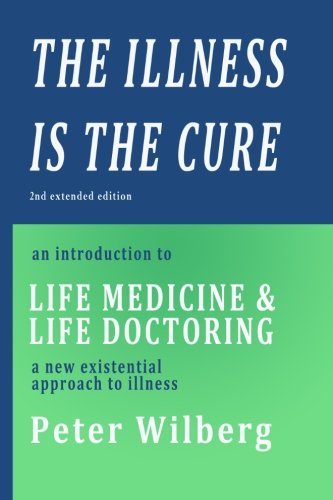
Wilberg on Wednesday - The Illness Is The Cure pt 11/46
Making Things Worse
through Medication
(see also appendices 3 and 4)
“…serious reactions to prescription drugs are responsible for 250,000 Britons being hospitalised each year – with aspirin, diuretics, warfarin and NSAIDs (non-steroidal anti- inflammatory drugs arthritis the main offenders.” Ben Ong
“The majority of the cancer patients in this country die because of chemotherapy, which does not cure breast, colon or lung cancer. This has been documented for over a decade and nevertheless doctors still utilize chemotherapy to fight these tumors.” Allen Levin, MD, UCSF
“…at least 250,000 people have attempted suicide worldwide because of Prozac alone and that at least 25,000 have succeeded.”Professor David Healy
Millions of prescriptions for highly profitable drugs are handed out each year by doctors – even though the ‘clinical trials’ which made them available often show them to be barely more effective than placebos. At the same time, sales of over-the-counter (OTC) drugs such as pain killers bring in equally huge profits – despite often leading to chronic dependency. The counter-productivity of their possible side effects (doing the very opposite of what they are prescribed for) and the often severe and chronic withdrawal symptoms generated by different classes of common legal drug medications is shown below – using information from the makers and users of these drugs, together with the ‘small print’ in the instructions and warnings to patients that come with them. Just as the price paid for drug medications is kept artificially high by clever marketing – so also does the price paid by the body for using them continue to rise.
Drug class: ANXIOLYTICS (a new name for tranquilisers)
Side effects and/or withdrawal symptoms – addiction leading to acute and chronic anxiety, irritability and restlessness, panic attacks, seizures, chronic sleep difficulties and/or muscular tension
Drug class: SLEEPING PILLS such as temazepam
Side effects and/or withdrawal symptoms: chronic rebound insomnia, nightmares, premature deaths (up to 500,000 in the U.S. alone according to the British Medical Journal Open Journal).
Drug class: ANTIDEPRESSANTS (SSRI-type such as Seroxat/Paxil/Prozac)
Side effects and/or withdrawal symptoms – depressive or manic symptoms, suicidal thoughts, suicide, aggressive behaviour, extreme violence
Drug class: ANALGESICS (prescription or OTC pain killers and headache pills such as codeine or paracetemol)
Side effects and/or withdrawal symptoms – nausea, digestive problems, chronic or recurrent rebound headaches.
Drug class: ANTIINFLAMMATORY drugs such as Ibuprofen used for conditions such as arthritis
Side effects: doubling the risk of strokes and miscarriage.
Drug class: ANTICONVULSANTS (for epilepsy, nerve pain and seizures)
Side effects or withdrawal symptoms – seizures
Drug class: ANTIBIOTICS (for bacterial infections)
Side effects and/or withdrawal symptoms: increased susceptibility to infection from increasingly resistant bacteria
Drug class: PRESCRIPTION SKIN CREAMS (for skin disorders or infections)
Side effects: acute or chronic skin damage and disorders, infections or inflammations
Drug class: STATINS (for reducing cholesterol and protecting from heart attacks & strokes)
Side effects: muscle weakness,fatigue,heart attacks, shortness of breath or difficulty breathing, strokes and death
Drug class: BIPHOSPHATE BONE DRUGS (for osteoporosis and brittle bones)
Side effects: increased risk of bone fracture
Drug class: DIET PILLS
Side effects: depression, suicidal ideation, suicide
Drug class: ANTI-SMOKING PILLS
Side effects: suicide, suicidal thoughts, depression, nausea and vomiting
Drug class: VACCINES
Side effects: increased susceptibility to infection (for example to flu, measles, polio etc.)
EXAMPLE: below is a list of side effects included in the maker’s own patient information leaflet for a skin cream currently prescribed for skin infections, reddening, swelling and itchiness and a variety of other skin conditions and disorders.
LISTED SIDE EFFECTS: Severe rash, burning and stinging feeling, skin irritation, itching skin, worsening of your eczema, thinning of the skin, small veins near the surface of the skin become visible, stretch marks, itchy rash and skin inflammation in the area where the medicine is used, red spotting rash around the mouth or chin, skin of the face may become puffy, irritation to the eye s and mucus membranes (such as lips or genital area).
Tuesday, 18 September 2018
Britain Today
75% percent of working people struggling to make ends meet. Financial stress, based on ballooning household debt (19 billion) as well as fraudulent banking debt and battles with aggressive bailiffs due to crippling (and ILLEGAL) council tax bills - all of which together are now recognised as a leading cause of mental distress and general ill-health (not to mention 40,000 austerity suicides). This is no longer even capitalism but feudal debt-slavery. 'Mortgage' translated from French: 'the grip of death'. Yet where is any sign of the sort of rebellion stirred by the Poll Tax? Instead even petitions to abolish council tax fail to gather almost any support - so deeply ingrained and seemingly unbreakable is the belief that council, income and other taxes are necessary for state or local expenditure.
That is why Lincoln's message must be explained and repeated again, again and yet again: “The Government should create, issue, and circulate all the currency, and credits needed to satisfy the spending power of the Government, and the buying power of consumers." Is this really so difficult to understand? If so, why? Too many other issues muddying the picture and allowing 'divide and rule' to reign. I propose a campaign to gather signatures for petition to enact Lincoln's socialist monetary policy - which was so successful until sabotaged by interest-greedy banks - not least the Bank of England itself.
Informative site: http://www.timetounite.com/stop-paying-unlawful-fraudulent-illegal-council-tax/
Sunday, 16 September 2018
Socialist Quotes for Sunday Reflection pt 28
How disgraceful it is that money owed over rent has risen to 200million and 30 percent of all private tenants are in debt over rent arrears. How shocking it iscouncil´s have hundreds of million s in financial black holes, with all constituencies including rural ones have up to 10,000 on their housing waiting list. Even with homelessness rising, it has became illegal to rough sleep, beg or be homeless. How sick this Globalist and treacherous regime is...
Dion Gibbs, BPWP
...................
...................
" I believe the National-Bolshevism is the most perfect eschatological formulation of the traditional idea taken in its most paradoxical and interesting version. The National-Bolshevism is the least pragmatic ideology, the least modern in the negative sense among all the those I know.
In fact, talking about the most distant and healthy tradition, I believe in the current circumstances, that a myth myth or a comforting thesis for misfits or incapable.
If we are truly rooted in the world tradition, we are forced to commit suicide or to move on to the offensive. We have to throw bombs, kill enemies, engage in active and totally subversive politics, otherwise we just dream."
Alexander dugin
.................
“To argue that the workers’ movement can be independent of the nation’s life and destiny is to say that it does not matter what range of forces and means of action it has at its disposal.”
Brzozowski continues:
“To renounce one’s national existence is to give up hope of influencing human reality: it means destroying one’s own soul, for the soul lives and acts only through the nation….A man without a country is a soul without a substance.”
It appears that for Brzozowski to deracinate a people, especially the working class, from their historic community is to deprive them of an essential means of being:
“We cannot communicate with anyone except through the nation. There is no road to life except through that body spirit by which we are sustained and exalted….Poland, our language and soul are not accidental figures of inanimate, uncaring nature: they are a great reality in their own right…”
Donald Perkins
......................
"With regard to our ideology, here I would like to bring more clarity. As I said, we adhere to the principles of freedom, justice, conscience, and equality. Freedom is a cornerstone value for the people and the state. For the people and the state, it is a matter of sovereignty and independence, i.e. the right to take decisions about their fate. But freedom does not equal permissiveness. Human freedom of the people and the state may restrict the freedom of certain persons, the people and the state must be respected as well as their own. Therefore, the concept of freedom for us is inextricably linked with the concept of order. Freedom is something that is worth fighting for and worth dying for. The freedom of Donbass! That is a slogan that motivated volunteers in the fight."
Alexander Zakharchenko
.........................
...............
..................
Saturday, 15 September 2018
Tom Wintringham: Revolutionary Patriot.
Tom Wintringham was born 1898 in Grimsby, Lincolnshire. He was educated at Gresham's School, Holt, and Balliol College, Oxford. In 1915 he was elected to a Brakenbury scholarship in History at Balliol,[1]but during the First World War postponed his university career to join the Royal Flying Corps, serving as a mechanic and motorcycle despatch rider.
At the end of the war he was involved in a brief barracks mutiny, one of many minor insurrections which went unnoticed in the period. He returned to Oxford, and in a long vacation made a visit of some months to Moscow, after which he returned to England and formed a group of students aiming to establish a British section of the Third International, a Communist party. As the party was formed, Wintringham graduated from Oxford and moved to London, ostensibly to study for the barat the Temple, but in fact to work full-time in politics.
Political career and the Spanish Civil War
In 1923, Wintringham joined the recently formed Communist Party of Great Britain. In 1925, he was one of the twelve CPGB officials imprisoned for seditious libel and incitement to mutiny. In 1930, he helped to found the Communist newspaper, the Daily Worker, and was one of the few named writers to publish articles in it. In writing for the Communist party's theoretic journal Labour Monthly, he established himself as the party's military expert. In LMarticles and in booklets on the subject, Wintringham formed the arguments against Air Assault and called for air raid precautions several years before the bombing of Guernica. His arguments were the basis for the most successful of the Communist Party's wartime campaigns, that for ARP provision, and shaped government policy on the issue in the years leading up to the war.
Although at the centre of the CPGB organisation, he was often at odds with Party policy, believing in a communism of alliance and co-operation, rather than the dominant Cominternideology of "class against class". Wintringham's ideas became party dogma when the Comintern announced the 'Popular Front', a form of communism Wintringham was prepared to fight for.
In 1934, he became the founder, editor and major contributor of Left Review, the first British literary journal with a stated Marxist intent. Although published by Wintringham and funded by the CPGB, it embraced writers of all shades of socialism, regardless of their party affiliations.
At the start of the Spanish Civil War, Wintringham went to Barcelona as a journalist for the Daily Worker, but he joined and eventually commanded the British Battalion[3]of the International Brigades. Some socialist commentators have credited him with the whole idea of "international" brigades.
In February 1937 he was wounded in the Battle of Jarama.[3]While injured in Spain he became friends with Ernest Hemingway, who based one of his characters upon him. He spent some months as a machine gun instructor. When he returned to the battalion the next summer he contracted typhoid, was again wounded at Quintoin August 1937 and was repatriated in October. His later book English Captain is based on these experiences.
Second World War
On returning from Spain, Wintringham began to call for an armed civilian guard to repel any fascist invasion, and as early as 1938 he had begun campaigning for what would become the Home Guard. He taught the troops tactics of guerrilla warfare, including a movement known as the 'Monkey Crawl'. They were also taught how to deal with dive bombers.
At the outbreak of the Second World War, Wintringham applied for an army officer's commission but was rejected. When the Communist Party promulgated its policy of staying out of the war due to the Molotov-Ribbentrop Pact, he strongly condemned their policies. Because of the appeasementpolicies of prime minister Neville Chamberlain, he also regarded the Toriesas Nazi sympathizers and wrote that they should be removed from office. He wrote for Picture Post, the Daily Mirror, and wrote columns for Tribuneand the New Statesman.
In May 1940, after the escape from Dunkirk, Wintringham began to write in support of the Local Defence Volunteers, the forerunner of the Home Guard. On 10 July, he opened the private Home Guard training school at Osterley Park, London.[4]
Wintringham's training methods were mainly based on his experience in Spain. He even had veterans who had fought alongside him in Spain who trained volunteers in anti-tankwarfare and demolitions. He also taught street fighting and guerrilla warfare. He wrote many articles in Picture Post and the Daily Mirrorpropagating his views about the Home Guard with the motto "a people's war for a people's peace".
The British Army still did not dare trust Wintringham because of his communist past. After September 1940, the army began to take charge of the Home Guard training in Osterley and Wintringham and his comrades were gradually sidelined. Wintringham resigned in April 1941. Ironically, despite his activities in support of the Home Guard, Wintringham was never allowed to join the organisation itself because of a policy barring membership to Communists and Fascists.
Later Life
In his later years he worked mainly in radio and film, both producing documentary and critical programmes and writing criticism. He continued to write about military history, opposing the use and development of atomic weapons and championing Tito's Yugoslavia.
Tom Wintringham died on 16 August 1949, aged 51, after a massive heart attackwhile he was staying with his sister at her farm at Owmby, Lincolnshire.
Friday, 14 September 2018
Irexit Freedom: A Party to get behind
From the Irexist Freedom Manifesto:
1. NAME: Irexit Freedom
(in Irish: Eire Amach: Cumann na Saoirse ) Colloquially: Irexit Freedom to Prosper
2. OBJECTIVES:
“Irexit Freedom” is a national movement of the Irish people and a political party with the primary objective of re-establishing the national independence and sovereignty of Ireland and restoring its national democracy by leaving the European Union and thereby taking back control by the Irish People of our law-making, our citizenship, our currency, our trade policy, our borders and immigration policy, our taxation and budget policy, our sea-fisheries and marine resources, our human rights under the Irish Supreme Court, our foreign and security policy and maintaining a meaningful military neutrality.
Irexit Freedom positively desires and supports all democratic endeavours to achieve the consent of the voters of Northern Ireland for a re-united and independent Ireland under the control of the Irish people and not that of London or Brussels.
Irexit is necessary to prevent a second Partition of Ireland being implemented by the addition of new EU dimensions to the North-South border and the consequent creation of major new obstacles in the way of securing consent to future Irish reunification.
The secondary objectives of Irexit Freedom will be contained in the thrust of these principles below:
- We believe in a society of liberty with a free and diverse media which supports free speech, freedom of association and freedom of religion.
- We believe in reduced taxation on Irish citizens and less wasteful government spending.
- We believe in a progressive tax system rewarding work, initiative and merit.
- We defend the separation of powers in the State and oppose the political / media hegemony that allows political and institutional corruption to flourish.
- As no nation has a future without children, as a patriotic party we are pro-natalist and supportive of stable families for the procreation, education and rearing of children.
- We believe in the equality of all Irish citizens before the law, oppose racism and the dominance of public policy by vested interests and privileged “golden circles”.
- Wishing to tackle corruption in key governmental institutions including the Gardai and our judicial and political systems, we believe that there must be legal and financial sanctions that penalise those involved in a culture of corruption and incompetence.
- As Irish people have no land to call their home but Ireland, we believe in the protection of the Irish language, culture and the natural environment. We hold that Ireland is our home, not an economic hostel, and that the Irish diaspora has a special part to play in building up our country.
- We believe that Ireland’s natural and financial resources should be utilised for the betterment of the life of the Irish people.
- We believe that the Irish people should have the right to control our money, our laws and our borders.
- We believe that no institution or government except Dáil Éireann should make the national laws or approve the budget applicable to the people of Ireland.
- We hold that the power to implement democratic change should be returned to the Irish people from the European Union and we are supportive of direct democracy including referenda for important public decision-making to the greatest practicable extent in our constitutional democracy.
“Irexit Freedom” is a national movement of the Irish people and a political party with the primary objective of re-establishing the national independence and sovereignty of Ireland and restoring its national democracy by leaving the European Union and thereby taking back control by the Irish People of our law-making, our citizenship, our currency, our trade policy, our borders and immigration policy, our taxation and budget policy, our sea-fisheries and marine resources, our human rights under the Irish Supreme Court, our foreign and security policy and maintaining a meaningful military neutrality.
Irexit Freedom positively desires and supports all democratic endeavours to achieve the consent of the voters of Northern Ireland for a re-united and independent Ireland under the control of the Irish people and not that of London or Brussels.
Irexit is necessary to prevent a second Partition of Ireland being implemented by the addition of new EU dimensions to the North-South border and the consequent creation of major new obstacles in the way of securing consent to future Irish reunification.
Thursday, 13 September 2018
The English Civil War (1642-1649)
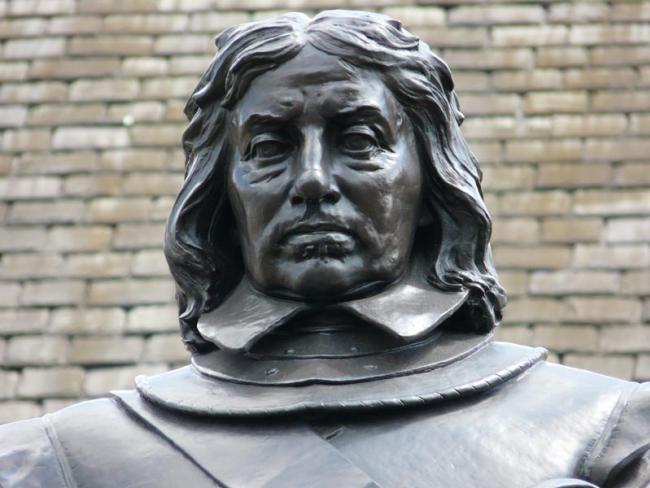
Detail from the statue of Oliver Cromwell by Sir William Hamo Thornycroft RA, unveiled outside the House of Commons on 31 October 1899. Photo Loz Pycock (CC-BY-SA 2.0).
A war unique in our history: a remaking of our country was fought not only on the field of war but also in people’s hearts and minds…
There have been power struggles before and since among rich elites or between rival aristocratic houses. The English Civil War was entirely different, actively involving whole swathes of society normally excluded from control.
In England, Charles I’s reign witnessed rising discontent almost from his succession in 1625. Costly, failed wars led to inflation and taxation. Religious reforms were unpopular and seen as taking the country towards Catholicism. And there was an underlying sense that the country was not being ruled in the best interests of its people.
Bankrupt
In 1640 Charles summoned parliament. He was bankrupt, but wanted to raise an army to suppress opposition in Scotland, where he was equally unpopular. The House of Commons in the Long Parliament (as it became known) represented a cross-section of the ruling class establishment: gentry, merchants, lawyers. But almost for the first time in English history, elections were contested on political issues.
The real strength of those opposed to the king in the House of Commons came from outside parliament, across a wide cross-section of society. Generally support for parliament came from the economically advanced south and east of England, whereas the king’s support came from the economically backward areas of the north and west. In Yorkshire, Lancashire and Sussex, there was a clear division between parliamentarian, rebellious industrial areas and royalist agricultural areas.
There is no simple reason why opposition to the king and his ministers moved from protest to armed revolt in the First Civil War (1642-46). It is likely that popular discontent over a range of different political and religious issues produced such a heady and powerful mix that trust in the king and his government totally collapsed. The “humble respect and awful reverence which is usually given to nobility, gentry and clergy”, as Edward Chamberlayne put it in 1672, crumbled in these tumultuous times.
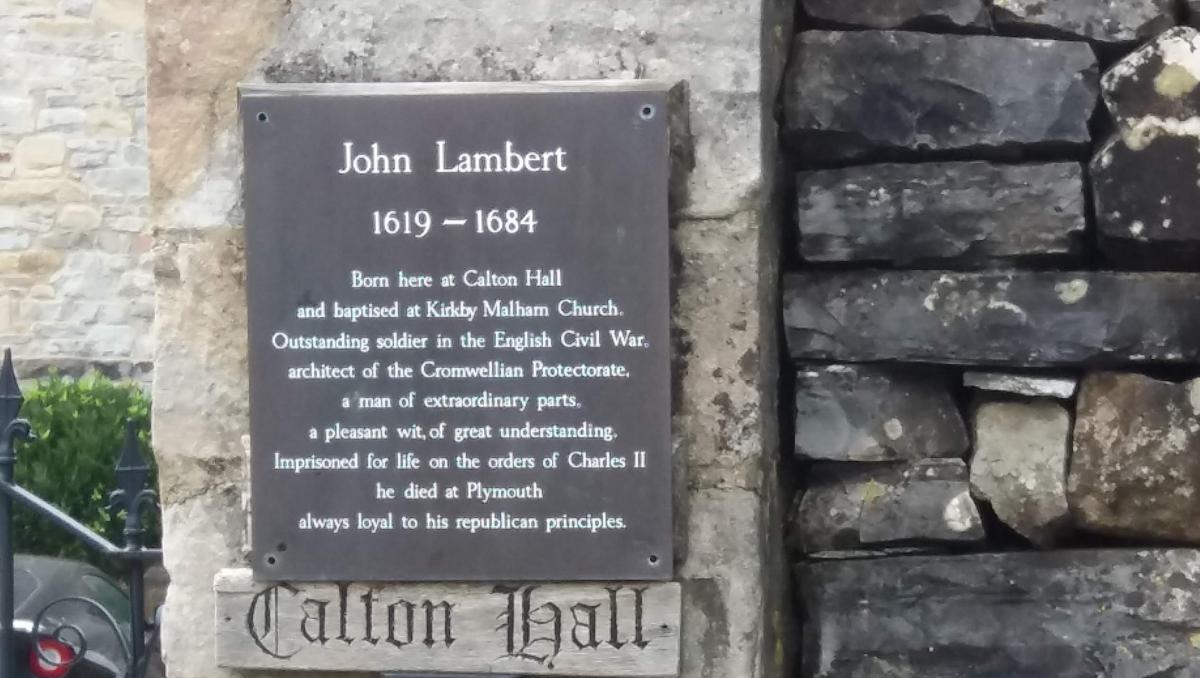
Memorial near Skipton, Yorkshire, to one of the heroes of the Civil War. Photo Workers.
In November 1641 parliament passed the “Grand Remonstrance” setting out their many grievances against Charles. The king’s next move was disastrous and prompted open revolt. He went to parliament with a body of soldiers intending to arrest the five leading members of the parliamentary opposition. Warned beforehand, they had left the Commons by the time Charles arrived. The king’s bungled attempt at a coup made them heroes.
King Charles left London and shortly began to raise an army against the rebellious parliament. In turn, parliament decreed that they did not require Royal Assent to make laws, taking control of local militias and a growing volunteer army. And so in 1642 war began.
Dissatisfaction about the conduct of the war led Oliver Cromwell setting up the New Model Army in 1645. Its composition was unusual, including a broad cross-section of society in contrast to armies elsewhere at that time. The broader social origins of its soldiers provided literate, argumentative soldiers with easy links to friends in civilian political movements.
The first armies of both sides had been formed largely of volunteers. Although diluted by conscription from the second year of the war, this sense of fighting for a cause they believed in remained a strong factor amongst parliamentary armies, and was transferred to the New Model Army.
Organised
The New Model Army was disciplined and well organised, averse to looting. Quite soon promotions to officer rank were on merit rather than social rank. It took a major political battle in parliament to ensure acceptance of these forms of military organisation.
Parliamentarian forces eventually gained the upper hand and in May 1646 Charles surrendered to the Scottish army. He was handed over to parliament when the Scots withdrew from England in January 1647.
‘THE OFFICE OF KING WAS FORMALLY ABOLISHED ON 17 MARCH 1649.’
In April 1647 parliament tried to disband the New Model Army but failed. Soldiers refused to disband. After months of dispute with parliament, they declared, “We were not a mere mercenary army” and would not disband without settlement of both their own grievances (including arrears of pay) and the people’s political and religious liberties.
In June 1647 a troop of 500 cavalry seized the king and brought him to Newmarket where the rest of the army was. In August the army occupied London. That October the Council of the Army, with representatives of the rank and file as well as officers, debated the settlement of the kingdom, known as the Putney Debates. They even discussed An Agreement of the People, a manifesto produced by radical Levellers.
The escape of Charles from detention brought the debates to an end and opened the Second Civil War. The New Model Army had to put down scattered mutinies and then fight a Scots army enlisted to support Charles. That was defeated in August 1648, ending the war.
Tyrant, traitor
Charles I was put on trial in January 1649. Condemned as a “tyrant, traitor, murderer, and public enemy to the good people of this nation”, he was executed on 30 January. The office of king was formally abolished on 17 March.
After the Putney debates the heyday was over for the Leveller cause. The momentum of the republican side veered towards the wealthy, anxious to protect the interests of property. Gradually the New Model Army became ever more a professional body and the days of sermons, lectures, leaflets, agitators and citizens in uniform passed.
The Levellers, Diggers and Ranters disappeared from view and lost their impact on the public arena. But the English people’s view of the world had changed forever.
Related Content
Capital vs. workers
Devolution – a failed idea from a failed era
Let's get on with leaving
The NHS at 70: all to play for
The great betrayal? Don’t let the EU steal our fish
Re-published with Permission from, and Thanks to, the CPBML
Subscribe to:
Posts (Atom)
UNRWA are terrorists
The SMPBI has been campaigning since the 7th October Massacre in Israel for the paliarstinan terrorists to be exposed for the murdering filt...
-
English Revolution was created in response to the need for a left-wing engagement with a rising English sense of national identity and to ...
-
by Wat Tyler The Socialist Workers Party are the product of the British education system and the media. Their obsession with the trials and ...
-
There has been much speculation over the past view days as to the nature of the SWPE. As links have been posted on various sites which will...