Showing posts with label CPB-ML. Show all posts

Saturday, 22 June 2019

Stand United for Brexit - Support the CPBML initiative.

The Communist Party of Britain Marxist-Leninist is organising a national conference on British independence for Saturday 29 June, in central London, to which SMPBI members and supporters are warmly invited (as are all people who are fighting to ensure Brexit happens). Anyone wishing to take part should get in touch at info@cpbml.org.uk.

They are also now organising informal meetings all round the country for people who want to take the discussion further. Again, email info@cpbml.org.uk. for more information.

The SMPBI welcomes this initiative, which is a positive step for all patriotic socialists/communists.  We encourage everyone who is able to do so, to attend the meeting on the 29th (next Saturday).  If you are not able to attend, then please do email the CPBML to discuss how to fight the Brexit-saboteurs in our own locations.


From the CPBML site:


Now finish the job

18 JUNE 2019
Photo Chris Dorney/shutterstock.com
The latest attempt by would-be Brexit wreckers was defeated in Parliament last week. But the job is not yet done. They will try again. We have to keep the pressure on untrustworthy Westminster politicians of whatever party.
On 12 June the Labour Party led an attempt to tie the next prime minister’s hands by ruling out no deal on leaving the EU. It was defeated by 11 votes, 309 to 298, after eight Labour MPs voted with the government and 13 abstained, cancelling out 10 Conservative rebels who voted with Labour.

They won’t rest

The pro-EU conservative MP Oliver Letwin told BBC Radio 4’s Today programme that he thought the latest defeat meant Parliament had exhausted the options for preventing a no-deal exit. Perhaps. But the only certainty is that the ruling class and pro-EU forces inside and outside Parliament will not rest. They will do whatever they can to reverse the historic Leave decision.
Listen to Keir Starmer, the Labour shadow for Exiting the EU: “…this House will take every step necessary to prevent a no deal.” Or Philip Hammond, currently Chancellor of the Exchequer: “Parliament will not allow a no-deal exit from the EU.” Both speak for MPs, but not for the British people.
We’ve seen lies and delay – many times. We’ve been told that Parliament is sovereign over the people, like the kings of old who declared their divine right to rule. We’ve seen the government’s negotiating position undermined by MPs openly promoting a second vote or even revoking Article 50, and by Corbyn and others trotting off to cosy up to EU leaders.

Shameful

Nearly all Labour’s MPs have played a shameful role in this saga. Elected on a manifesto that promised to honour the referendum vote and act in the national interest, they have done neither.
The eight Labour MPs who voted to support the government and defeat the wreckers on 12 June should be saluted. What are the others playing at by putting the interests of the EU before those of their country?
On the positive side there has been a resolute response from British people. Whenever people have been given a chance to express their views it’s clear that parliamentary niceties cut no ice. We want out, and cleanly.
As a result of that clarity, the latest prime minister has handed in her resignation. May’s would-be successors seem for the most part to understand that willingness to face up to the EU is a prerequisite for the job.
The establishment fears that whoever wins the Conservative leadership will do what most of his party members and the country want – leave the EU. 
No doubt we’ll see further dirty tricks and attacks whoever becomes Prime Minster. And more of the vicious attacks on those in the labour movement who dare to speak out for Brexit and against the EU.
The pro-EU forces will not let this rest; nor should we. Finish the job and get on with working on a future for Britain, so far put to one side as we struggle to get what we voted for.

Thursday, 11 October 2018

Reproduced in Comradeship: CPBML Newsletter No. 75

No. 75  9 October 2018

287921d4-dc58-49ee-aa38-c0a7c6b0c8e2.png CPBML Newsletter

No. 75  9 October 2018
The Brexit clock is ticking, and the media are full of all kinds of information, real and imagined. There’s no better time to get hold of a copy of our latest pamphlet, Brexit: let’s get on with it. Download your free copy. Send it on to your friends. Fight to implement the Referendum vote! And don’t forget, if you would like extra copies, or want help handing it out in your area, get in touch with [email protected].
breakfree.jpg?itok=Bi4tLMQo

Brexit: The road to freedom

CPBML/Workers Public Meeting, Wednesday 17 October, 7.30 pm
Bertrand Russell Room, Conway Hall, Red Lion Square, London WC1R 4RL
Britain has a skilled and literate workforce, an exceptional research base and abundant energy resources. Free from the shackles of the EU, what can we not achieve? Come and discuss. All welcome.
brexit_29.jpg?itok=X-Q_uCNH

Labour's Brexit betrayal

Labour has aligned itself with those in Westminster who want to betray Britain, betray the trust that people put in the referendum process, and betray democracy itself. 
romania.jpg?itok=23XGots2

How free movement is wrecking Romania

With much of its young workforce now abroad, Romania is increasingly a country of old people and children – and utterly dependent on the EU.
heads.jpg?itok=Ed0etBHq

Heads march to reverse cuts

Head teachers are to march on Downing Street on Friday 28 September in an unprecedented bid to get improved and sufficient school funding.
160427%20iphone27april2016%20021_1.JPG?itok=ZlQiBa3n

NHS workers must remain vigilant

In June the government asked NHS England to make a 10-year plan, and guaranteed real funding increases over the next 5 years. NHS workers must remain vigilant to take advantage of the opportunity to repair damage done to the service.
bolton.jpg?itok=Il-GZUB1

Bolton rally shows spirit for EU fight

The 1,500 enthusiastic Brexiteers who came to Leave Means Leave’s Bolton rally show that the people are ready to fight for Brexit. 
Copyright © 2018 Communist Party of Britain Marxist-Leninist, All rights reserved.

Communist Party of Britain Marxist-Leninist, 78 Seymour Avenue, London N17 9EB. Tel 020 8801 9543.

Thursday, 13 September 2018

The English Civil War (1642-1649)

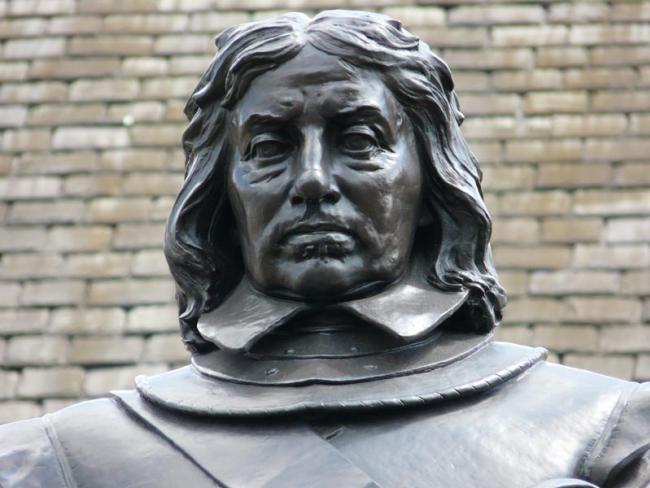
Detail from the statue of Oliver Cromwell by Sir William Hamo Thornycroft RA, unveiled outside the House of Commons on 31 October 1899. Photo Loz Pycock (CC-BY-SA 2.0).

A war unique in our history: a remaking of our country was fought not only on the field of war but also in people’s hearts and minds…

There have been power struggles before and since among rich elites or between rival aristocratic houses. The English Civil War was entirely different, actively involving whole swathes of society normally excluded from control.

In England, Charles I’s reign witnessed rising discontent almost from his succession in 1625. Costly, failed wars led to inflation and taxation. Religious reforms were unpopular and seen as taking the country towards Catholicism. And there was an underlying sense that the country was not being ruled in the best interests of its people.

Bankrupt

In 1640 Charles summoned parliament. He was bankrupt, but wanted to raise an army to suppress opposition in Scotland, where he was equally unpopular. The House of Commons in the Long Parliament (as it became known) represented a cross-section of the ruling class establishment: gentry, merchants, lawyers. But almost for the first time in English history, elections were contested on political issues.

The real strength of those opposed to the king in the House of Commons came from outside parliament, across a wide cross-section of society. Generally support for parliament came from the economically advanced south and east of England, whereas the king’s support came from the economically backward areas of the north and west. In Yorkshire, Lancashire and Sussex, there was a clear division between parliamentarian, rebellious industrial areas and royalist agricultural areas.

There is no simple reason why opposition to the king and his ministers moved from protest to armed revolt in the First Civil War (1642-46). It is likely that popular discontent over a range of different political and religious issues produced such a heady and powerful mix that trust in the king and his government totally collapsed. The “humble respect and awful reverence which is usually given to nobility, gentry and clergy”, as Edward Chamberlayne put it in 1672, crumbled in these tumultuous times.

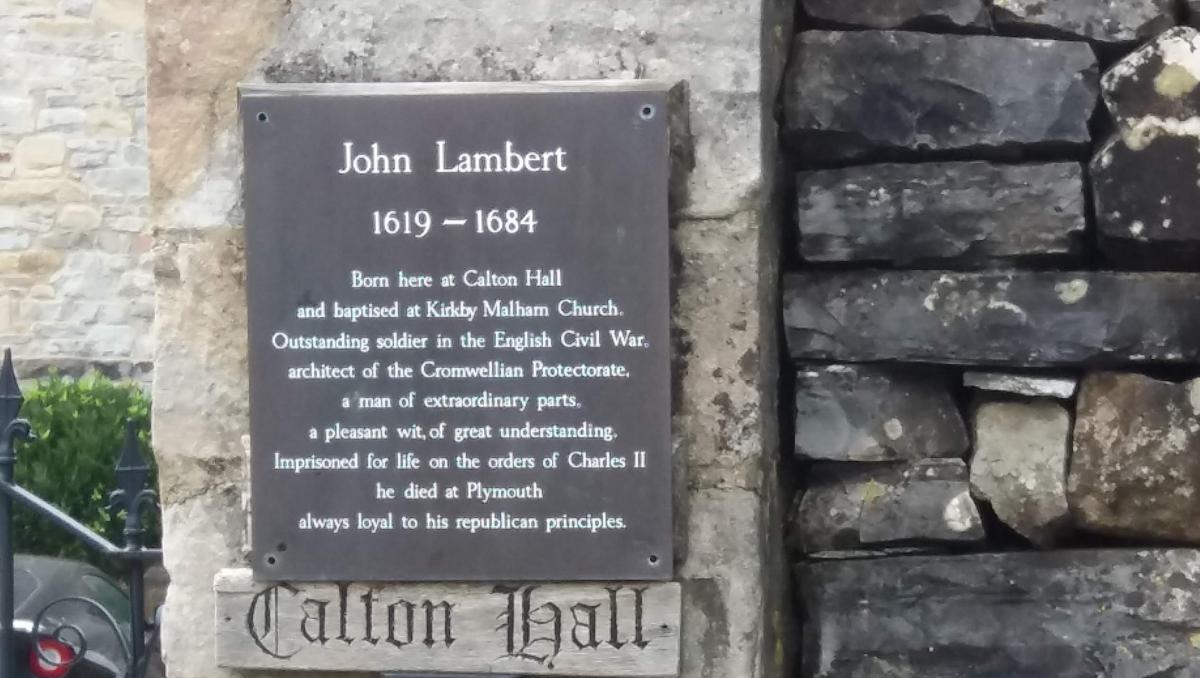
Memorial near Skipton, Yorkshire, to one of the heroes of the Civil War. Photo Workers.

In November 1641 parliament passed the “Grand Remonstrance” setting out their many grievances against Charles. The king’s next move was disastrous and prompted open revolt. He went to parliament with a body of soldiers intending to arrest the five leading members of the parliamentary opposition. Warned beforehand, they had left the Commons by the time Charles arrived. The king’s bungled attempt at a coup made them heroes.

King Charles left London and shortly began to raise an army against the rebellious parliament. In turn, parliament decreed that they did not require Royal Assent to make laws, taking control of local militias and a growing volunteer army. And so in 1642 war began.

Dissatisfaction about the conduct of the war led Oliver Cromwell setting up the New Model Army in 1645. Its composition was unusual, including a broad cross-section of society in contrast to armies elsewhere at that time. The broader social origins of its soldiers provided literate, argumentative soldiers with easy links to friends in civilian political movements.

The first armies of both sides had been formed largely of volunteers. Although diluted by conscription from the second year of the war, this sense of fighting for a cause they believed in remained a strong factor amongst parliamentary armies, and was transferred to the New Model Army.

Organised

The New Model Army was disciplined and well organised, averse to looting. Quite soon promotions to officer rank were on merit rather than social rank. It took a major political battle in parliament to ensure acceptance of these forms of military organisation.

Parliamentarian forces eventually gained the upper hand and in May 1646 Charles surrendered to the Scottish army. He was handed over to parliament when the Scots withdrew from England in January 1647.

‘THE OFFICE OF KING WAS FORMALLY ABOLISHED ON 17 MARCH 1649.’

In April 1647 parliament tried to disband the New Model Army but failed. Soldiers refused to disband. After months of dispute with parliament, they declared, “We were not a mere mercenary army” and would not disband without settlement of both their own grievances (including arrears of pay) and the people’s political and religious liberties.

In June 1647 a troop of 500 cavalry seized the king and brought him to Newmarket where the rest of the army was. In August the army occupied London. That October the Council of the Army, with representatives of the rank and file as well as officers, debated the settlement of the kingdom, known as the Putney Debates. They even discussed An Agreement of the People, a manifesto produced by radical Levellers.

The escape of Charles from detention brought the debates to an end and opened the Second Civil War. The New Model Army had to put down scattered mutinies and then fight a Scots army enlisted to support Charles. That was defeated in August 1648, ending the war.

Tyrant, traitor

Charles I was put on trial in January 1649. Condemned as a “tyrant, traitor, murderer, and public enemy to the good people of this nation”, he was executed on 30 January. The office of king was formally abolished on 17 March.

After the Putney debates the heyday was over for the Leveller cause. The momentum of the republican side veered towards the wealthy, anxious to protect the interests of property. Gradually the New Model Army became ever more a professional body and the days of sermons, lectures, leaflets, agitators and citizens in uniform passed.

The Levellers, Diggers and Ranters disappeared from view and lost their impact on the public arena. But the English people’s view of the world had changed forever.

Related Content
Capital vs. workers
Devolution – a failed idea from a failed era
Let's get on with leaving
The NHS at 70: all to play for
The great betrayal? Don’t let the EU steal our fish

Re-published with Permission from, and Thanks to, the CPBML

Friday, 17 August 2018

Keep Britain out of the Free Trade trap - CPBML, Workers

Source: https://www.cpbml.org.uk/news/keep-britain-out-free-trade-trap

Chinese manufactures waiting for export at a Shanghai container port – the world’s busiest. Photo chuyuss/shutterstock.com

Siren voices are telling us that we should be negotiating Free Trade Agreements with the US, with the EU, with just about anybody…

Karl Marx and Frederick Engels declared in the Communist Manifesto that capitalism had “resolved personal worth into exchange value” and wiped out all previous freedoms to establish just the one: “Free Trade”. And “Free Trade”, as we have learnt, is the opposite of freedom for a sovereign country.

Both a means and an end, trade is the “heavy artillery” of capitalism, they said, the weapon with which it batters down the “Chinese walls” protecting nations. “It compels all nations, on pain of extinction, to adopt the bourgeois mode of production; it compels them to introduce what it calls civilisation into their midst; i.e., to become bourgeois themselves.”

That was 170 years ago. And it’s as true as ever today. But capitalism has not had everything its own way, and its dream – for us a nightmare vision – of a world where free trade rules unhindered is not yet reality.

World domination

Britain adopted free trade – trade with few or no tariffs, quotas or restrictions – for much of the economy around 1840. It was a conscious rejection of a strategy (known as mercantilism) of protecting trade with the empire. India, Australia, Canada, South Africa – these were no longer enough. British capital was out to take over the world.

In this struggle, as in all its struggles, it sought to enlist the support of the working class, promising workers cheap bread. The Chartists, at least, were too savvy for this, pointing out that if the price of bread came down, so too would wages, the price of labour. Cheap food, usually poor quality and produced under dubious conditions, always means cheap labour and is therefore good for the employer.

The first salvos in this new trade war came when Britain forced China to import opium. How’s that for ethical capitalism? Opium smoking had been illegal in China since 1729. In order to break down China’s control over exports through Canton (now Guandong) and get its hands on the country’s silver, the East India Company started auctioning opium grown in India to independent Chinese merchants.

In 1839, concerned at the growing number of addicts, the Chinese government seized 20,000 chests of opium – over a million kilograms, and easily the biggest drugs haul in history. Britain responded by sending the Royal Navy, which humiliated the Chinese fleet and forced a settlement favourable to the East India Company. “Gunboat diplomacy” had arrived.

‘WE ALREADY HAVE AMPLE EXPERIENCE OF FREE TRADE: IT’S CALLED THE EUROPEAN UNION.’

Then, between 1846 and 1849, the government abolished the Corn Laws, which it was claimed kept the price of bread artificially high by effectively banning imports from abroad. The price of grain was initially unaffected, but when good harvests and cheap steamship transport kicked in around 20 years later, imports soared. In the 1830s just 2 per cent of Britain’s grain was imported. By the 1880s that figure had risen to 45 per cent (65 per cent for wheat).

Fast forward to 1939, and Britain was importing 70 per cent of its food. Over the course of World War II more than 36,000 merchant seamen and women and roughly as many Allied sailors died plugging that gap and similar gaps in strategic materials.

In 2018, with trade an object of everyday political debate and disinformation in the context of the Brexit negotiations, workers are being urged to back free trade once again. Where do the interests of workers lie?

Single market

Not with free trade. We already have ample experience of that: it’s called the European Union, which operates on the basis of the “free” (for the employer) movement of goods,capital, services and workers.

And free trade has moved on since the 19th century, when the idea related exclusively to trade in goods. The modern free trade agreements are hardly about goods at all: they are about services, especially financial services and investment, and even free movement of labour. What’s more, most modern free trade deals target “restrictions” such as legislation on workers’ rights, environment laws and consumer protection.

Free trade means countries that seek to protect industries and services are bound in legal chains. Capital is free to invest in privatised companies, but countries are told what can and can’t be in public ownership.

It’s excellent for capital and bad for workers, which is why workers rejected that model in the referendum of 2016.

The free traders say they don’t want to be restricted by the EU, but their aim is a whole planet built in the image of the EU. They want a world where capital can move seamlessly from country to country, one where nation states cede control to multinationals and – in the event of any dispute – their lawyers. They call it “globalisation” and present it as inevitable and immutable.

The argument is often portrayed as a battle between those who favour trading with the US and those who favour ties with the EU. But that ignores the fact that the greatest supporters of EU integration are the US multinationals themselves.

You need look no further than the lobby group they set up to influence Brussels policy, the American Chamber of Commerce to the European Union, or AmCham EU for short. Its agenda is clear: the EU needs to take powers over investment policy and services away from its member states.

In July 2017 it welcomed EU’s Court of Justice ruling on the EU/Singapore Free Trade Agreement. That ruling clarified the Commission’s sphere of competence in signing such agreements but said that at present the bits relating to portfolio investment and disputes settlement need agreement from member states. But moving forward, added AmCham EU, “the EU needs to establish a new tradition of seeking political and legal acceptance of EU trade policy.”

The language is coded, but it couldn’t be clearer, coming as it does from the body with the tag-line “Speaking for American Business in Europe”.

To the world’s multinationals and finance capitalists, sovereign states are thoroughly undesirable, an obstacle to profit. Worst of all are nation states, where sovereignty is supported by shared culture and history.

‘WE DON’T WANT FREE TRADE: WE WANT TO BE ABLE TO TRADE FREELY.’

Nation states may have grown up in Europe along with the rise of the bourgeoisie, but now they stand as the last bulwark against the domination of finance capital. The bourgeoisie has split – some still need the nation, most have abandoned it – but workers know that if we can’t control our own country we have no chance at all.

The EU’s historic mission has been to sew up an entire continent and deliver it into the hands of the multinational corporations through the medium of free trade.

Our referendum vote has dented that strategy, but it still stands. The latest tactic is to tell us – as the Japanese ambassador did on 8 February – that the multinationals will abandon Britain if we don’t have free trade with the EU.

The modern kind of Free Trade Agreement (FTA) was piloted in 1987 with the deal between the US and Canada, later expanded to take in Mexico and become NAFTA. With the World Trade Organization’s push to “liberalise” trade stalling (see Box 1), the US went hunting for new agreements, starting with Guatemala.

Then it went for a big one: the Trans-Pacific Partnership, or TPP, between the US, Australia, Brunei, Canada, Chile, Japan, Malaysia, Mexico, New Zealand, Peru, Singapore and Vietnam.

China was pointedly excluded. The aim was to bypass the World Trade Organization and present China with the fait accompli of a new world trading order, new rules for everyone. Once again, capitalism was using trade to try to batter down a Chinese wall. Barack Obama was explicit:  “If we don’t pass this agreement – if America doesn’t write those rules – then countries like China will.”

But there was opposition, not least in the US itself. The TPP agreement was signed in 2016, but it has never been implemented – strangled at birth when Donald Trump withdrew the US from it saying it put American jobs at risk.

The EU was not far behind, setting off to negotiate FTAs with Canada, Japan, Singapore, Malaysia and so on. Progress has been snail-like. But the big prize has been an FTA with the US – the Transatlantic Trade and Investment Partnership, TTIP.

‘IF WE JUST SIT AND DO NOTHING, THERE’S NOTHING TO PROTECT US FROM TTIP.’

Negotiations started in 2013, but were still only halfway through the list of topics when Trump was elected and everything ground to a halt. The US would, it appears, like to restart the negotiations, but has been waiting for a government to be formed in Germany. (After all, no one can lift a finger in the EU without German approval.)

During the referendum campaign Obama warned that if Britain voted to leave we would go to “the back of the queue” when it came to negotiating a Free Trade Agreement (FTA). The threat backfired: the reaction of many people was, “Really? Can we have that in writing?”

Now we have Trump saying an FTA with Britain could be sewn up “very, very quickly”. Leaving aside the Trump hype (“very quickly” and “trade deals” are two phrases that should never figure in the same sentence), the threat is real.

What do we want?

Some supporters of the EU here are prone to shouting loudly that leaving won’t protect us from TTIP. Like all good lies, it’s based on a half-truth. If we just sit and do nothing, then of course there’s nothing to protect us from TTIP and similar trade agreements.

But sitting and doing nothing is precisely what these EU fans suggest: that parliament should overturn the people’s referendum decision. If that happens, then we know exactly where we will be: stuck in the EU and banned from making a trade agreement of any kind with any country.

Only outside of the EU – and therefore outside the customs union – will the UK be able to take up its seat at the World Trade Organization. It’s still a member, formally, but it gave up its independent voice when it joined the European Economic Community and its customs union in 1973.

Outside the EU Britain will be able to make its own trade agreements. Workers must make it clear that we don’t want free trade: we want to be able to trade freely, which is quite another thing.

Against the freedom of the multinationals and finance capital, we must assert the freedom to protect our industries, services, agriculture and fisheries.

The last thing we want is to see the country flooded with cheap agricultural imports that knock a few pennies off the cost but lay waste to British farms and make us dependent on imports.

Nor do we want to be a dumping ground for German steel, or Chinese steel for that matter. We should insist that British steel is used on the new railways such as HS2 – and that British-made locomotives and carriages run on the new lines as well.

And if the politicians really screw up their courage, they might even insist that pharmaceutical multinationals like Pfizer that want to sell their overpriced drugs to the NHS manufacture them in Britain. Which is what a (Conservative) government forced Pfizer to do in 1952!

• Related article: 1: The road from the WTO to Free Trade Agreements

• Related article: 2: The EU's new colonialism

Tuesday, 17 July 2018

Brexit: Stop the Sabotage! Important CPBML Public Meeting Today - If in London, please try to attend


CPBML Public Meeting, This Evening, Tuesday 17 July, 7.30pm

Brockway Room, Conway Hall, Red Lion Square, London WC1R 4RL

Brexit is in danger. Across the establishment, in the Commons and the Lords, those who wish to defy the democratic mandate of the EU referendum are turning from obstruction to sabotage. They will do anything to keep Britain in the EU. And they must be stopped. Come and discuss. All welcome.


Getting to Conway Hall
By Bus
Route 98 comes via Oxford Street and terminates in Red Lion Square. Routes 19, 38, 55 and 243 pass by the Theobalds Road entrance to the Hall. Any bus to Holborn, Grays Inn Road or Southampton Row/Kingsway comes close to Conway Hall.

By Underground
Holborn Station (Central and Piccadilly lines) is approximately five minutes walk away. Also within reasonable walking distance are Chancery Lane and Russell Square.

Travelling by Train
Farringdon, Euston, Waterloo & Waterloo East, Kings Cross and London’s Eurostar Terminal St. Pancras International are under 15 minutes journey from Conway Hall. See National Rail for more details and planning your journey.

Cycling
There is a Cycle Hire docking station on the corner of Red Lion Square and Old North Street. There are two more docking stations on Theobald’s Road and on Red Lion Street.

There are cycle racks available around the perimeter of Red Lion Square.

Parking
There is metered car parking available in Red Lion Square and adjacent streets, unrestricted after 18.30, Saturdays after 13.30 and Sundays all day. Please note some parking areas are for “Residents Only” and there are other local restrictions. There is also one disabled parking bay directly in front of our main entrance, but blue badge holders can park for free in and around the Red Lion Square area following Camden’s Blue Badge Parking Scheme (Guide in PDF). Parking in Red Lion Square follows Camden Council’s Green Zone regulations (Map in PDF). More information on Camden’s website: https://www.camden.gov.uk/parking

Tuesday, 3 July 2018

Separatist antics fail to derail Brexit - Guest item by CPB-ML

Editor's introduction:
The SMPBI shares the CPB-ML belief that separatism is divisive and must be stopped.  We go further than the CPB-ML, in our belief that the entire British Isles need to stand together as one Nation.  We share the optimism of our Comrades in the CPB-ML that the agents of globalism - seeking to tear our people apart by pitting region against region - are failing.  United we stand....


Uniting Britain and defeating separatism are essential for securing our nation’s independence. And as class struggle spreads in public services, transport and energy, support for separatism weakens…

In a boost to Brexit and the quest to achieve a fully independent Britain, defeats and afflictions on several fronts are beginning to weaken the SNP government and the wider separatist movement in Scotland. While the Welsh Assembly accepted the EU Withdrawal Bill, the Scottish Parliament did not, voting by 93 to 30 to reject consent.

The area of contention is a group of 24 areas – out of 157 devolved areas – that need to be kept under central control in order to safeguard integrity of the UK's own internal single market. This is necessary to properly negotiate trade deals outside the EU after Brexit. The 24 items cover such activities as fisheries, agriculture, food labelling, environmental protection and public procurement.

The SNP dramatised this into a “power grab by Westminster”, staged walk-outs in Parliament during June and threatened to frustrate the Brexit process by copying the tactics used by the Irish nationalist Charles Parnell in the 19th century.

It was not long before there was a growing perception around Scotland of the SNP’s antics as hypocritical. Being all-supportive of the EU and demanding membership of both Customs Union and Single Market, they would, if their break-up of Britain were to be achieved, abandon control of all 157 powers back to the European Union anyway.

No veto

The SNP case was further weakened when the architect of the devolution convention, Lord Sewel, intervened to point out that it had never been intended that any constituent part of Britain could hold an ultimate veto over matters that need to be resolved by Britain as a whole. Neither was the repatriation of Britain’s powers from the EU meant to be part-distributed to Holyrood – as if the 2014 referendum to keep the UK together had never happened.

Over 40 years ago this Party fought against separatism with its pamphlet Unity not Devolution showing a united working class as the backbone of the nation. Several bodies are now coming onboard to seek to reverse devolution.

Of course, the SNP antics were part of a strategy to use the Brexit process to create circumstances in which the party could demand and win a second Scottish independence referendum. Hence the launch in May of an “economic blueprint”, the Sustainable Growth Commission report. But it was roundly condemned from all sides – including by proponents of separatism.

At the SNP annual conference in Aberdeen in June over 250 people attended a fringe meeting where loud applause was given to strong criticism of the “blueprint”. As well as embracing “austerity”, it comes firmly down on the side of globalised capitalism – perhaps as an entrance essay for EU membership.

The leadership of the Scottish TUC – who frequently bow in reverence to the EU – could only complain about being excluded from contributing to the document while praising its call for “the need for government, businesses and trade unions to work together”.

Having trotted off to Brussels the week before, SNP leader Nicola Sturgeon remarked that the SNP conference “marks the start of a new chapter on Scotland's road to independence”.

She had gained direct access to the EU's chief negotiator, Michael Barnier, to pledge allegiance to, and seek ways for Scotland to remain in, the EU Customs Union and Single Market, despite Brexit. While Barnier complained in a speech in Lisbon that Britain was refusing to spell out exactly what it wanted, he was no doubt hearing in Brussels exactly what the Scottish separatists wanted.

It took a former SNP deputy leader, Jim Sillars, who had tirelessly campaigned for Brexit, to voice the thought that arises from this by accusing his own party of “acting like a fifth column for the EU”.

In a bout of wishful thinking, the separatist movement resorted to inflating the numbers on its rallies. A body monitoring the recent SNP and “Yes” movement marches showed this conclusively. The Union City campaign in Glasgow counted the numbers as the march passed. Combined with aerial footage they demonstrated a crowd total nearer to 8,000 rather than the 80,000 claimed.

A similar exercise was carried out in Dumfries in south west Scotland. On both occasions the counter demonstration – for a united and independent Britain – was well received by the public.

Farming

The Scottish government's proposals on farming in its Climate Change Bill were described in late June as “devastating for farming” by Quality Meat Scotland chairman Jim McLaren, speaking at the Royal Highland Show. This came just as Nicola Sturgeon and Carwyn Jones (her Welsh counterpart) addressed a conference of the British-Irish Council, calling for staying within the EU Customs Union and Single Market.

Undermining their deliberations, too, was Michael Gove's timely intervention pledging financial assistance to Scottish agriculture to ease the cessation of EU subsidies following Brexit.

Then came a joint statement from the Scottish Fishermen’s Association and the National Farmers’ Union urging Scottish ministers to get on with ensuring they devote enough money and manpower to implement trade and export policy following Brexit. Campaigning continues by Fishing for Leave from its HQ in Glasgow.

A steady stream of negative publicity and unrest has hampered progress for the separatists. Failings in dealing with the NHS, policing and education in Scotland are ongoing. A 5 per cent cut from central government became an 11 per cent cut to local authorities from the Scottish government.

Action by trade unions against this is beginning in earnest as we now see in the strikes organised by Unison, Unite and GMB (see Services: Dunbarton strike). The RMT, Aslef and TSSA continue their agitation against the ongoing privatisations carried out by the Scottish government, as in the cases of Northlink Ferries and train sleeper services (now run by Serco), and ScotRail (now run by Abellio).

 In services, nearly 80,000 jobs have gone, while in college education 140,000 places have gone. In the year to June a total of 30 libraries closed down, up from 15 in the year before. For the previous decade such annual closures had been in single figures. The campaign Library Matters is gearing up to fight this.

In education, members of Scotland's largest teaching union, the EIS, voted in June to escalate a pay dispute to “strike readiness” and began preparing a ballot for August when summer holidays end.

Transnational energy companies have received the bulk of subsidies while smaller community energy projects get tiny loans. On 22 June Unite Scotland announced a yes vote for industrial action at Total E&P Shetland Gas Plant. Enthusiasm for this was shown by the 96.8 per cent yes with 96.9 per cent participation. Offshore members were expected to follow suit. The enforcement of three-week shift rotas was among the terms and conditions being reviewed by the company across its North Sea operations. Balloting on a separate dispute over hours was ongoing as Workers went to press (see page 5).

Still in the north, some success for RMT as well as Nautilus International was reported at the STUC annual conference. While presenting the motion on support for seafarers on the Orkney Ferries, speakers from these unions outlined how they had achieved good results after a long campaign of solidarity and perseverance for better pay and conditions. They had broken the “pay cap”, resulting in increased membership.

An earlier campaign by the RMT had highlighted the need for more attention to be paid to moving heavy freight by rail. This is a particular necessity in Scotland with the long distances involved. The RMT’s General Secretary Mick Cash laid out the overwhelming case, citing the problem as being “a lack of strategic planning and integration as a result of our fragmented, privatised railways”.

In the face of the Scottish government buying Chinese steel for the new River Forth bridge, the Community union received unanimous support from the STUC conference for its Save Our Steel campaign. They demanded the reintroduction of high quality steelmaking and slab casting facilities in Motherwell, at the Dalzell and Clydebridge plants.

Fiasco

In late June the fracking fiasco continued when the Court of Session in Edinburgh, Scotland's supreme civil court, ruled that the long perceived Scottish government ban on fracking for shale gas was not a ban at all. Ministers had to admit that despite proclaiming a ban, they had been merely been expressing a preference.

 Ineos, meanwhile, had been forced to import shale gas by sea from the USA. With a proper evaluation and solving of safety concerns, this operation based at Grangemouth could play a major role in Britain's quest for energy self-sufficiency.

The disputes within Scotland encourage a turning away from separatist thought and EU dependency. Polls reveal a steady support for a united Britain, with the “No” answer to the question “Should Scotland be an independent country?” staying at a constant 50 per cent. The question was asked between January and June by Survation, Ipsos Mori and YouGov. The “yes” reply received 42 per cent in January, 46 per cent in March and 41 per cent in June, with the rest being “don’t knows”.

...
Article reproduced with thanks to the CPB-ML

Friday, 4 May 2018

The disadvantage of being British


(Republished with thanks to our Comrades in the CPB-ML:http://www.cpbml.org.uk/news/disadvantage-being-british)

The vicious treatment of the Windrush Britons – who arrived from the Caribbean as children from 1948 to 1971 – contrasts starkly with the position of EU nationals under the Brexit transition agreement.  It shines a light on how so-called “free movement” has operated to discriminate against British people (whether of Commonwealth origin or not).

To focus on alleged bureaucratic bungling is to miss the point. The machinery of government can be efficient when it wants to be. At heart of the problem is that no government – not for decades – has grasped why the British people think it ought to have a migration policy that favours British workers.

In fact, this government and its predecessors have  wanted to move in the opposite direction.

Ever since Britain accepted the EU concept of free movement, EU nationals have been able to bring in children, spouses, and the children of spouses, from anywhere in the world without having to meet all the thresholds that are required of UK citizens.

Now, with the transition agreement, they have further rights. In particular (Article 10), EU nationals resident in Britain before the end of the transition period will retain the right of permanent residence even if they have been absent from Britain for a period of more than five years.

Yet the Windrush Britons were told that any absence from the UK since 1988 lasting more than two years would disqualify them from residence. One, Junior Green, was told in 2009 by the Home Office that to update his passport he had to prove he had lived here for each of the previous 10 years.

EU nationals seeking permanent residence in Britain are guaranteed a form that is “short, simple, user friendly”. The NTL (No Time Limit) form that was required of Windrush Britons is 21 pages long, with an additional seven pages of guidance.

For EU nationals, the transition agreement says that the UK “shall ensure that administrative procedures for applications are smooth, transparent and simple and that any unnecessary administrative burdens are avoided”. Contrast that with the obstacle course that was placed in the path of the Windrush Britons before the tsunami of public outrage forced a change of policy.

And then there’s the cost. The NTL application cost £229 for a single person and £229 for each dependent. Plus a Biometric Residence Permit at £19.20 per person. An EU national applying for settled status will pay “no more than the cost charged to British citizens for a UK passport” – £85.

What’s wrong about all this? Just about everything. The casual disregard for basic humanity shown by successive governments – Labour, Coalition and Conservative – is a disgrace.

Brexit is our chance to plan an immigration policy that doesn’t discriminate against British citizens – or favour citizens of EU states.

Related Content
Migration - The truth is out
Migration and control
Why self-sufficiency in health matters
Migration statistics in turmoil
Are we witnessing the strange death of the European Union?

Tuesday, 1 May 2018

Happy May Day. In Comradeship with CPB-ML

Happy May Day

Today, if you are within reach of London, Glasgow or Leeds, show your support for our Comrades in the CPB-ML, by going along to one of their May Day rallies, which this year also celebrate the 50th anniversary of the founding of the CPB-ML.

CPB-ML May Day Meetings:


  • 7.00pm, Renfield Conference Centre, 260 Bath Street, Glasgow G2 4JP
  • 7.30pm, Cosmopolitan Hotel, Lower Briggate, Leeds LS1 4AE
  • 7.30pm, Conway Hall, Red Lion Square, London WC1R 4RL
SMPBI sends greetings and wishes of support.  All who are able to attend any of these meetings, please do.

Friday, 30 March 2018

Call this a Transition?


(Republished with thanks to our Comrades in the CPB-ML - http://www.cpbml.org.uk/news/call-transition)

The media is heralding a triumphant Brexit “transition” agreement. It is, of course, nothing of the kind.

There’s no transition, simply a delay. Britain will stay inside the EU until December 2020, paying out billions, subject to its laws, but without any say in its decisions.

What has Theresa May negotiated in return? The EU’s agreement that during the transition we can negotiate trade deals – as if a country leaving the EU did not have a natural right to make international arrangements to come into effect when it leaves. Thanks for nothing.

It’s as close as makes no difference to the “vassal state” that some in government had been saying was unacceptable. No matter, they say now, keep your “eyes on the prize”.


Further away

But that prize is getting further away, not closer. And on 27 March May hinted that timetables for leaving the EU’s customs union “might need to be revised” – in other words, extended.

When we voted to leave in June 2016 it was in the expectation – Cameron even promised it – that Article 50 would be invoked the next day. Yet come June 2018 we will be even more than two years away from leaving EU control over our borders, our laws, our economy.

Employers can continue to freely import cheap labour until December 2020 – a further 21 months – so that they can put off having to invest in technology and training British workers.

And as the fishermen point out, the EU can squeeze British fishing out of existence, and the government won’t be able to lift a finger.


The battle continues

The battle for Brexit is not over. The forces opposing us have more than two years to turn delay into the denial of democracy that they seek.

Expect more and more “reports” from corporate interests seeking to maintain the status quo.

Expect more and more moans from parts of the the civil service that everything is really too complicated and they need more time.

Expect more delaying tactics from our unrepresentative parliament.


Speak out

We warned of this in November 2017. We said the people must speak out, that the campaigns left dormant after the referendum will have to be reactivated. That’s becoming more and more urgent.

The outcry against the transition agreement has begun, in the fishing communities. It must spread across the whole of Britain.


Related Content
'Strength in workplace' matters most, admits Unite
Fishing fury at transition 'betrayal'
Aerospace demands plans for Brexit
Corbyn's speech: cynical, disingenuous, reckless
May Day 2018. Take Control for an Independent Britain! London

Friday, 9 March 2018

Corbyn's speech: cynical, disingenuous, reckless

Editor's introduction
The absolute betrayal by Jeremy Corbyn of everything that he has stood for throughout  his time in politics, makes the man just another poodle of the system.  The self-labelled Democratic Socialist is a Capitalist lackey, no matter how much he claims to stand for the Working Class.  In 1975 he campaigned to keep the UK out of the EEC, and since that time has consistently spoken out against the power-grabbing organisation as a servant of big business and enemy of sovereignty/freedom.

Since becoming leader of the Labour Party (and potentially Prime Minister if they win the next General Election) his position has reversed and he is all for keeping the UK in the EU in all but name.  This makes a mockery of the will of the majority of people of the UK who voted for Brexit and a mockery of his own professed ideology.  Unbelievably his sychophantic followers in the CPB are still fighting to get him elected as PM, even though their own publication, the Morning Star, admits that the EU is undermining the politics of people and making commerce king. 

Below is an article from our Comrades in CPBML (not to be confused with CPB) which highlights the mendacity of Corbyn.  We call on all - especially CPB and Momentum activists - who misguidedly believe that Corbyn is playing a cunning game and is waiting for his moment to save us from the EU (rather than being a toady who is helping them), to wake up and stop supporting this man who is very far removed from deserving to be considered a 'comrade'.


Corbyn's speech: cynical, disingenuous, reckless
Source: http://www.cpbml.org.uk/news/corbyns-speech-cynical-disingenuous-reckless


The referendum in June 2016 was clear: a majority voted to Leave. Since then clarity has been in short supply. And last week Labour added to the confusion with a speech by Jeremy Corbyn in Coventry on 26 February that would have been breathtakingly naïve had it not been so stunningly cynical.

Corbyn called disingenuously for “a” customs union with the EU, then added that it would have to be one where Britain “has a say in future trade deals”. Short of actually staying in the EU, there is no way that this would be possible. And he knows it.
Impossible

This new “customs arrangement”, he said, would “depend on Britain being able to negotiate agreement of new trade deals in the national interest”. That simply cannot happen if Britain is in a customs union of any kind. Customs unions bind their members to common tariffs – so we could only have a trade deal with another country if the EU negotiated it.

‘IT MEANS STAYING IN THE EU, BUT WITHOUT EVEN A COURTESY VOTE.’

And being in a customs union with the EU means staying with the rules of the Single Market, including the free movement of capital and labour. It means abiding by the rulings of the EU’s Court of Justice (an institution not mentioned at all in Corbyn’s speech). To all intents and purposes, it means staying in the EU, but without even a courtesy vote.

Corbyn knows this. So why the speech? The answer can only be that it is a reckless attempt to hold his party together and enlist the aid of Remainer Conservatives to bring down the government – whatever the consequences for Brexit and for Britain.
Pattern of betrayal

Likewise with Corbyn’s repeated trips to Brussels: what are they for if not to undermine Britain’s position in the negotiations with the EU? It’s all part of a pattern of betrayal.

Labour stood in the 2017 general election on a platform of Brexit. “Labour accepts the referendum result and a Labour government will put the national interest first,” its manifesto declared. Now it has abandoned national interest, and in a way that signals it is moving away from its acceptance of the result.

For the time being, the line – repeated in the Coventry speech – is still that Labour respects the referendum result. But the tone of the references to “a” customs union is the language of betrayal. Its only effect is to encourage those in his party, and elsewhere, who have never given up trying to reverse the referendum result.

Related Content
May Day 2018. Take Control for an Independent Britain! London
May Day 2018. Take Control for an Independent Britain! Leeds
May Day 2018. Take Control for an Independent Britain! Glasgow
Customs: Something to declare [print copy]
Coastal communities fight for a future

Reproduced with Permission from and Thanks to CPBML

Wednesday, 31 January 2018

Some more critical historical questions relating to the Brexit debate - Wilberg on Wednesday

Further political and philosophical notes and reflections:


Part 1. Some more critical historical questions relating to the Brexit debate

Questions: how would either Brexit or remaining in the EU bring us one millimetre closer to true socialism or even real national sovereignty? Does anyone seriously believe that any party in the UK Parliament, pro- or anti-Brexit, has any more interest in controlling immigration than Germany or the EU? Why was the UK under Blair one of the few EU countries, besides Ireland and Malta, that did NOT impose a transition period before accepting migrants from ex-Soviet states such as Romania or Poland? The answer is ‘the elephant in the room’: Jewish influence and the taboo on talking about it - the ‘Jew taboo’ in talking of Jewish supremacism. Britain is not a democracy: it is an oligarchy. The most influential component of this oligarchy is Jewish, and if Jews opposed Third World immigration it would not be happening. And according to Theresa May “Jewish values will prevail.” But what of Blair’s Jewish immigration Minister - Barbara Roche.

Labour let in 2.2million migrants during its 13 years in power – more than twice the population of Birmingham. Lord Glasman, 49, had already told BBC Radio 4 in 2011: The most incredible revelations [about New Labour’s conspiracy] concern Barbara Roche, a little-known MP who was immigration minister between 1999 and 2001. During this period, she quietly adopted policies – with Mr Blair’s approval – that changed the face of the UK. … Like [Jack] Straw, Blair was careful never publicly to mention the rising number of immigrants from India and Pakistan who could now enter Britain. Nor did he consider how to provide housing, schools and healthcare for an additional 300,000 people arriving a year. Least of all did either of them question whether the immigrants would have any effect on the lives of the British working class. (Nine years later, a report by the Migration Advisory Committee found that 23 British workers had been displaced for every 100 foreign-born workers employed here.) Could this chicanery get any worse? It did — with the appointment of Barbara Roche as Junior Immigration Minister. Blair’s only instruction to her was to deport bogus asylum seekers. But Roche wasn’t playing. ‘It was clear Roche wanted more immigrants to come to Britain,’ recalled Stephen Boys-Smith, the new head of the immigration directorate. ‘She didn’t see her job as controlling entry, but by looking at the wider picture “in a holistic way” she wanted us to see the benefit of a multicultural society.’ Jack Straw never openly contradicted Roche — it simply wasn’t worth the risk of alienating the Labour Party. So she set to work on a speech, in which she outlined the advantages of reducing controls to immigration and portrayed asylum seekers as skilled labour. She didn’t discuss what she was going to say with Straw. …‘Well done, Barbara,’ Blair told Roche soon [after the speech]. Despite its controversial content, her speech passed relatively unnoticed. But migrants quickly grasped its importance and passed the news on to their friends and family across the world. Labour was letting more people in, they told them, and — unlike other European countries — Britain would provide benefits and state housing. … One of Roche’s legacies was hundreds more migrants camped in squalor in Sangatte, outside Calais, where they tried to smuggle themselves onto lorries. News about the new liberalism — and in particular the welfare benefits — now began attracting Somalis who’d previously settled in other EU countries. Although there was no historic or cultural link between Somalia and Britain, more than 200,000 came. Since most … would be dependent on welfare, the Home Office could have refused them entry. But they were granted ‘exceptional leave to remain’. Daily Mail, 26th February 2016)

See also: http://www.unz.com/article/wicked-muslims-innocent-jews/

As regards refugees from Syria, American Jews and Jewish organisations united around the idea that they were victims of some sort of Syrian Hitler - Assad. As a result they encouraged America to eventually let in the grand and generous total of 10,000 Syrian refugees - completing forgetting that it was precisely America and Israel - and not Germany, which is where the majority of refugees ended, who were responsible for their plight.

Eleven Jewish organisations joined another 70 groups in pleading with Congress to keep open the Obama administration’s program, which would allow in 10,000 refugees over the next year from among the 200,000 to 300,000 in Europe. Among the signatories were mainstream bodies like the the Reform movement, the Anti-Defamation League, the American Jewish Committee and the National Council of Jewish Women, as well as HIAS, the lead Jewish body dealing with immigration issues, and the Jewish Council for Public Affairs, the umbrella body for Jewish public policy groups.

If the EU broke down tomorrow and we would have a new ‘Europe of Nations’, each of them imposing strict immigration controls and regulations - as Austria has now also done - how would even this bring us closer to socialism or true national sovereignty? For the fact is that most of the European parties or governments pursuing this goal are:

1. in hock to the Jewish-dominated global monetary system.

2. bow down to and pledge fealty to Israel - whatever it does.

3. pursue neo-liberal economic policies aimed at reducing state spending of the sort and promoted first by the Milton Friedman, and then by Thatcher and Reagan - not the EU.

4. strong supporters, like Poland, of the NATO-Atlanticist alliance which, through the Zionist neocons in the White House, first created the flood of internal and external refugees through US wars of aggression against Afghanistan, Iraq, Lebanon, Libya and Syria.

As well as Hungary and the Czech Republic, the new Austrian government bows to Israel:

During the recent (2017) Austrian election campaign, “the ruling Social Democratic Party of Austria (called SDO for short) imported an Israeli dirty-tricks master, a macher in Yiddish, Tal Silberstein, to besmirch its [anti-immigration] adversary Sebastian Kurz.The idea was that the Austrians will get cold feet and run away from Kurz. Kurz figured this out and asked the Facebook moderators to stop it. Usually you do not have to ask FB twice to stop Nazi stuff. Kurz was lucky as Silberstein had been arrested in Israel for corruption-related offences. After that, the FB unplugged its ears and removed Silberstein’s created pages and groups. This was sheer luck: if he were arrested elsewhere, he would be considered a victim of antisemites, and his nasty web would remain intact. So the attempt of Silberstein to frame Kurz as an antisemite had failed, up to a point. He anyway continued to smear another Austrian politician as a Jew-hater. That was the ‘far right’ FPO [Austrian Freedom Party] leader Heinz-Christian Strache. The end of the story may comfort us: the Austrians preferred these two parties, Kurz List and FPO, despite the alleged antisemitism, and punished SDO, the kosher party. However, before celebrating let us see the downside of this wonderful event. In order to extricate themselves and their parties from the Jewish smear, the two leaders swore loyalty to Israel. They went (separately) to Israel, took photo-op with PM Netanyahu and at the Holocaust memorial, they spoke endlessly how much they adore and appreciate Israel. The antisemitism accusation is a win-win proposition for Jews. If a politician doesn’t do what the Jews want, they call him antisemite, and he (a) does what they want, and/or (b) swears fealty to Israel. In case (a) he is a liberal, in case (b) he is a nationalist. In both cases, Jews win.” from Antisemitism Weaponised www.unz.com

Similarly, although Hungary banned billionaire financier George Soros, it’s still business as usual for the banksters: https://www.nationaldebtclocks.org/debtclock/hungary Viktor Orban went on to promise Netanyahu “zero-tolerance for anti-Semitism”. And according to Netanyahu, “Israel has no better friend in Europe than the Czech Republic”.


Question: What does it mean, besides mere words, for a country to “declare independence” or say that it is “taking back control” - whether through leaving the EU or by plotting a supposedly independent course within it. Does this not beg the basic question: declaring independence or taking back control from what or whom - if not from the parasitic international banking system? And is it any accident that the EU migration chief in 2015 was non-executive chairman of Goldman Sachs International, and affirmed the Kalergi agenda in no uncertain terms:


Further questions in this context:

What possible reason obligates a Corbyn, like most Tories and many other Labour MPs, to become a ‘Friend of Israel’? Does this not lend credibility to the term ‘ZOG’ - Zionist Occupied Government?

And again, why are those European countries, parties, governments and leaders who most oppose the Islamisation of Europe ‘the best friends of Israel’ - and vice versa? Voltaire’s answer: “Ask whom you cannot criticise and you know who rules you.”

But this question is not asked. Instead opponents of Islamisation in Europe ignore all those facts that point to the main instigator of ‘Islamisation’ being none other than Israel itself.

Fact 1: Israel and its neocon Zionist agents in the White House were chiefly responsible for the US wars of aggression in Iraq and the Middle East which first gave rise to the refugee crisis.

Fact 2: Israel gave and still continues to give military support to Islamic terrorism in the form of ISIS, even to the extent of bombing Damascus and the Syrian army.

Fact 3: Zionist jews actively promote an ‘open borders’ policy in Germany, Sweden, the UK and elsewhere in Europe. See the words of Barbara Lerner Spectre below, who though she is an Israeli national, has the support of the Swedish government in promoting immigration:


See also report on Rabbinical support for the Islamisation of Europe: https://www.ynetnews.com/articles/0,7340,L-4299673,00.html

Fact 4: Israel benefits from the rise of ‘anti-Semitism’ stemming from Arab immigration - because this distracts attention from its own genocidal war crimes in Palestine and Lebanon, its ambitions for a ‘Greater Israel’ and its warmongering policy toward Iran. Yaron London, an Israeli journalist, wrote that if Trump’s America’s can be made to “hate Arabs more than they hate Jews”, it would be a “good deal”.

Fact 5: rather than using the full force of the law to stop rampant crimes and also sexual attacks on European women in Sweden, Germany and the UK (not a single victim of which has been Jewish) both Britain and Germany are introducing new laws against so-called anti-Semitic ‘ ‘hate crime’.

Fact 6: even if uncontrolled immigration does lead to a rise in anti-Semitism, this would not prevent Jews returning to Israel. But it is more likely to fuel a violent civil war - itself a convenient excuse to impose a form European martial law on the nations of Europe.

Fact 7: Count Kalergi, founder of the Pan-European movement whose 1925 book laid the programmatic basis for the present EU, was funded, with the help of the Rothschild family by the Wall St. banker Max Warburg and believed that Jews would be the new ruling elite in a Europe whose population would be transformed into a mixed “Negroid-Eurasian” race.


Fact 8: Jewish supremacism is not a conspiracy but a fact. Zionist jews control Hollywood, almost all the major US media, the hi-tech internet giants like Google, Wall Street - and, last but not least, the privately owned Federal Reserve Bank. As for the EU, Mario Draghi, head of the ECB, was vice-chairman of Goldman Sachs. And Emmanuel Macron was a Rothschild investment banker. And already in the 18th century they had financial control over America, a control they fought ruthlessly to maintain in the face of resistance from both Lincoln and the Southern states - and which culminated in the secret but successful plot to create a Jewish-controlled private central bank - the Federal Reserve - in 1913,

‘Globalisation’ is simply the monetary and political form taken by Jewish supremacism.
How can any country simply ‘declare’ political sovereignty from the global monetary system, for example through Brexit, unless it first of all reasserts - as Lincoln did, as Germany did in the thirties, and as Kennedy tried to do - its sovereign right as a nation to issue its own debt- and interest-free money - rather than getting into mounting debt with the global banksters.

US corporate interests and their controlling Jewish financial interests are therefore the ‘elephant in the room’ of the acrimonious and divisive Brexiteer/Remainer debate which obsesses British politics - a debate which only divert all attention from this Jewish elephant.

Should not Marxists look a little deeper beneath the surface of this simplistic and simplifying debate, which has nothing to do with the real interests - or real enemies of workers - Brexit or no Brexit? It seems that socialists have forgotten or know nothing of the extraordinarily well-researched work of German economist and sociologist Werner Sombart - according to Friedrich Engels the only professor who fully understood Marx’s Das Kapital. It was Sombart’s book on The Jews and Modern Capitalism showed, without the slightest trace of racial or religious malice that without Jews and Judaism capitalism simply would not exist in its present form.

Thus simply demonising or sanctifying the EU forgets that it is part of the U.S.-Zionist-Wall St. imperial project to dominate Europe through TTIP, sanctions on Russia and by employing NATO to encircle and harrass Russia. And yet this US supremacist project is itself in essence a Judaic one through and through, whether led by Jews or not. For it is above all Jews who are happy to see Europe crumble and - once again - see Russia submit to Jewish oligarchical power, as it did to the genocidal violence of Communist Jews, from Trotsky to Yagoda, against ethnic Russians and Ukrainians - particularly the peasantry, whom Lenin himself despised, believing that if any Russian had intelligence they would most likely have a Jewish element in their ancestry.

Leave or Remain? In itself is this not a question which has proved to be perhaps the most effective form of divide and rule - one which has not become almost neurotic political obsession - obscuring all other and larger issues - but is perhaps the most divisive political civil war that Britain has seen since Cromwell - he whom Dutch Jews veritably praised as their Messiah - and through whom they gained re-admittance to England. Later the reign of William III created conditions for the establishment of the first - and notoriously usurious - ‘Bank of England’. William himself was dedicated to Calvinism - a Christian reinvention of Judaism that sanctioned usury. And even before the accession to power of the Jewish Tory Prime Minister Disraeli, the unholy alliance of British Imperialism and ‘proto-Zionism’ had already been forged. See also: Disraeli and the Imperial Anglo-Zionist Alliance

Additional notes:

The CPBML in particular seem to see Brexit as a sort of fuse lighting the way to socialism. Yet they admit that: “Leaving the EU will only mean an independent Britain if we make it so. Above all, we need control over our economy.” By “control over our economy” they then go on to list a set of traditional Corbynesque style socialist policies. Yet they have the naivety to insist that Brexit negotiations themselves “must” be conducted in this with these aims - by the Tories!!! And their idea of “control over the economy” includes everything except what is most essential to implement any socialist policies - the creation of a sovereign money supply independent of the banks and the debt-based global monetary system.

The oldest and biggest immigration wave still visible in Britain today began before the European Common Market even existed - resulting from the catastrophic and totally arbitrary British-drawn partition of India and Pakistan in 1948, which, along with a huge post-war need for labour, resulted in the 1948 Act allowing the immigration of Commonwealth citizens. Many hundreds of thousands came from India, Pakistan and the West Indies to Britain through the 1950s, not just for short-term work, but settling for good. Immigration has continued and widened ever since, resulting in an ethnic and cultural diversity that would have been unthinkable in 1945.

It was not Angela Merkel but Winston Churchill, who, already in 1946, promoted the idea of a ‘United States of Europe’ launched by Count Kalergi, whose “International Paneuropean Union, also referred to as the Paneuropean Movement and the Pan-Europa Movement, is the oldest European unification movement, beginning with the publishing of Count Richard von Coudenhove-Kalergi's manifesto Paneuropa (1923), which presented the idea of a unified European State.”

Lenin believed that “in the civilised world….the great world-progressive features of Jewish culture stand clearly revealed: its internationalism, its identity with the advanced movements of the epoch … the percentage of Jews in the democratic and proletarian movements is everywhere higher than the percentage of Jews among the population.”

In the end it makes no difference whatsoever how many Russians were or were not murdered under Soviet rule, even if it were tens of millions. Why? Because the mythos of Auschwitz and the identification of Germany and National Socialism as the embodiment of Absolute Evil has long cemented itself. Hence also the 1943 Hooton plan for population replacement in Germany through the mass immigration of non-white males and their forced intercourse with native German women (sound familiar?).

The Soviet Union under Stalin was the first country to recognise the State of Israel - only after which did Stalin gradually begin to see hidden Jewish tribalism and nationalism as a problem - resulting in a plan for the world’s first Anti-Zionist Congress - something still long overdue! NB Stalin had 3 Jewish wives, the last of which was the sister of the Jew Lazar Kaganovich.

It is interesting to note also that, from 1967 to 1994, 43% of all the heirs of previously 'loyal', solid Soviet and Communist citizens and apparatchiks of Jewish ethnicity had emigrated to Israel and the USA. Those that went to America became the arch neo-cons and today's Clintonite Russophobes. Those that remained included the oligarchs and key, Western-backed players in undermining Russia from within.

Jewish bankers had their grip on America already from the 18th century onward: http://www.realjewnews.com/?p=640

A most interesting critical review by Keven MacDonald of “Stalin’s Willing Executioners” https://drive.google.com/file/d/1mYBcq78yIvKOHaRJEH6hPqOZAsryPQpC/view?usp=sharing This reveals the immense and disproportionate influence of Jews in the institutions of the USSR right up until the immediate years before Stalin’s death.

UNRWA are terrorists

The SMPBI has been campaigning since the 7th October Massacre in Israel for the paliarstinan terrorists to be exposed for the murdering filt...