Showing posts with label Comrades. Show all posts

Thursday, 30 June 2022

Imperialism, Nation and Class Struggle


National-Revolutionaries - "Red Nazis", "Bolsheviks in disguise", "Nazi-Maoists", "Stalinists of the Right" or "Conservatives of the Left"? Our political opponents have been confused since the post-war national revolutionary movement came into being. Ideological pigeonholes and old dogmas no longer hold true and the old taboos of the traditional political camps are shaken when confronted with national revolutionary positions. There are nationalists who make no secret of their nationalist radicalism, but at the same time have elevated the class struggle against the capitalists to the highest principle. How is this possible? How can a nationalist stand for the class struggle against the capitalists? A revolutionary socialist class struggle for the nation? "They are controlled by the East!" cries the so-called "nationalist" right, for whom the protection of private property over the means of production has always taken precedence over the freedom of the nation. They have always seen the class struggle as a tool of an enemy foreign power, intended to destroy the so-called unity of the people. "They are Nazis in a new guise!" cry both the Marxists and the liberals, for whom people and nation have at best a tactical meaning and whose dream goal is the levelled "one world", free of ethnic and cultural differentiations, without independent nations. However, new problems require new questions and new questions require new answers. The fronts of the 19th century (which on closer inspection were also different from what school historians would have us believe), are no longer the fronts of today. The world of the last twenty years of the 21st century is at a point where these new fronts are becoming increasingly clear. Classes, ideologies, social forces, they are all in turmoil.


The New "One World" Imperialism


Today, when we speak of the nation, when we fight for its liberation, when we see nationalism as a progressive, emancipatory force, our opponent is different from the one who confronted the nationalists of the 19th century. It is no longer a question of freeing the merchant and the industrial citizen from the shackles of feudal restrictions; it is no longer even primarily a question of freeing some "small" nation from the rule of a "large" one. Even the concept of imperialism as the antithesis of national liberation can no longer be defined exclusively in terms of individual states.


Certainly, there is American imperialism, the imperialist neo-colonialism of England and France, there are also imperialist elements in German politics. However, all these phenomena, which the socialists of the 1960s were still railing against, are today becoming more and more evident for what they really are: different aspects or facets of one and the same multinational globalist corporate imperialism that penetrates into the very ends of the globe!


The capitalism of the 19th century was the grandfather of this corporate imperialism. It began as the competitive capitalism of individual entrepreneurs. Family fortunes were invested, increased, strengthened by bank loans, and factories were built that in the Netherlands are associated with names like Philips, Unilever, Shell, and so on. The origin, development and inner regularity of this were excellently described by Karl Marx in his economic works. This stage of capitalist development had already been completed for several decades when Lenin wrote his book "Imperialism as the highest stage of capitalism" in 1916. In it he accurately described what Marx had already foreseen: the course of capital concentration in the industrialised countries, which at the end of the 19th century gradually began to replace competitive capitalism. This was caused by the concentration of the economy under conditions of free competition, as Marx had described in his work "Das Kapital". The imperialist phase of capitalism was characterised by the concentration of productive forces as a result of ruinous competition, which led to the formation of cartels, trusts and monopolies, as well as the increasing incorporation of bank capital and industrial capital and thus the complete placing of national state apparatuses at the service of the capitalist classes. While competitive capitalism was still characterised by the export of goods, imperialism was characterised by the export of capital: investments were made in so-called "backward" countries; wages, land and raw materials were cheap here, new markets could be developed locally.


The imperialist states, which primarily included England, France, Germany and the US, secured these interests through military aggression ("gunboat policy") and the colonial conquest of entire continents. In this period, for example, British and French colonial rights were extended to large parts of North and Central Africa, parts of Africa and Oceania were colonised by the German Empire, and the third-ranking former colonial power Spain was crushed by the US, with the establishment of US colonies on former Spanish colonial soil (Philippines, Puerto Rico, etc.). Conflicts of interest between these national imperialisms and their national capital groups then led to the First World War; a thoroughly imperialist war, for which the blame must be laid not on one nation (e.g. Germany), but on the interests of conflicting national capitals.


The period from 1914 to 1945 can be seen as a time of great upheaval, as a transition phase to the nocturnal phase of capitalism. Lenin was mistaken when he considered the imperialism of his time, represented by individual states, to be the highest and final stage of capitalism. On the contrary, the human mill was turned further, the bulldozer was driven even more brutally over tribes, peoples and nations, even more nature and raw materials, people, material, soldiers and citizens, workers and peasants were sacrificed to the Moloch of capitalist industrial development. The revolutionary-socialist hope of Lenin and the Bolsheviks for the end of times proved to be false.


At the end of the Second World War, the USA had become the dominant power in the imperialist camp, the former European competitors had torn each other apart and eaten each other up. However, European capital was still there, in the colonies, in the production units, stocks and real estate that had remained intact, in the money that had been invested in neutral countries. Thus, although the US took over the political and military leadership of the Western world and was certainly the most powerful economically, the US capitalists could not easily absorb European capital. On the contrary, after a phase of increasing export of US capital to Europe, a phase of increasing reciprocity in the export of capital began, the creation of joint subsidiaries (not only in the Third World) and the amalgamation of the largest banking and industrial groups around the world through a thousandfold network of holdings and cooperatives. After competitive capitalism and old imperialism, the third stage of the capitalist system has been reached, multinational imperialism, or globalism!


"One World" of Dead Souls


This new type of imperialism created globalist instruments to coordinate its activities and gain complete control over all the peoples of the world. These instruments include:


- NATO and friendly/allied pacts such as SEATO, ANZUS, etc. as military instruments of domination.


- The World Bank and the infamous "International Monetary Fund" (IMF) as the central levers of global economic control, which have brought almost all the nations of the world into dependence through their lending policies and all manner of financial manipulations.


- Associations such as the "Trilateral Commission", "World Economic Forum" and the "Bilderberg Conference" as consultative bodies of important state, economic and trade leaders, media representatives etc. from the Western industrialised countries.


The goal, the "One World" controlled by inscrutable multinational globalist bodies is now within their grasp! It is not the result of an ominous "world conspiracy", but results from the development logic of capital (which was never understood by the right-wing parties; the reason why they had to resort to mystifications of conspiracies to explain simple processes). The interdependence of capital increases day by day, as does the dependence of the peoples on the decisions of the IMF and the big banking centres. For the sake of higher profits, the importance of capital utilisation cries out for globally standardised production processes, consumer behaviour, ways of life; for global psychological calculability and thus for the disappearance of all mental and cultural differentiations.


This 'brave new world' of the multinationals will be a world without cultural diversity, without national sovereignty and regional autonomy, without democratic decision-making and without workers' rights. It will be planned and structured down to the smallest detail, realising Ernst Jüngers' chilling horror vision of "planetary planned landscapes". It will reduce the human being to the functions of production and consumption, it will leave no room for individuality, creativity outside the global culture industry and no self-determination for the people. Its supreme principle will be the rationality of capitalist profit. Their ideologies are - even now - liberal cosmopolitanism, progressivism and the idolisation of industry and technology. Their archenemy is and remains: NATIONALISM!


Class Struggle as Revolutionary Task


If nationalism is anti-capitalist, it must finally free itself from the reactionary imagination of the political right. This means, above all, that all ideas of the "peoples community" (volksgemeinschaft) and "national solidarity" under the umbrella of the capitalist system must be definitively rejected. For the people are divided into the stooges of imperialism and its ideologies, on the one hand, and those who suffer and partly fight against imperialism, on the other. This division is - from its objective causes - a division into social classes since the basis of imperialism is determined by one class alone, namely the capitalist class from whose womb it emerged.


The class struggle is therefore not a Marxist "instrument of division" against the people, but exists objectively and is perceptible every day in the conflicts between the different social classes. Today, more than ever, it is the task of true national revolutionary politics to make people aware of this class struggle, to intensify it and to orientate it.


The beneficiaries of the imperialist system in each country are the direct representatives of the multinationals, the directors, commissioners and managers of the respective banks and companies, as well as their accomplices in political parties, trade unions, the media and the cultural sector. The deceived are the broad strata of the people, the workers who have been deprived of their identity and culturally enslaved. They are economically exploited and politically impotent. It is necessary to persuade these misled people to fight against the globalists. This can be done on the basis of the objectively existing economic contradictions, which have become increasingly evident in recent years.


The economic contradictions of the working class in particular against the capitalists have been elaborated excellently by Karl Marx: the workers produce surplus value which the capitalists appropriate. The producers are thus deprived of the fruits of their own production. Moreover, in the capitalist production process they are constantly exposed to the constraints of profit maximisation for the capitalists, with all its consequences: rationalisation, high work pressure, industrial accidents and waste of personal labour power. In times of crisis, the capitalists and their state withdraw previous social concessions, resulting in poverty and impoverishment. From these contradictions arises an anti-capitalist potential for conflict, which can manifest itself in daily small-scale wars in the factory, but also in mass actions of the workers, employees, etc. on the streets. That is where the national revolutionary struggle can and must begin!


Imperialism is based on a system of continuous industrial production, creation of surplus value, reinvestment, increased production, etc. The bearers of production are the workers, without whose labour there would be no existence. The carriers of production are the workers, without their labour the system could not exist. There can be no war in the world without weapons produced by the workers. No ship, no aeroplane, no car is available, no electricity flows through the wire without the power of the labourer. Thus the worker has in his hands the weapon to pull the rug out from under imperialism and thereby liberate both himself and the nation, the people. The sharpening of the antagonisms between the exploited and the exploiters, the raising of the class struggle to a higher level, can lead to the working class refusing to work in one country or another and thus attacking the basis of the system. Political strike, general strike, factory occupation are thus among the main instruments of the class struggle, which must ultimately lead to the national liberation struggle.


The political-strategic awareness of the link between personal suffering and the imperialist world system arises no more or less spontaneously today than it did 80 years ago, when Lenin, in his writing "What to do?", pointed out the necessity of the link that the spontaneous (economic) workers' movement must make with revolutionary theory. The lever for establishing this link is the revolutionary organisation, the creation of which is an increasingly urgent task for national revolutionaries.


It is the workers and the other simple layers of the people who have every interest in freeing themselves from this system, which means social liberation from the capitalist economic system and thus liberation from the imperialist world system. The bourgeoisie, on the other hand, is today anti-national to the bone (and that means, above all, liberal), because everything it has to lose after a socialist workers' revolution, it has gained through this globalist system. This also applies to the much-quoted 'small', 'medium' and 'anti-monopoly' capitalists, even now that their days are numbered due to the wave of bankruptcies. What is overlooked, however, is that these capitalists also benefited to the end from the ruling system, which guaranteed them private ownership of the means of production, protection from exploitation and, in most cases, a decent living. They are allies of the system and not of the people; for the sake of profit they have always been prepared to betray their nation. One cannot serve both the moneybags and the nation. Individual pursuit of profit is liberalist behaviour and service to the nation is socialist behaviour (the former characterised by individual, the latter by collective interests); both are mutually exclusive.


Conclusion:


Capital has now organised itself internationally and is striving for the completion and unification of the world. The struggle for the preservation of peoples and cultures as a national revolutionary task must therefore be directed against international capital, globalism. Nationalism is thus an anti-capitalist struggle; a class struggle!


National revolutionaries must recognise the objectively existing contradictions between the workers and the capitalist system and mobilise the enormous power of the working class for the national liberation struggle. They must make the workers aware that social liberation cannot be achieved without national liberation, the task of which is to liberate one country after another from world capitalism. The escalation of the class struggle is in no way directed against the interests of the nation, but rather serves them. If capital today is internationalist and its ideology globalist, then the working class as a counterpart of capital must be nationalist (in the sense of anti-imperialist solidarity of the people fighting for liberation). And vice versa: the class struggle of the workers against capital is directed against an internationally intertwined power and thus benefits the liberation of the peoples from this power!


NO NATIONAL LIBERATION WITHOUT THE LIBERATION OF THE WORKING CLASS!


NO SOCIALISM WITHOUT THE LIBERATION OF THE NATION AND THE RECONQUEST OF NATIONAL IDENTITY!


PEOPLES OF THE WORLD, UNITE IN THE STRUGGLE AGAINST GLOBALIST CAPITAL - NATIONAL LIBERATION EVERYWHERE!



Saturday, 26 January 2019

Changes to recruitment: a more individual-focused approach


In our struggle to expose the confront the Ruling Class and its collaborators, there is a natural tendency to seek out others who share our views.  It is a part of human nature to wish to share the burden, but therein lies the danger of becoming trapped inside a ghetto of our own making.

We cannot afford the luxury of dealing only with like-minded people, nor should we wish to.  Limiting oneself to information which reinforces ones preconceptions is to behave as the organised Trotkyites do, with their 'No Platform' strategy.  By refusing to consider opposing views, these people block out any chance of being proven wrong, thus condemning themselves to be forever in an ideological prison.

Blindly defending an ideology without questioning it, is akin to a cult-like devotion which aids those in the aloof leadership ranks, and is detrimental to genuine understanding.  Only those who are perfect are immune from making mistakes, and thus have no need to be open to change; no one of that calibre is alive in the world today, and those who believe they are, clearly need to be kept from positions where they can influence the lives of other people.

Whilst the No Platform mentality is largely manifested amongst neo-Trot revisionist reactionaries, the other end of the political spectrum is equally prone to the 'big fish in little pond' mentality of policing those who allow themselves to be categorised as being within the ideological fold.  We in the Socialist Motherland Party understand the need to steer clear of falling into the trap of having a rigid ideology, but we also understand the need to have a coherent one!  This is a balancing act which is not without its difficulties.  Many organisations have come and gone, some stubbornly holding on to their existence when they should have long ago folded voluntarily.  One only has to think of all the rival organisations which spend more time recruiting from one another than they do gaining converts from the mass populace.  Ironically, it is very common for the leaders of the rival groups to preach of the need for Unity against the common enemy; Unity which they insist can only be achieved under their leadership!

In a time when the false dichotomy of Left and Right is clearly giving way to a new unified socio-economic and political movement based on mutual support, it is absurd that the old divisions are so vigorously defended.  The great danger to the Ruing Class lies in an awakening of those who are hypnotised by the Left-Right charade.  Should those who are willing to actively fight for their principles come to realise that the real enemy is laughing at how easily they can be manipulated to fight one another, then a shift of focus from futile and self-destructive squabbling, to vital and realistic action, could be achieved.  It is precisely to prevent such an awakening that the rival factions are allowed to continue, even to the point of being ineffectively legislated against, in order to create a false feeling of validation through persecution.

We cannot afford to sit in ideological ivory towers, refusing to communicate with those who do not share our views.  If we refuse to speak to those who are not already aware of the underlying reasons for the woes of the world, then all we will be doing is preaching to the converted.  If we are to have any chance of defeating our enemies, we need - at the very least - to weaken their support base; that requires preaching to the misdirected but active useful idiots.  For those with a religious disposition, it could be said that our task is not 'to call the righteous, but sinners to repentance.'

We must engage with everyone who is ready to explore the fact that all is not well with the world.  To that end, we have to link up with people who have information which can help to unravel the web of deceit which keeps the exploiting ruling class in power.  The presence of infiltrators and economically-motivated opportunists in every organisation in which membership has grown beyond a tightly-knit few does make our task harder, but it does not in any way justify doing nothing.  If we are to overcome the war-mongers and profiteers of globalism, we must reach out to those who can help, in however small a way.

The recruitment aim of the Socialist Motherland Party is to awaken the misled activists from across the spectrum, and to work alongside the opinion formers.  Quality is always far more important than quantity.   We have had a form of 'No Platform by default' in our refusal to deal with people who have ever been connected with a range of organisations which have traditionally been defenders of the status quo.  Likewise we have refused to have dealings with people who have been a part of liberal organisations.  We need to make our recruitment strategy more individual-focused and less party-focused.

The Socialist Motherland Party is striving for a better society, a fairer society, a saner and less individualistic society.  We have had approaches from people who we consider out natural Comrades, and we welcome these contacts, having the full intention of building strong and deep links with people in organisations which share more of our ideals than they differ.  We have also had approaches from people from organisations which we have very little in common with, and such individuals we encourage as individuals rather than as party members.

We have decided to open our Culture blog to everyone who has something to contribute which shows the beauty of Working Class Culture, as opposed to the degenerate and sickening bourgeois imposter which the mass media push as if it was in any way an authentic expression of humanity.  This is an opportunity to put the theory of 'unity' into practice.

We maintain our opposition to bourgeois identity politics so of course will not accept those who promote degeneracy as members. But in the case of people who have been in organisations which have supported ideas which are contrary to the well-being of the people, as long as the individuals in question leave behind their old misguided views, we see only a positive outcome from bringing in people who have an inner desire to fight the common enemy.


Please comment at: https://www.tapatalk.com/groups/smpbiforum/changes-to-recruitment-a-more-individual-focused-a-t100.html

Saturday, 27 October 2018

Advancing Solidarity. A working pact with the BPWP

In the spirit of pursuing practical cooperation with parties across the political spectrum which we have common ground with, the following has been signed by Bob Flowers on behalf of the SMPBI, and Dion Gibbs of the BPWP:


Proclamation of the Coalition between the British Patriotic Worker's Party and the Socialist Motherland Party of the British Isles

27 October 2018
17:45

As leader elect of the British Patriotic Worker's Party, Mr. Dion Gibbs and with Agreement of the
Socialist Motherland Party of the British Isles via their Official, Bob Flowers, a mutual agreement of a pact for strategic voting and strategic alliance between the two Parties involved.

  1. We agree to vote for the most likeliest to get elected in a by election or a General Election.
  1. (A) We the signatories agree to advocate for the candidate most likely to be victorious in any elections held.
  2. We the signatories of this pact, agree to look for marginal seats, seats where our candidates are most likely to win or cause a national stir.
  3. We the signatories agree to protest together, attend each others meetings where at all possible and to show solidarity for both parties involved.
  4. We the signatories to this agreement pact, shall both, keep our distinct policies and where our policies diverge together, we will work hard together to effect law change or a change in the public's perception and attitude on the said issue.
  5. We the signatories, agree to, assist each other in any matters that may arise, as to keep any potential schisms at bay.
  6. We the signatories, will work hardest above all to gain political power and to create a Government of National Unity and Strength.

Friday, 28 September 2018

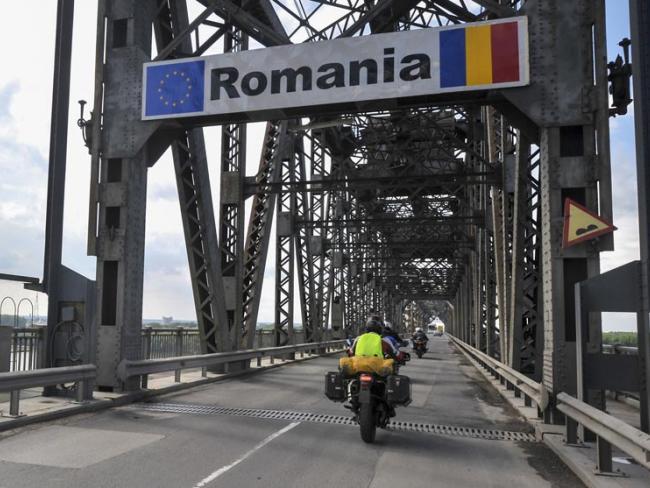
How free movement is wrecking Romania (CPBML guest post)

Romanian border with Bulgaria. Photo Jaggat Rashidi/shutterstock.com
In February this year there was a short news item in the Romanian news. An American automotive parts producer, Delphi Packard, announced that it was shutting its factory in Moldova Noua, in the south west of the country, because it can’t get enough workers to enable full production. 
That item didn’t make it into the newspapers here. That’s hardly a surprise: there’s been plenty of discussion about the effect on Britain of the EU’s free movement of labour – but little about its effect on the countries whose workers come to Britain to work. Those who champion free movement seem oblivious to the wreckage the policy leaves behind.
The 700 or so workers who were employed in the factory will swell the ranks of the local unemployed or, more likely, join the millions of their compatriots who have gone abroad in search of work.

The old and children

Romania has become a country populated mainly by the old and by children. Working-age adults are thin on the ground, except in August and around Christmas, when they come home for a visit. 
And land prices have slumped, says a September 2018 report by Colliers International. Properties in the capital Bucharest are just 50 per cent of their 2008 values – that’s one year after Romania joined the EU.
While the British press is piling up scare stories of Jersey potatoes left to rot in fields when free movement to Britain ends, the nightmare of labour shortages has already hit Romania. 
Describing an idyllic Bruegel-like harvest scene in the country’s Maramures Valley, Timestravel writer Chris Haslam noted this year, “Look closer, though, and you notice that unlike Bruegel’s depiction of strapping youths and comely maidens, nobody in these fields is under 50 years old.”
The young have gone. “The kids have left,” one farmer sighed to Haslam. “My son is driving a delivery truck in Peterborough.” 

Exodus abroad

Since Romania became part of the EU in 2007, 3.7 million Romanians have left to work abroad (though they are still counted officially as part of the population). To put that number in perspective, in 2007 the working age population amounted to 14 million, so around a quarter of the country’s workers have gone.
Many of those who left did so after 2014, when all restrictions on movement for work within the EU were lifted for Romania (and Bulgaria, which joined the EU at the same time as Romania). Before 2014 some countries required work permits. Others, such as Ireland, had allowed unrestricted movement since 2012.
The result was an outpouring of workers – not just into low-paid unskilled manual work. It affected skilled workers, too. In the professions, where work permits are easier to come by, the exodus started even earlier.
“IF YOU THI
And it came swiftly. One of the most acute areas of labour shortage is in medicine. For all the talk of an NHS crisis when Britain leaves the EU, the real crisis is in countries such as Romania. Between 2011 and November 2013 fully a third of Romania’s hospital doctors left the country.
No wonder Professor Vasile Astarastoae, president of the Romanian College of Physicians, talked to The Guardian about “a major crisis”. 
“If you think that the situation is bad in Bucharest, in the rural areas it’s tragic,” he said in an interview, this time to the Financial Times in January 2014. “Those who used to operate there are now filling the gaps left from those who have migrated abroad.” In many rural towns and villages there are no doctors at all.

Disappearing doctors

A year later, Viorel Husanu, president of national healthcare union Sanitas, told the news agency Agerpres that half of Romania’s doctors had left – 14,000 of them, along with 28,000 nurses. According to Deutsche Welle, Germany’s public international broadcaster, they were joined by 43,000 pharmacists. Estimates suggest that the bulk of the doctors have gone to Germany, France and Britain.
By 2017, even The Independent was reporting that a third of hospital positions in the country are lying vacant. In March this year, the government responded by raising medical salaries by 70 per cent, though Romanian doctors will still be able to earn two to three times as much by working in France, Germany and Britain, for example. 
In order to fund the rise, the government hiked employees’ social security contributions by 25 per cent (at the same time as reducing employers’ contributions).
Romania is also haemorrhaging researchers. Around 20,000 now work abroad, according to the Romanian Association for Health Promotion – proportionately, as large a loss as the flight of doctors. These include many of Romania’s best scientists, which makes it harder for those left behind to gain science funding from the EU – virtually the only source available.
Added to this, around 300,000 young Romanians have chosen to study abroad, in search of better education and better job prospects after they graduate. The result is a decimation of the talent available to the country.  

EU funding stranglehold

And there’s a further twist of the EU knife. With its skilled workers lured abroad and its economy severely damaged, Romania has become almost totally dependent on the EU. Most of its public funding – 70 per cent – comes from the EU’s regional funds (for comparison, EU regional funds account for 5% of Austria’s spending). And 70 per cent of its exports go to other EU countries. 
Meanwhile, a report from a German political institute, the Friedrich Ebert Foundation, in 2014 suggests that the outflow of workers is set to continue. Almost 80 per cent of young people (15 to 29) polled by the institute wanted either strongly (42 per cent) or very strongly (36.9 per cent) to be established outside Romania within 10 years.
The EU is turning Romania into a wasteland – and the worst is yet to come, according to the United Nations. It forecast last year that the country’s population, currently around 19,700,000, will fall to 16,400,000 by 2050 and below 12,100,000 by 2100.
That is the EU, destroyer of nations.

…and union rights attacked too

It’s been well documented – and not just in Europe – that when the global financial institutions impose “structural adjustments” it leads to an increase in migration. Romania has had more than its share of these “adjustments”. You’d almost think that encouraging migration was a deliberate policy.
When the financial crisis of 2008 struck, Romania was hit hard. Cap in hand, it went to the EU and asked for €20 billion to keep itself afloat. The “Troika” (European Commission, European Central Bank, International Monetary Fund) that asset-stripped Greece was happy to oblige.
But there were conditions (as in Greece): workers’ rights, both individual and collective, were savagely cut. As the Institute of Employment Rights reported in 2016, new provisions made it easier for employers to hire and fire, as well as introduce “flexible” employment contracts. 
Cross-sectoral collective bargaining was outlawed. Even sectoral collective agreements were hamstrung, and their number fell by 60 per cent. Public sector salaries were slashed by a quarter, along with reductions in benefits.

That is the EU, destroyer of trade union rights.
Republished with full permission, and thanks to the CPBML

Tuesday, 4 September 2018

Giovine Italia: The Legacy of Giuseppe Mazzini

Greetings to Giovine Italia. Here is the translation of selected GI texts (translated by Pietro), followed by the original Italian...

Giovine Italia can be contacted on Facebook at @GiovineIT

On Salary

That it is clear to all: The salary is a theft against the worker, who is unjustly torn a part of the product of his work, in the state that we would go to constitute there will be no room for this form of slavery misrepresented by free and necessary Agreement. All non-family businesses will be socialized: This is a duticious act towards the citizens, too long subjected to the exploiting logic of capitalism that makes work, a noble product of human ingenuity, nothing but a Goods as well as machines and tools. There will be no more antiquated categories of employer and lender, there are only workers freely associated with the purpose of improving and enlarging their work.

It will be the workers all to agree for a proper sharing of the proceeds of their work, the workers will decide how much of the wealth they produce should benefit the company and compensate those who make possible their work, As accountants and representatives.

It is deeply unfair that the family fathers, who are young in the midst of the forces or, in more recent times, elders more near to death than to the retirement should be seen subtracted a considerable part of the wealth from their product, for the gain of the master, Real pig who prefers to wallow in his money slyly stolen to honest workers rather than reinvest it to ensure a more dignified condition to so many of those who should be his compatriots.

In the state that will come, workers will be free to join, because they are freed from the chains of the market and of "competitiveness", which humiliates and kills man. They will be able to associate themselves with free men, having their work at heart and seeking a continuous improvement of this. Not meat machine, but demiurge: This will be the worker in the future state.

'Association is Freedom '

Every hope that by an election the national situation how international can change is simply ridiculous.

The enemy we are fighting is tied to double wire, is well inserted in any institution, whether civil or military, controlled by it. Do not escape from this, this "state" is not reformable, it is impossible to redeem because of the nature extraneous to the true concept of state. The only way to restore freedom to nations is through association. Only it, only the constitution of a true citizenship, external and in absolute conflict with this occupying body that oppresses our lives, can redeem our fate of slaves.
Association means freedom, that everyone has this motto engraved on fire in the mind. Just search for purity in a world in ruins, just the pensive retreats and depressing interiority, because the Nations live serve apostles, serve prophets of the order Venturo. The citizens will organize the state, they are already doing it and it is a reality that will be paleserà as soon as possible to the eyes of our enemies. Our path inevitably leads to victory, our strength, the strength of the people raised against the tyrants cannot be bridled.

Every day of apathy is a thrown day, organize yourselves today, resist the mental occupation of the invader.

Association is freedom.

And it spreads rapidly throughout the country. Giovine Italia was able to found many sections among the Italian emigrants, one of these welcomed Garibaldi just arrived in South America.

The goal of Giovine Italia was to create Italy as a sovereign, free and Republican. This goal, although never achieved, inspired many episodes of the Italian Risorgimento, the first  ...

On Giuseppe Mazzini, our political father

It is clear that our organization is to face the great thinker and patriot who was Giuseppe Mazzini. He was the first to teach us in the modern age to love the homeland and the work, to fight for the freedom of nations and for greater social justice. His political activity as revolutionary, however unfortunate, must be for us an example of absolute dedication and a spirit of sacrifice. Despite the overwhelming forces of the reactionary tyrannies mai Mazzini and his brothers gave themselves up for the losers, and continued barricade after barricade, martyr after martyr to fight for the cause of the Italian nation and any other oppressed people.

Giuseppe Mazzini was born in 1805 in Genoa from a family of medium-high extraction. First addressed to medical studies, he enrolled in law after having passed out several times during necroscopies. Coming here in contact with the university environment of a strong reactionary and pro-pontifical tendency, he began to develop his own political thought, influenced by his mother's religious teachings and his patriotic disposition. Affiliated with the local Carboneria section, he was arrested on charges of conspiracy. Following the failure of the riots of the 30s he wanted to investigate the motives of the defeat, identifying mainly five: the difficulties in propaganda and the involvement of the people due to the extreme secrecy of the seven and their detachment from reality Daily, the excessive trust placed in the aid of the Italian governments and not, the lack of a unified vision of the struggle of the peoples and in particular of the Italian people ("The cause of Modena is not that of Bologna", will say one of the leaders of the rebellion on Modena To a hypothetical support to the city of Bologna), the extreme political fragmentation of the Italian forces and the spiritual subjection towards the French Revolution, which prevented the creation of a methodology of struggle and organization that was applicable To the Italian situation, totally different from the French one both for economic and social conditions.

He decided to found Giovine Italia, an association that he never wanted sect, born mainly among the political exiles and spread rapidly throughout the national territory. Giovine Italia was able to found many sections among the Italian emigrants, one of these welcomed Garibaldi just arrived in South America.

The goal of Giovine Italia was to create Italy as a sovereign, free and Republican. This goal, even if never achieved, inspired many episodes of the Italian Risorgimento, first of all that of the Roman Republic, of which Mazzini himself was consul. Republic which had as its motto "God and People", the most famous summary aphorism of Political thought Mazziniano. In fact, the divine message would manifest in the popular consciousness. Divine that is not confessional but is a progressive source of human ethics, ethics that is not absolute in time and space, but which shares the search for the righteous as an end.

God is therefore a progressive source, because his message is discovered through history, and in it is fulfilled, not decreeing the end but the subsist of it. A God who is therefore the inspiration of human deeds, God who is united with thought and action.

Mazzini is an annountor of a religion of the future, which he has not communicated but prophesed. It would come to continue the path of man in history, going beyond the Christian era. This new faith, this overcoming of the Christian Era would have been possible since the birth of new men, able to go beyond the morality now become corrupt and useless of the time at their contemporary.

The thought of Mazzini therefore arises on the spiritualistic level, but despite this are evident several points in common with socialist thought: from socialization of the companies to programs of popular education, from the secularism of the state to retirement Social. The state advocated by Mazzini can be called ethical, taking up the Hegelian terminology. This state is not oppressive, but it has the task of protecting citizens by encouraging them to personal affirmation in Concord with their brothers and sisters. The Genoese patriot owes what can be defined as a real "Copernican revolution" in the ethical-political sphere, the one that had as its protagonists the duty and the rights. These should be thought not as a characteristic of man as being abstract, but as an attribute of the citizen who accomplishes his duty. It is from the duty that the rights descend, which are not a means to reach freedom, but an end to be attained as a collective body. He argues that a society based on law as a means and not as an end is destined for atomization and individualism, which is more than ever present. Placing the right as the fruit of a duty fulfilled Mazzini places all citizens in a relationship of mutual assistance, in such a way that the attainment of the right of one does not mark the end in search of the right of the other.

In spite of this closeness to certain socialist theses Mazzini is completely adversa the class struggle. The nation must be a union of brothers and there is no place for fights dictated by selfishness, it matters little whether individual or classy. This must not mislead: Mazzini does not defend the abuses of the bourgeoisie or ignores the plight of the Proletarians, he argues that the communion of intent is the only means to solve the social question, it was born from the imposition Interest of the individual at the expense of the community. Mazzini showed himself particularly close to the proletariat by opening his ' rights and duties of man ' addressing the workers, both men and women, of Italy, analyzing their situation and asking for more equitable wages and working hours, in such a way that the Citizen could accomplish that work of intellectual improvement necessary for individual and community progress.

In the same book Mazzini highlights those who are the 3 fundamental duties of the human being: the duties towards humanity, towards the homeland and towards the family.

Mankind, conceived as a set of free peoples, must be bound by bonds of brotherhood and mutual assistance, in fact the battle of every people is that of all peoples. The duties towards it are solidarity between peoples and among individuals, who recognize every human as their own.

The homeland is the Idea that develops on a land, it is a spiritual communion between the past generations, the present and the future, whose political manifestation is the state. It is a large family, it is the largest possible extension of the individual and what connects it to mankind. It must be honoured and defended, bearing in mind that, as within the national community, there must be peace, justice and Concord, so it must be among the various nations.

The family is "the homeland of the Heart", it is where man is born and where he prepares to receive those ethical teachings that will make him a citizen day. Men and women are put on par, recognizing each other's peculiarities and their essential role within the same. Within this each component must show respect for others, putting the family interest above that particular. The family should be the mirror of a functioning state.

In spite of this closeness to certain socialist theses Mazzini is completely adversa the class struggle.

The nation must be a union of brothers and there is no place for fights dictated by selfishness, it matters little whether individual or classy. This must not mislead: Mazzini does not defend the abuses of the bourgeoisie or ignores the plight of the Proletarians, he argues that the communion of intent is the only means to solve the social question, it was born from the imposition Interest of the individual at the expense of the community. Mazzini showed himself particularly close to the proletariat by opening his ' rights and duties of man ' addressing the workers, both men and women, of Italy, analyzing their situation and asking for more equitable wages and working hours, in such a way that the Citizen could accomplish that work of intellectual improvement necessary for individual and community progress.

In the same book Mazzini highlights those who are the 3 fundamental duties of the human being: the duties towards humanity, towards the homeland and towards the family.

Mankind, conceived as a set of free peoples, must be bound by bonds of brotherhood and mutual assistance, in fact the battle of every people is that of all peoples. The duties towards it are solidarity between peoples and among individuals, who recognize every human as their own.

The homeland is the Idea that develops on a land, it is a spiritual communion between the past generations, the present and the future, whose political manifestation is the state. It is a large family, it is the largest possible extension of the individual and what connects it to mankind. It must be honoured and defended, bearing in mind that, as within the national community, there must be peace, justice and Concord, so it must be among the various nations.

The family is "the homeland of the Heart", it is where man is born and where he prepares to receive those ethical teachings that will make him a citizen day. Men and women are put on par, recognizing each other's peculiarities and their essential role within the same. Within this each component must show respect for others, putting the family interest above that particular. The family should be the mirror of a functioning state.

The human being is aimed at progress, that is, the gradual growth, both material and spiritual, provoked by the path of history. It is realized through the association and the Freedom, key concepts of its political thought. The association is the way in which people with similar functions gather to organize themselves in order to overcome by force and capacity the individual and to orient the intent on a common directrix, not only common to the category but to all the human groups. This allows the individual to live and work in harmony with his peers, thus avoiding unfair competitions, abuses and wasting resources. Freedom refers to a community transcendent the individual and is realized completely within this. It is first of all to put oneself in an organic context, not as a spectator but as an agent, to whom a mission is entrusted according to its own capacities. Freedom is therefore first of all a collective thing. From collective freedom comes the freedom of the individual, freedom that is limited by that of his brothers.


Che sia chiaro a tutti: il salario è un furto nei confronti del lavoratore, al quale viene strappata ingiustamente una parte del prodotto della sua opera, nello Stato che andremmo a costituire non ci sarà spazio per questa forma di schiavismo travisata da libero e necessario accordo. Tutte le imprese non a conduzione familiare saranno socializzate: questo è un atto doveroso nei confronti dei cittadini, da troppo tempo sottomessi alle logiche sfruttatrici del capitalismo che fa del Lavoro, nobile prodotto dell’ingegno umano, null’altro che una merce al pari di macchine e utensili. Non esisteranno più le antiquate categorie di datore di lavoro e prestatore d’opera, vi saranno solamente lavoratori liberamente associati al fine di migliorare ed ingrandire la propria opera.

Saranno i lavoratori tutti ad accordarsi per una giusta spartizione dei proventi del loro lavoro, saranno i lavoratori a decidere quanto della ricchezza da loro prodotta debba andare a beneficio dell’azienda e a compensare coloro che rendono possibile il loro lavoro, come contabili e rappresentanti.

È profondamente ingiusto che padri di famiglia, che giovani nel pieno delle forze o, in tempi più recenti, anziani più prossimi alla morte che alla pensione debbano vedersi sottratta una considerevole parte della ricchezza da loro prodotto, per il guadagno del padrone, vero e proprio maiale che preferisce sguazzare nel proprio denaro furbescamente rubato ad onesti lavoratori piuttosto che reinvestirlo per garantire una condizione più dignitosa a tanti di quelli che dovrebbero essere suoi compatrioti.

Nello Stato che verrà, i lavoratori potranno associarsi liberamente, perché liberi dalle catene del mercato e della “competitività”, che umilia e uccide l’Uomo. Potranno associarsi da Uomini liberi, avendo a cuore la propria opera e cercando quindi un continuo miglioramento di questa. Non macchina di carne, ma demiurgo: questo sarà il Lavoratore nello Stato futuro.

'Associazione è Libertà'

Ogni speranza che tramite un’elezione la situazione nazionale quanto internazionale possa cambiare è semplicemente ridicola.

Il nemico che stiamo combattendo è legato a doppio filo, è ben inserito in qualsiasi istituzione, sia essa civile o militare, da esso controllata. Non si scappa da ciò, questo “stato” non è riformabile, è impossibile da redimere proprio per la natura estranea al vero concetto di Stato. L’unico modo per ridare Libertà alle Nazioni è tramite l’associazione. Solamente essa, solamente la costituzione di una vera cittadinanza, esterna e in conflitto assoluto con questo organismo d’occupazione che opprime le nostre esistenze, può riscattare la nostra sorte di schiavi.

Associazione significa Libertà, che ognuno abbia questo motto inciso a fuoco nella mente. Basta cercare la purezza in un mondo in rovine, basta i ritiri pensosi e le interiorità deprimenti, perché le Nazioni vivano servono Apostoli, servono profeti dell’ordine venturo. I cittadini organizzeranno lo Stato, lo stanno già facendo ed è una realtà che si paleserà quanto più presto agli occhi dei nostri nemici. La nostra strada conduce inevitabilmente alla Vittoria, la nostra forza, la forza del popolo sollevato contro i tiranni non può essere tenuta a freno.

Ogni giorno di apatia è un giorno buttato, organizzatevi oggi, resistete all’occupazione mentale dell’invasore.

Associazione è Libertà.

On Giuseppe Mazzini, our political father

È evidente che la nostra organizzazione si rifaccia al grandissimo pensatore e patriota che fu Giuseppe Mazzini. Egli fu il primo ad insegnarci nell’età moderna ad amare la Patria ed il Lavoro, a lottare per la libertà delle Nazioni e per una maggiore giustizia sociale. La sua attività politica di rivoluzionario, per quanto sfortunata, deve essere per noi esempio di assoluta dedizione e di spirito di sacrificio. Nonostante le forze soverchianti delle tirannie reazionarie mai Mazzini e i suoi fratelli si diedero per vinti, e continuarono barricata dopo barricata, martire dopo martire a lottare per la causa della Nazione italiana e di ogni altro popolo oppresso.

Giuseppe Mazzini nacque nel 1805 a Genova da una famiglia di estrazione medio-alta. Indirizzato dapprima agli studi medici, si iscrisse a legge dopo essere svenuto diverse volte durante delle necroscopie. Venuto qui a contatto con l’ambiente universitario di spiccata tendenza reazionaria e filo-pontificia, iniziò a sviluppare un proprio pensiero politico, influenzato dagli insegnamenti religiosi della madre e dalla sua indole patriottica. Affiliatosi alla locale sezione della Carboneria, venne arrestato con l’accusa di cospirazione. In seguito al fallimento dei moti degli anni ’30 volle indagare sui motivi della disfatta, individuandone principalmente cinque : Le difficoltà nella propaganda e nel coinvolgimento del popolo dovute all’estrema segretezza delle sette e il loro distacco dalla realtà quotidiana, l’eccessiva fiducia riposta nell’aiuto dei governi italiani e non, la mancanza di una visione unitaria della lotta dei popoli e in particolare del popolo italiano ( “La causa di Modena non è quella di Bologna”, dirà uno dei capi della rivolta modenese riguardo ad un ipotetico supporto alla città di Bologna), l’estrema frammentazione politica delle forze italiane e la sudditanza spirituale nei confronti della Rivoluzione Francese, la quale impediva di creare una metodologia di lotta e di organizzazione che fosse applicabile alla situazione italiana, del tutto differente da quella francese sia per condizioni economiche che sociali.

Decise quindi di fondare la Giovine Italia, associazione che egli mai volle setta, nata principalmente tra gli esuli politici e diffusasi rapidamente su tutto il territorio nazionale. Giovine Italia riuscì a fondare anche numerose sezioni fra gli emigrati italiani, una di queste accolse Garibaldi appena giunto in Sud America.

L’obiettivo della Giovine Italia fu quello di creare l’Italia come una, sovrana, libera e repubblicana. Questo obiettivo, seppur mai raggiunto, ispirò moltissimi episodi del Risorgimento italiano, primo fra tutti quello della Repubblica Romana, di cui lo stesso Mazzini fu Console.Repubblica che ebbe come motto “Dio e Popolo“, celeberrimo aforisma riassuntivo del pensiero politico mazziniano. Nella coscienza popolare si manifesterebbe infatti il messaggio divino. Divino che non è confessionale ma è sorgente progressiva dell’etica umana, etica che non è assoluta nel tempo e nello spazio, ma che condivide la ricerca del giusto come fine.

Dio è dunque sorgente progressiva, poiché il suo messaggio è scoperto attraverso la Storia, e in essa si compie, non decretando la fine ma il sussistere di essa. Un Dio che è quindi ispirazione delle gesta umane, Dio che è unita di pensiero e azione.

Mazzini si fa annunciatore di una religione dell’avvenire, da lui non comunicata ma profetizzata. Essa verrebbe per proseguire il cammino dell’uomo nella Storia, andando oltre l’era Cristiana. Questa nuova fede, questo superamento dell’Era Cristiana sarebbe stato possibile dalla nascita di uomini nuovi, capaci di andare oltre alla morale ormai divenuta corrotta ed inutile dell’epoca a loro contemporanea.

Il pensiero di Mazzini si pone quindi sul piano spiritualista, ma nonostante questo sono evidenti diversi punti in comune con il pensiero socialista: dalla socializzazione delle imprese a programmi di educazione popolare, dalla laicità dello Stato alla previdenza sociale. Lo Stato auspicato da Mazzini può essere definito etico, riprendendo la terminologia hegeliana. questo Stato non è oppressivo, ma ha il compito di tutelare i cittadini spronandoli all’affermazione personale in concordia con i propri fratelli. Al Patriota genovese si deve quella che può essere definita una vera e propria “rivoluzione copernicana” nell’ambito etico-politico, quella che ebbe come protagonisti il Dovere e i diritti. Questi vanno pensati non come una caratteristica dell’uomo in quanto essere astratto, ma come attributo del cittadino che compie il proprio dovere. E’ dal dovere che discendono i diritti, i quali non sono un mezzo per arrivare alla libertà, ma un fine da raggiungere come ente collettivo. Egli sostiene che una società basata sul diritto come mezzo e non come fine sia destinata all’atomizzazione e all’individualismo, considerazione più che mai attuale. Ponendo il diritto come frutto di un dovere compiuto Mazzini pone tutti i cittadini in un rapporto di reciproca assistenza, in modo tale che il raggiungimento del diritto di uno non segni la fine alla ricerca del diritto dell’altro.

Nonostante questa vicinanza a certe tesi socialiste Mazzini avversa in maniera totale la lotta di classe. La Nazione deve essere unione di fratelli e non vi è posto per lotte dettate da egoismi, poco importa se individuali o di classe. Questo non deve però trarre in inganno: Mazzini non difende i soprusi della borghesia o ignora la condizione dei proletari, egli sostiene che la comunione d’intenti sia l’unico mezzo per risolvere la questione sociale, essa infatti è nata dall’imposizione dell’interesse del singolo a scapito della collettività. Mazzini si mostrò particolarmente vicino al proletariato aprendo il suo ‘Dei Diritti e dei Doveri dell’uomo’ rivolgendosi agli operai, sia uomini che donne, d’Italia, analizzando la loro situazione e chiedendo salari e orari di lavoro più equi, in modo tale che il cittadino potesse compiere quel lavoro di miglioramento intellettuale necessario al progresso individuale e comunitario.

Nello stesso libro Mazzini evidenza quelli che sono i 3 doveri fondamentali dell’essere umano: i doveri verso l’Umanità, verso la Patria e verso la Famiglia.

L’Umanità, pensata come insieme di popoli liberi, deve essere legata da vincoli di fratellanza e di reciproca assistenza, difatti la battaglia di ogni popolo è quella di tutti i popoli. I doveri verso di essa sono la solidarietà fra i popoli e fra gli individui, i quali riconoscono ogni umano come loro simile.
La Patria è l’Idea che si sviluppa su di una terra, è una comunione spirituale fra le generazioni passate, le presenti e le future, la cui manifestazione politica è lo Stato. Essa è una grande famiglia, è la più grande estensione possibile dell’individuo e ciò che collega esso all’Umanità. Essa va onorata e difesa, tenendo ben presente che come all’interno della comunità nazionale devono vigere pace, giustizia e concordia, così dev’essere fra le varie Nazioni.

La Famiglia è “la Patria del Cuore”, è dove l’uomo nasce e dove si prepara a ricevere quegli insegnamenti etici che lo renderanno un giorno cittadino. Uomini e donne sono messi alla pari, riconoscendo ad ognuno le proprie particolarità ed il proprio ruolo essenziale all’interno della stessa. All’interno di questa ogni componente deve mostrare rispetto per gli altri, mettendo l’interesse famigliare al di sopra di quello particolare. La Famiglia dovrebbe essere lo specchio di uno Stato funzionante.

L’essere umano è volto al Progresso, ossia alla graduale crescita, sia materiale che spirituale, provocata dal percorso della Storia. Esso si realizza tramite l’Associazione e la Libertà, concetti chiave del suo pensiero politico. L’associazione è il modo attraverso il quale persone con funzioni simili si riuniscono per organizzarsi al fine di superare per forza e capacità il singolo e per orientare gli intenti su di una direttrice comune, non comune solamente alla categoria ma a tutti i gruppi umani. questo permette al singolo di vivere e lavorare in armonia con i suoi simili, evitando così concorrenze sleali, soprusi e sperperio di risorse. La libertà fa riferimento ad una comunità trascendente il singolo e si realizza completamente all’interno di questa. Essa è prima di tutto porsi in un contesto organico, non da spettatore ma da agente, al quale è affidata una missione a seconda delle proprie capacità. La Libertà è quindi prima di tutto un qualcosa di collettivo. Dalla Libertà collettiva nasce in seguito la libertà dell’individuo, libertà che è limitata da quella dei suoi fratelli.

UNRWA are terrorists

The SMPBI has been campaigning since the 7th October Massacre in Israel for the paliarstinan terrorists to be exposed for the murdering filt...