Wednesday, 24 October 2018

Wilberg on Wednesday - The Illness Is The Cure pt 16/46


Illness as Deviance


“In Latin norma means ‘square’, the carpenter’s square. Until the 1830’s the English word normal meant standing at a right angle to the ground. During the 1840s it came to mean conformity to a common type. In 1880s, in America it came to mean the usual state or condition not only of things but of people… [It] was first given a medical connotation around 1840 by August Comte … During the last decade of the nineteenth century, the norms and standards of the hospital became fundamental criteria for diagnosis and therapy. For this to happen … it was sufficient that disease as deviance from a clinical standard make medical intervention legitimate… “
Ivan Illich, Medical Nemesis, the Expropriation of Health

Though they may or may not think very deeply about what is wrong with the social and economic system they live in, most people who suffer from being stuck in poverty, poor housing or boring, low-pay jobs would not think of asking what is wrong with them. Nor do people who suffer from the experience of war, floods or other natural catastrophes, deaths in their family etc. Yet when it comes to suffering experienced in the form of bodily symptoms of ‘illness’, then, unless their condition is clearly related to their immediate environment or living conditions (for example starvation, lack of clean water, radioactive emissions etc.) the first question people tend to ask themselves is ‘What’s wrong with ME?’

The question itself carries several implications. Firstly, the word ‘wrong’ implies that something abnormal and unnatural is going on in their bodies, i.e. a deviationfrom some normof ‘healthy’ bodily functioning. Secondly, the question implicitly asks for a ‘cause’ of the body’s deviant behaviour – and usually seeks an answer in the form of some medically diagnosable ‘illness’ or ‘disease’. Indeed the sufferer might already be asking themselves speculative diagnostic questions such as ‘Am I getting a cold?’ or ‘Might I have cancer?’.

A third, even worse implication is suggested by the little word ‘me’ – the implication of it being that not just a person’s ‘mind’ or ‘body’ but they themselves are ‘deviant’ in some way. The belief that illness is a form of deviant bodily state or even deviant behaviour may be reinforced by feelings of shame or anxiety around it – for example, shame or anxiety about calling in sick and taking a day or more off work.

Such feelings are further reinforced if, as was revealed in a recent documentary on working conditions and regulations in Amazon warehouses – employees are actually given a ‘black point’ for simply taking half a day off work due to illness – or even just feeling tired at the end of a gruelling 10- hour night shift – and thus not fulfilling their pre-set performance targets. Worse still, the Amazon rule was ‘three strikes’ (three black points) and you’re out – quite literally out of a job – and that quite irrespective of whether your symptoms (for example a bad or even chronically injured back) might actually be dueto the excessive strain placed upon your body by the job itself (for example from having to constantly push heavy trolleys). In the case of Amazon, we must include also the mental stress of having the maximum time in which you are expected to pick up another item for the trolley literally counted down in seconds on a hand-held monitor carried by every employee).

This is but a particularly extreme example of how the very phenomenonthat we call ‘illness’ is never itself brought into question. Is a worker’s ‘illness’ merely their bad back, or some other psychological stress or physical strain symptom? Is it enough to have a doctor diagnose the patient’s symptoms (for example as tendonitis or a damaged vertebra ) to know what’s ‘wrong’ – to know what the ‘illness’ is? Or is what is really‘wrong’ the fact that institutionalised biological medicine limits the very phenomenon of illness to the patient’s body and mind – failing to look for let alone ‘diagnose’ anything fundamentally ‘wrong’, ‘ill’ or ‘sick’ in their life world.

This narrow biomedical concept of ‘illness’ as a phenomenon is particularly obvious in the case of so-called ‘mental illness’ – where a person may for example, be medically labelled as suffering from a ‘psychiatric disorder’ called ‘depression’ – yet without taking into account any of the countless entirely good and valid reasonsa person might have for feeling depressed, even severely or ‘clinically’ depressed (for example the actual or looming death of a spouse, loss of a home or job etc.). More broadly still (and though it seems almost a too blindingly obvious question to even ask, though it rarely is asked) what sort of medical ‘mindset’ is it that regards ‘depression’, ‘cancer’ and even ‘Post Traumatic Stress Disorder’ as ‘illnesses’ – but not exploitative wage-slaveryor war – not even dropping atom bombs on whole populations or using carcinogenic uranium tipped bullets? Similarly, what sort of medical mindset is it that regards liver cirrhosis as an ‘illness’ – but not the mass marketing of alcoholic drinks or a culture of binge-drinking? The list of possible examples here is endless, yet they all point to a wholly artificial division between the sickness of individuals and that of society as a whole and social relationships in general – including the doctor-patient relationship – a division maintained not just by medical practitioners but all too often by their patients as well.

From the first question (‘What’s wrong with me?’) comes another: ‘What can I do about it?’. This second question too, carries many hidden implications and presuppositions. One major presupposition is that if a person has discomforting symptoms of any sort, then the natural and obvious course of action is to seek to get rid of them – and to do so both as soon as possible and by any medical means available. The idea that an illness may be a natural expression or even a healthyresponse to fundamentally unhealthy ways of living and relating, to distressing life experiences – or to a fundamentally sick world – does not even enter the medical mindset shared by most doctors and patients alike. Instead it is as if the whole place of medicine in society is simply to eradicate the symptoms of a sick society by ‘privatising’ them – reducing them to a personal condition of individuals and one that can be diagnosed and treated independently of their larger social and relational context of emergence.

What Martin Buber said of so-called ‘mental illness’, namely that “sicknesses of the soul are sicknesses of relation” can therefore just as well be said of so-called ‘physical illnesses’ too – ‘sicknesses of the body’. Indeed it may be argued that ‘sicknesses of the body’ are there precisely to express and make us aware of ‘sicknesses of the soul’. For the human body is not just a more or less well-functioning biological machine but a living relational language of the human being. And just as ‘body language’ constitutes the major component of all human communication and relating, so also is ‘bodily sensing’ (Gendlin) our most important way of staying aware of how we are experiencing our lives and life world as a whole – being a type of sensitive field awareness of that world as opposed to the more focussed awareness we apply to everyday activities in it.

As Carlos Castaneda put it: “The bodyis an awareness.” This is an understanding central to the very essence of what we call ‘body’ – a word whose oldest etymological meaning is simply ‘to be aware’ or ‘be awake’. Quite simply, the body itself, being itself so intimately connected with the world around us, also is aware of and knowsthat world more deeply and intimately than the intellect alone. Yet we are faced with medical mindset that, whilst it claims a huge amount of intellectual knowledge aboutthe body, at the same time totally ignores or devalues the body’s own knowing – that sensitive knowing awareness which the body most essentially is.

A second presupposition of the ‘What can I do about it?’ question is (except in emergency situations or where simple remedies suffice) the belief that anything needs to be ‘done’ at all. For more often than not, when patients present physicians with symptoms, their principal motive – beside the basic infantile one of wanting a parent figure who will ‘make it better’ – is simply to seek acknowledgement or ‘registration’ of their discomfort or suffering by another human being and – through the official role of the doctor in society – by society at large. The patient may also, consciously or unconsciously, be seeking someone who will recognise the ways in which they feel not just ill-at-ease with their bodies but ill-at-ease with their lives, i.e. recognition of the existential or life dis-easethat their body is communicating through their symptoms.

This is not the same thing as asking for a medically recognised ‘disease’ to be diagnosed. For though this is something which may be a comfort for some, for most patients diagnostic testing and its results often constitutes a further step on the road of separating their body from their being, their ‘illness’ from their life– including their life history, relationships, circumstances and conditions, dilemmas and ‘dis-ease’. Taking this step may also lead to suggestions for medical treatment which only serve to reinforce this separation of illness and life, and which often also carry with them another presupposition latent in the question ‘What can I do about it?’. This is the presupposition that if nothing is done about it, ‘it’ can or will only get worse.

On one level, we all have a tendency to respond to any form of bodily suffering in a basically infantile way – feeling upset by it, wanting it to go away immediately or seeking someone or something that will ‘make’ it go away – make us ‘better’ as soon as possible. We may also believe that if nothing is done the symptoms will either persist for ever or get worse in ways that are a further source of fear. This belief and the fear associated with it is often actively intensified by physicians (usually out of their own fearof negligence in ignoring the possibility of some serious or even life-threatening disease developing if what may be its first signs are not looked at more closely or its still harmless first stages not treated promptly). Indeed we could go so far as to say that the mindset of biological medicine is based on a fundamentallyparanoid relation to the human body and bodily states. Thus the often amorphous sense of ‘not feeling ourselves’ that is often taken as the first sign of ‘illness’ may already alienate us from our bodies – leading us to experience them in a paranoid way as alien or persecutory bodies, altering and threatening the usual bodily sense of selfwe take for granted.

In today’s medicalised world however, any suggestion that we might overcome this sense of alienation from our bodies in the way that human beings used to do for millennia – by accepting andpatiently bearing the discomforts, pain or incapacity we are suffering– is regarded as a dangerous form of defeatism in the on-going medical ‘war’ against disease, i.e. against whatever genes, cells or microorganisms are currently held by medical ‘science’ to be the alien disease ‘entities’ responsible for that suffering. The role of the physician then, is reduced to one of merely identifying this alien entity as precisely as possible in medical terms, and then medically exterminating or surgically excising it. Hence instead of exercising the art of patiencein the face of suffering people become willing ‘patients’, often colluding with physicians in a common war against the supposedly alien entities inhabiting their bodies. The biological fact that there are, all the time, millions of times more bacteria than cells in a ‘healthy’ human body (including pathogenic ones) is quietly ignored – as are many proven medical and biological facts that fly in the face of biological medicine.

The fact of the matter is also that in industrialised societies billions of people – even if not‘ill’ in medical terms – are already unhealthily alienated from their bodies. They are so simply by virtue of having to sell their bodies’ physical and mental capacities to an employer – for them to use or abuse at will for in the pursuit of commercial and corporate profit. Yet instead of this fact – this ‘sickness of relation’ – being taken as an illness in itself it is meekly accepted as an unalterable economic ‘given’.

After all, we all have to ‘earn a living’, even if we have no option but to do so through what Marx described so well as “the alienation of labour” – a big part of which was the alienation of the labourer from his or her own body. The result is that ‘health’ as such has increasingly come to be defined as mere ‘fitness for work’, i.e. the capacity to ‘function’ economically and in this way conform to and sustain an economic system based on wage-slavery.

That the human body should rebelagainst this type of alienation and slavery through symptoms of ‘illness’ – even and particularly if as human beingswe do not ourselves rebel – is surely a healthy response (and that even and particularly if it incapacitates or disables the individual’s capacity to merely function economically as a ‘healthy’ corporate wage-slave).

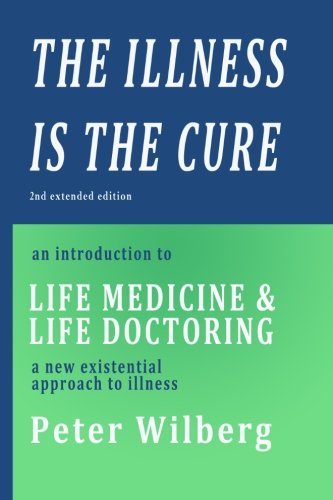
And yet the pseudo-religious dogma and moralistic judgement that illness implies something ‘wrong’ with the body – or even with the person who is deemed ‘ill’ – stubbornly persists, thereby providing an on-going justification for the increasing medicalisation – and commercially highly lucrative medication– of almost every form of human suffering. Thus despite the no less commercialised proliferation of ‘alternative’ forms of medicine the true alternativeto biological medicine finds almost no voice in our society. This is the alternative of understanding the very phenomenon of ‘illness’ in a way that transcends the boundaries of the body, of seeking and finding meaningin illness rather than seeking medical cures for it. By this I mean understanding what we call illness as something with an innatelyhealing function – not something in need of cure or elimination but there to cure us – to free us from intrinsically unhealthy ways of thinking, relating, living and ‘making a living’. Hence the provocative title of my book – ‘The Illness is the Cure’.

One fundamental way in which each of us can therefore begin to alter our whole understanding of and relation to illness from this new and radical perspective is therefore precisely not to ask ourselves the sort of questions referred to at the beginning of this essay- questions such as what is ‘wrong’ with us or with our bodies. Instead we can ask ourselves what it is that our bodies are telling us is wrong with our lives. Similarly, instead of asking ourselves what we can ‘do’ to cure our symptoms we can ask ourselves what our bodies themselves are urging – or even forcing us – to start or stop doing in and with those lives (by which I do not mean things like stopping smoking or starting on the latest health tips and fads).

It is the reduction of life as such (Greek bios) in all its dimensions to the life of the body, and the reduction too of life’s own meaningful ‘speech’ (bios logos) to a single science called ‘biology’ that together constitute the most basic falsehoods on which modern ‘biological’ medicine is built – preying on our need for instant fixes for any form of suffering.

Therefore a second way of fundamentally changing our relationship to illness is, like the Stoics and Pyrrhronian skeptics of ancient Greece, to refuse to judgeany particular way of experiencing our body – and with it our minds – as ‘better’ than any other. This means also breaking with the conventional association of health with happiness. For it might well be that by fully accepting a bodily state of suffering associated with ‘illness’, not only do we not cease to be capable of happiness, but might actually experience a new and deeper state of ‘happiness’ or ‘well-being’ – one wholly independentof the presence or absence of ‘illness’ or suffering in our lives.

What we are speaking of is a depth of contact with our own innermost being (Greek daimon) that in and of itself constitutes a state of ‘well-being’ – one that the Greeks called eudaimonia.

Tuesday, 23 October 2018

Russ James on Alan Cox's Radion Show 10pm 25.10.18

Reminder:

Russ James will be on Alan Cox's Understanding Spirit radio show, at 10pm, this Thursday, the 25th October.  To listen live, go to Alan's website and follow the links:
https://alancox.podomatic.com/

This is the last chance for suggestions for topics to discuss.  Please send them to the internal email or for non-members, to jointhesmpbi@gmail.com

Sunday, 21 October 2018

Socialist Quotes for Sunday Reflection pt 33

Globalization encompasses three institutions: global financial markets and transnational companies, national governments linked to each other in economic and military alliances led by the United States, and rising "global governments" such as World Trade Organization (WTO), IMF, and World Bank.
Charles Derber argues in his book People Before Profit, "These interacting institutions create a new global power system where sovereignty is globalized, taking power and constitutional authority away from nations and giving it to global markets and international bodies". Titus Alexander argues that this system institutionalises global inequality between western countries and the Majority World in a form of global apartheid, in which the IMF is a key pillar.

The establishment of globalised economic institutions has been both a symptom of and a stimulus for globalisation. The development of the World Bank, the IMF regional development banks such as the European Bank for Reconstruction and Development (EBRD), and multilateral trade institutions such as the WTO signals a move away from the dominance of the state as the exclusive unit of analysis in international affairs. Globalization has thus been transformative in terms of a reconceptualising of state sovereignty

Derber, Charles (2002). People Before Profit. New York: Picador.

Alexander, Titus (1996). Unravelling Global Apartheid: an overview of world politics. Polity press. pp. 127–133.

..................

“In all of Europe, in the whole world, political power is at the service of high finance and banking, it submits to the abject impositions of thieves and fraudsters working together in legal consortium. Not even in the worst times of barbarism and slave trade were human beings trafficked with such cold cruelty. Nations are put on the market. Public life exists only as a filthy commerce practiced within the confines of sterile institutions and hollow laws.”

- Gabriele D’Annunzio in an address to his Arditi, Fiume, 1920

...............

October 20th, marks the anniversary of Gaddafi’s assassination. Let us recall the words of his will and testament:

I call on my supporters to continue the resistance, and fight any foreign aggressor against Libya, today, tomorrow and always.

Let the free people of the world know that we could have bargained over and sold out our cause in return for a personal secure and stable life. We received many offers to this effect but we chose to be at the vanguard of the confrontation as a badge of duty and honour.

Even if we do not win immediately, we will give a lesson to future generations that choosing to protect the nation is an honour and selling it out is the greatest betrayal that history will remember forever despite the attempts of the others to tell you otherwise.

..............

Saturday, 20 October 2018

Freedom is an Illusion without Economic Sovereignty


The present government is possibly the least trusted government in living memory, and it is certainly a contender for the least democratic.  At a time when the policies of government have pushed the people to think only of how they are to survive, the cynical opportunists are wasting no time to break every election pledge, and push forward with an agenda that the people did not, and would not, vote for.

Under the lie of 'austerity', the government are transferring wealth away from the poorest sections of society, into the coffers of the richest.  Theresa May has stated that austerity is over.  The austerity policies continue, so this is another sound bite without substance.  Giving tax breaks to their friends and their masters in the Establishment, and cutting services for the common people, the government insist that only by encouraging enterprise and cutting bureaucracy can the country struggle out of recession.  What they fail to mention is that every recession is artificially created in order to redistribute wealth away from the people.

The re-privatisation of the Banks taken into public and part-national ownership under the previous regime, was conducted at a loss to the taxpayer.  Yet again, the bankers gained at our expense.  If the government was honest in any way, it would admit that the banking crisis was created to increase the grip of international finance, and that the only solution to our economic woes is for the government to issue its own currency, and pay the banks what they are owed in debt, using worthless pieces of paper created with no backing - in exactly the same way as the banks created the debt in the first place.  Would the banks then fail?  Hopefully so.  However, what would be guaranteed would be that the people would owe the banks nothing, and the graduated income tax system introduced as a temporary measure to repay the Bankers' loans to pay for the war against Napoleon, could finally be abolished.  Of course, as the politicians serve the Bankers and not the people, this outcome could not be expected under the present system.

On top of the theft of the people's money; in effect reducing us all to wage-slaves who have no option but to pay their taxes forever, the government have 'relaxed' green belt restrictions, allowing for the already over-populated UK to be flooded with millions more people who will be housed at the cost of the destruction of the land.  Our country already relies on imports of food, thus an increase in population can only make the suffering which will come when food imports are interrupted, more devastating than if the population stayed at roughly the ridiculous level it is at now. 

Tinkering with the economy is the way of political parties of ever hue.  What the main parties will not do is to bring about full economic sovereignty for the country.  As long as the issue of currency is in the hands of the banks, the country will never be free.

The great American, Thomas Jefferson stated that
"I believe that banking institutions are more dangerous to our liberties than standing armies."

That was true for the early United States, and it is true now in this and every other country.

Relaxing austerity is mere smoke and mirrors.  Theresa May will not tackle the banks, nor will Jeremy Corbyn.  Refusal to even consider breaking the power of the banks, is certain proof of allegiance to the economic system they are a central part of.

Friday, 19 October 2018

Act NOW: Stop the GRA Reform.

Image thanks to Socialist Feminist Network: https://www.socfem.net/

The deadline for filling out the Gender Recognition Act Reform Consultation Survey is 11pm tonight.

If you have not had a chance to voice your opposition to a reprehensible piece of legislation which will wipe out hard fought for Women's Rights, and will be a Charter for Paedophilia, you need to go online NOW and do so.  The site you need to visit is:

https://consult.education.gov.uk/government-equalities-office/reform-of-the-gender-recognition-act/consultation/intro/

If self-id for Gender is allowed, it will encourage the manipulation of impressionable children, into undergoing medical assault which, whilst highly profitable to the pharmaceutical companies, will have life-long devastating effects upon the children themselves.  Reform of the legislation will embolden paedophiles as it will enshrine in law the sexualisation of children.  The media is pushing the transfascist agenda, the education system is in lock-step, the government and so-called opposition parties are equally pushing this vile anti-reality insanity.

The powers that be have consistently undermined the safety of Women and Children. This is just another part of the total removal of all defences against misogynist control.  Major corporations back this move.  Capitalists only back that which increases their revenue.  The GRA Reform will destroy the lives of those who are pressured into undergoing 'sex-change' (which is in any case impossible).  It will also wreck all the progress towards equality which women have fought hard for.

Already we have seen Men self-identifying as Women in Sport, with the recent case of a man 'winning' the Women's World Cycling Championships.  His physiology gave him an advantage over women, turning him from a loser in Men's Sport, into a 'winner' by cheating in Women's Sport.  In another case, a Woman Boxer was seriously injured when beaten (literally) by a Man who could not defeat other men in a boxing ring, so chose to pretend to be a woman so that he could legally assault women in the ring and gain a 'victory' which he had no right to.

Self-id will exacerbate the problems women and children are already facing, and will also have an impact upon Trans-Sexuals, who will be lumped in with people who larp gender roles to be fashionable, and dangerous perverts and/or rapists who will use self-id as an opportunistic way of gaining access to more victims.

Self-id will encourage homosexuals to identify as being in the wrong body, which is profoundly homophobic, as well as scientifically nonsensical.

Self-id will allow even more predators access to Women's Refuges, Prisons, and into female only organisations such as the Girl Guides.  Do you want your daughter to have to share a sleeping space with a boy who claims to be a girl?  At best he is mentally ill (which is bad enough), at worst you could be putting your child at risk of rape.

SMPBI has a policy of not asking people about their sexuality.  We don't see an individual's sexual preference as any more relevant than his or her taste in music (with the obvious exception of paedophiles/rapists and indeed music which promotes the same).  We do not see homosexuality as something to be ashamed of, but the GRA Reform will embolden those who do.  Children who are homosexual will be encouraged to see themselves in need of costly treatment to 'cure' same sex attraction, with expensive 'therapy' including surgery being pushed on them to put them in the 'right' body, rather than accept that they prefer their own sex to the opposite one.

GRA Reform is crafted in such a way to legalise and normalise homophobic bigotry, sexism, paedophilia, misogyny etc, all at the same time as generating vast profits for the trans industry.  It has to be stopped.  We have to stop it now.  The deck is stacked against us, but we must shout with the voice of sanity now, so that should the Reform happen, we have the strongest base possible to fight back.

If you are on the fence, you need to get off it now.  If you need more information, a good place to start is with Radical Snippet's banned facebook writings, now available at:

https://www.patreon.com/posts/why-we-cant-just-22159537

You're online already, so there is no excuse for doing nothing.  Go to the Consultation link now (it closes at 11pm):
https://consult.education.gov.uk/government-equalities-office/reform-of-the-gender-recognition-act/consultation/intro/
Do it NOW!

Thursday, 18 October 2018

Liberal-extremism is a Disease of the Mind


Psychology is a much mocked science.  Captured early on by the charlatan, Sigmund Freud, Psychology will forever be tainted by its association with the plagiarist and sexual deviant, and by those who followed in his wake.  However, whereas the presence of shysters is undeniable, the willingness to reject the study out of hand, is a reaction we undertake at our peril.  The motley collection of cranks and politically correct psycho-social engineers hiding behind the claims to be academic researchers, have done much to aid the advance of liberal extremism, but this truth only underlines the validity of the science itself.

Carl Gustav Jung began in the shadow of Freud, but soon realised that the entire direction of psychology was wrong, and that an understanding of the workings of the mind could not be generalised to everyone, regardless of cultural background.  Understanding that at our very essence we are spiritual creatures, Jung's greatest gift to our understanding was his emphasis on the inner psychic/spiritual unity of culturally kindred peoples.  Absolutely rejecting the imposition of Freudian Psychological analytical techniques on anyone except people raised under the debilitating conditions of a neurosis founded on a persecution AND superiority complex, Jung understood that each culture can be said to have a distinct soul - its very own collective unconscious - and that attempts to analyse others through the looking glasses of our own origins, are futile.  Whereas Freud is a key tool of the Globalists, Jung stands as a staunch defender of freedom in a multipolar world.

The deliberate muddying of the science of Psychology, by elevating the theories of certain personalities, and ridiculing those of others, has been a part of the politicisation of science.  Just as social anthropologists and ecologists can be bought to serve the globalisers, sadly, so can a significant number of scientists of every discipline.  The internal debates and the public mockeries which shroud our perception of the study of ourselves, masks the most fundamental fact; that the Bourgeois Ruling Class fully appreciate how the scientific method can be applied to understanding how we think, and to using that knowledge against us.  The deliberate denial of a biological basis in how we think, is pure politics, and whilst demanded of the masses, is not practised by the ruling parasitic class.

The basic psychological predisposition of the British Working Class is towards fairness, and tolerance of ideas.  One of our most clearly identifiable traits is our love of freedom.  We espouse Freedom of Speech, Thought, Expression etc; not because we are ideologically conditioned by our leaders to do so, but because we internally know that Freedom is right.  We sense it at a level which is beyond intellectual; it is a part of our spiritual outlook.

Liberal extremism has perversely corrupted our inner sense of fair play.  Our inner desire to see real justice for everyone, has become the tool by which to make us weak.  Liberal extremism only exists because our enemies have taken a wholesome desire for everyone to be treated with respect, and turned it into a way of beating down those who oppose the replacement of all we hold dear with a 'culture' of bland consumerism .  The sense of fairness which opposes the exploitation of those weaker than ourselves, has become the sick diseased liberalism which promotes all manner of degeneracy and social suicide.  The enemy has studied us, and found a weak spot by which to undermine us, whilst simultaneously appealing to our inner soul.

The vipers who are destroying us, have cunningly corrupted the foundations of our societies by attacking the very core of how we feel.  They have attacked us at a level which undermines our ability to obey our instincts and to fight back.  Rather than expending energy trying to accommodate people who are clearly not a part of the majority society, we need to accept that they cannot be - nor should they.  We need to use the Science of Psychology as Jung intended; to understand ourselves, and to defend and develop our own culture as a Class; to harness and embrace our own collective unconscious.  Psychological manipulation has been used to turn us against ourselves.  Once we can see this attack, we can protect ourselves from it.

Liberal extremism is a bourgeois sickness. Once we see it as a mental disease, we can understand that there is as no point in trying to reason with those who suffer from it. Rather, we must quarantine those who have fallen victim to this toxin, in psychiatric institutions where they can be contained.  In the cases of members of our class who have fallen victim to the machinations of the anti-reality media and educational indoctrination system, it is possible that some of them may be rescued from the sickness - through intensive re-education / deprogramming - and be helped to reach a level of mental health where they are no longer a danger to society, and may have the potential to re-enter it as useful contributing members

Wednesday, 17 October 2018

Wilberg on Wednesday - The Illness Is The Cure pt 15/46


Biomedicine as a Religion
of Salvation from Sickness


“Scienceis the new religion.” Nowhere, outside perhaps cosmology, is this saying by Martin Heidegger more evident than in the field of biomedical science, which, like a religion, claims an absolute monopoly on true ‘knowledge’ in matters relating to illness and the human body – regarding all other or earlier forms of medicine as based on primitive or pre-scientific ‘beliefs’ in contrast to true biological ‘knowledge’ in the form of biomedical ‘science’ – the ‘one true faith’.

The cultural kinship between biological medicine and religion goes even further and deeper however. To begin with, the words ‘whole’, ‘hail’, ‘hale’, ‘heal’ and ‘holy’ share a common origin. Hence the unhealthy is also the ‘unholy’, as echoed in the German word ‘Unheil’. It is not surprising then, that some religions have therefore traditionally associated sickness with sin, not least Christianity – which also laid emphasis on the healing powers of Christ as part of his salvational role.

The theme of this chapter is that biomedicine effectively offers the same type ofsalvation as a religion, so that even whilst its emphasis is on salvation from sickness rather than from sin, nevertheless in today’s health-obsessed culture, health as such has become a synonym of what is ‘good’ whereas illness is regarded as something not only intrinsically ‘bad’ but also associated with ‘unhealthy’ (read ‘sinful’) activities such as ‘bad’ foods, smoking, overeating, not taking enough exercise etc.

Thus it was only a small step from the demonization of smokingto the demonization and ostracization of smokers– who are constantly reminded by medical propaganda and gruesome images on cigarette packets that they will pay the price for their filthy habit or ‘sin’ – for example through eventually contracting one or another form of serious lung or heart disease as a form of punishment.

Biomedical science is not only a religion of salvation from the implicit ‘evil’ of illness but also and in this way a search for salvation from death itself. Indeed through advances in genetics, biomedical science holds out the ultimate prospect of overcoming death itself – through a form of physical immortality.

“Through the medicalization of death, healthcare has become a monolithic world religion.” Ivan Illich

The new religion has evolved to the point of having its own Bible and Book of Genesis – namely the human genome – a bible which is understood by the medical-scientific high priests of this religion as literally holding all the keys to life and death, sickness and health – yet which only those high priests can decode and master.

Through this new bible the long-standing quasi-religious quest for ‘miracle cures’ on the part of biomedical science continues. For though medical researchers regularly complain about the exaggeration of such cures on the part of the media, pharmaceutical companies still promote their pills as ‘magic bullets’ with miraculous powers – and that however negligible their effectiveness in comparison to placebos, or however mysterious their mechanism of action is to biomedical science itself.

Nevertheless, as Illich also points out: “Public fascination with high-technology care and death…” continues, and can be understood, as the expression “…of a deep-seated need for the engineering of miracles.”

A case in point is ‘intensive care’, which Illich describes “…as but the culmination of public worship organised around a medical priesthood struggling against death.”

On the other hand, he also points out significant differences between the religion of biomedicine and the approach of traditional religions to illness and suffering.

“The major religions reinforce resignation to misfortune and offer a rationale, a style and a community setting in which suffering can become a dignified performance.” The difference also lies in the different modes of interpretation of illness that these religions offer, whether “…as karma accumulated through past incarnations, as an invitation to Islam, the surrender to God; or as an opportunity for closer association with the Saviour on the Cross.”

In contrast:

“Medical procedures turn into black magic when, instead of mobilising his self-healing powers, they transform the sick man into a limp and mystified voyeur of his own treatment.” They also “turn into sick religionwhen they are performed as rituals that focus the entire expectation of the sick on science and its functionaries instead of encouraging them to seek a poetic interpretation of their predicament or find an admirable example in some person – long dead or next door – who learned to suffer.”

Illich himself became a supreme embodiment of such an “admirable example” during the last ten years of his life, during which he refused hi-tech biomedical treatment for a painful and disfiguring facial cancer on the grounds that it would prevent him from engaging in the most innately fulfilling and therefore most essentially healthy dimension of his life – namely his work.

Yet as he also observed, the religious dimension of biomedicine is nowhere better exemplified than by the money poured into hi-tech cancer research and treatment, which increases in direct proportion to the ineffectiveness of such treatment – or its iatrogenic effects in either triggering or worsening cancer conditions as well as severely damaging the patient’s quality of life (for example through carcinogenic chemo- or radiotherapy) and all this on the pretext of saving that life.

This paradox can only be accounted for by recognising that “Paradoxically, the more attention is focussed on the technical mastery of disease, the larger becomes the symbolic and non-technical function performed by medical technology … Not only white coats, masks, antiseptics, and ambulance sirens but entire branches of medicine continue to be financed because they have been invested with non-technical, usually symbolic power.”

This would also explain why entirely fake operations relying only on the symbolically suggestive power of mysterious forms of technology and belief in the god-like power of clinicians or surgeons have been shown, like placebos, to be capable of producing exactly the same results as real operations – with operating theatres serving as the innermost holy sanctum of hospitals – the temples of biomedicine.

This is not to say that emergency-room operating theatres and intensive care units do not and have not saved lives or that they should be abolished. But intensive hospital care for the ‘terminally ill’ is a different matter entirely – for as Illich notes, evidence suggests it does not increase life expectancy at all and in many cases it actually reduces it in comparison with home care– which allows the patient to “avoid the exile, loneliness and indignities which, in all but exceptional hospitals, await them.” Thus “…patients who have suffered cardiac infarction themselves tend to express a preference for home care; they are frightened by the hospital, and in a crisis would rather be close to people they know. Careful statistical findings have confirmed their intuition: the higher mortality rate of those benefited by mechanical care in the hospitals is usually ascribed to fright.”

‘Putting the fear of God’ – and of death – into patients is a more recent and one of the most perversely religious dimensions of biomedicine. Thus the current standard of what is bizarrely understood as ‘ethical’ practice on the part of biomedical clinicians is to present patients diagnosed with terminal illness with a worst case scenario as regards their maximum life-expectancy.

Thus a patient may be told that he or she has at mostone year or less to live, even though the clinician well knows from experience and empirical evidence that though this maybe the case, there can be absolutely no ‘scientific’ certainty in this respect – and that the patient may in fact live on for anything up for an indefinite number of years – or even, as also happen, go into remission.

The profound and stressful psychological impact of such prognoses – and that not just on the patient’s state of mind but on their body – goes without saying. As a result it can prove tantamount to a self-fulfilling prophecy – a form of ‘death by prognosis’ – akin to a doomsaying religious prophecy or a witchdoctor’s curse.

Just as religion has its own temples so does biomedicine – the hospital or clinical surgery. These are truly clinical temples, unadorned, like Lutheran churches, and replacing uncomfortable pews with cheap plastic chairs. Stands or shelves abound in every waiting room, replete with glossy printed religious tracts warning of the evils of this or that disease and/or of the price to be paid by unhealthy (read ‘sinful’) lifestyles.

The institutional hierarchy of biomedicine is also like that of a church, except that its bishops are managerial bureaucrats who preach the gospel of cost-cutting and the sanctity of efficiency. Consultation with the patients are ritualised time-limited ‘procedures’ which severely restrict the patient’s ability to share their own lived experience of illness and its effects on their lives – something which anyway counts for nothing to the clinician unless the patient’s own words can be immediately translated into the dry liturgical language and terminology of biomedical science.

The physician is not there to listen, understand and empathise but, like the dogmatic mouthpiece of a religious belief system – simply to prescribewhat the patient must do – whether this means taking a pill or undergoing a further standardised ‘procedure’ whether in the form of a blood test, a scan, an operation or a further tightly time controlled consultation with a ‘specialist’ in one or other area of biomedical theory and practice. All such procedures are of course documented in the form of medical records, reports, test results and communications. The result is that the patient is ultimately reduced to a set of documented, biomedically framed accounts of their illness in which all traces of the patient’s experience of illness have been purged.

As for the written ‘prescriptions’ with which patients regularly leave their clinic or hospital, these are comparable to the so-called ‘indulgences’ granted (or even sold) by the Catholic church, “proving relief from the temporal punishment resulting from the effect of sin” – or in this case sickness.

Finally, we should not forget also the religious and globally ‘crusading’ role of biomedicine in seeking to displace local, culturally and ethnically rooted understandings of illness – which, again, are seen as mere systems of ‘beliefs’ in contrast to the supposedly universal truth of biomedical ‘knowledge’. Here we see something akin to the historical appropriation of local ‘pagan’ gods and symbols by Christianity. Yet if traditional local remedies can be displaced by – or, as is increasingly the case – modified and repackaged as patented pharmaceutical products, then of course this crusade also reaps big profits for Big Pharma – just as the Crusades were as much about bringing home booty as imposing new belie

UNRWA are terrorists

The SMPBI has been campaigning since the 7th October Massacre in Israel for the paliarstinan terrorists to be exposed for the murdering filt...