Sunday, 7 April 2019

Socialist Quotes for Sunday Reflection pt 56


.........................

Alain de Benoist on the possibilities for a new anti-liberal ideology:

PHILITT: Marxism and fascism constructed themselves ideologically against the liberal bourgeoisie. Nevertheless, you explain that these two political theories couldn't reach the conclusion of their reasoning: Marxism was trapped by its economism, fascism used the bourgeoisie by radicalizing its conservativism. Have you identified a political ideology that is opposed to the bourgeoisie in a coherent manner?

Alain de Benoist:From Proudhon and Sorel to Illich, Christopher Lasch, Michéa, Baudrillard, Michel Freytag or Serge Latouche, passing through Sombart, Edouard Berth, Charles Péguy, Georges Valois, Jacques Ellul, Karl Polanyi, Georges Bernanos and many others, there is no lack of thinkers from whom we could formulate a political ideology rigorously opposed to bourgeois liberalism. If its hour has not yet come, it's because liberal ideology has prevailed, for various reasons, over its competitors until now. But after having reached its peak, this ideology seems to have entered into its phase of decline. Today the crisis of great breadth that strikes liberal democracies, the threat of the general depreciation of value that threatens the capitalist system, the evolution of opinion, which hardly believes in progress any more and begins to realize that “always more” doesn't necessarily mean “always better,” lets us predict revolutions to come.

For the moment, we can already detect localized attempts to establish different ways of life in enclaves “liberated” from the dominant ideology. These attempts are unequal in value, but could announce harvests that have begun to sprout. Today we're passing through a phase of historic transition. We're seeing a world that we've known disappear, sometimes loved (or not), while the contours of the world ahead only begins to take shape. The world has lived for centuries, even millennia, without liberal capitalism. I'm convinced that it could live again without it. History is open.

..........................


.............................

"Our contemporaries are convinced that, in order to be free, one must not depend on anybody. There is a tragic error in this. Western people are convinced that receiving is contrary to the dignity of human persons. But civilized man is fundamentally an heir, he receives a history, a culture, a language, a name, a family. This is what distinguishes him from the barbarian. To refuse to be inscribed within a network of dependence, heritage, and filiation condemns us to go back naked into the jungle of a competitive economy left to its own devices. Because he refuses to acknowledge himself as an heir, man is condemned to the hell of liberal globalization in which individual interests confront one another without any law to govern them besides profit at any price."

- Cardinal Robert Sarah

............................


..........................

"The achievement of socialism in our life is a fundamental condition for the survival of our nation and for the possibility of its progress." 

- Michel Aflaq

............................


........................

THREE HUNDRED YEARS AGO
When the executioner, holding the head of Charles Stuart high above the crowds thronging Whitehall, pronounced the ancient formula: "Behold the head of a traitor!", a cold shudder ran down the spine of every constituted authority in Europe. That was on January 30, 1649--three hundred Years ago--but they have never been properly warm since. For that moment marked one of the turning points of history, the definite and unqualified emergence into full daylight of a revolution whose consequences are still by no means exhausted.

It was not merely that a king had been put to death by his subjects: that was not an uncommon happening. In England, too, kings had been deposed and afterwards murdered, as were Richard II, Edward II, and Henry VI. But here was a new class coming to the front, demanding political power and challenging in the most decisive and symbolic way an order of society and a conception of authority that had existed unchallenged for a thousand years.

It was feudal England that perished that day on the scaffold in the person of England's last feudal king. For the monarchy had a double character: practically the king was the effective head of the feudal State. He commanded its armies, he presided at its Council, the judges and officers of State were his servants. But besides all this he was in a sense a sacred figure. " Such a divinity doth hedge a king ", Shakespeare had written only half a century earlier. In 1649 the king still retained some of his divinity, a relic of times far older even than feudalism, when the king was actually both god and man. So Charles, in his last words, scornfully declared: "A subject and a sovereign are clean different things." Yet the very act of his execution was already making his belief a thing of the past. For the new class, the merchants and manufacturers and gentry, with the yeoman farmers and craftsmen behind them, stood for a quite different conception.

They declared that the people were the source of all power and that kings and governments existed only for and by the consent of the people. It is true that for many of them "the people" meant the people with property: that is a point to which I shall have to return later. My present point is that by putting Charles on ,trial and executing him by due process of law the new ruling class overturned all the old conceptions of kingship and put in its place the revolutionary idea that the king is merely a part of the apparatus of the State, who may be tolerated or dispensed with according to their needs and wishes. In 1649 the king was inconvenient to this class, and monarchy was abolished. In 1660, when it appeared likely to be a useful weapon against the danger of a rising of the masses, it was restored -- on conditions.

In 1688 the person of the monarch was changed by Act of Parliament and still more stringent conditions were imposed. And today, a corrupt and decaying capitalism finds it convenient, while not, of course, allowing the monarchy any real power; to glorify and refurbish it, to give it a new halo of bourgeois sanctity, in order that it may act as a rallying point for reaction and a bulwark against the rising power of the working class. In this the bourgeoisie denies its own revolutionary past, but it cannot undo it. They themselves destroyed the sanctity of kings and it cannot be recreated. Meanwhile the work they began remains to be finished by others. The object of this pamphlet is to tell the story of the English Revolution, to show what was done and how, and to indicate something of what, still remains to do.

2. HOW THE CHANGE BEGAN
The English Revolution neither began nor ended on that January afternoon, and to understand it we have to go back quite a distance into the past. England in the Middle Ages was a feudal country -- that is to say, a country where the land was held by lords and worked by serfs, where, in fact, the serf-lord relationship was the basis of society. And this society had naturally a corresponding form of State machine, with the lords as the ruling class and the king at the head as the greatest of all feudal magnates.

Gradually, as towns grew new classes came into the picture, craftsmen, traders, industrialists. And with the growth of industry, especially of the cloth industry, many of the landowners changed, too. Instead of living on their estates in the old feudal way, surrounded by their retainers and serfs, they began to grow wool, corn, and other things for sale, and to employ wage labourers. All these classes in town or country, depending on money and on producing goods for sale, naturally had quite different interests from the lords whose wealth and power came from the ownership of feudal estates. As the new classes grew, feudal society began to decay, yet the new and the old existed for a time side by side, And the rising bourgeoisie, as we can call them conveniently, supported, and were supported by, the power of the monarchy.

This was natural so long as they were too weak to aim at power for themselves. But as feudal society decayed the feudal monarchy changed also, and, instead of protecting the rising bourgeoisie, began to be a burden upon them, barring their advance. While they in turn, growing stronger, became impatient of restraints they had previously tolerated. A revolutionary crisis developed, in short, because the rulers could not continue to rule in the old way and the ruled were unwilling to go on being ruled in the old way. This was the point reached early in the seventeenth century when the Stuarts came to the throne.

3. THE REVOLUTION STARTS
The issue on which the struggle turned was that of property. The "sacred" feudal monarchy claimed the right to dispose of the property as well as the lives of its subjects. The bourgeoisie, to whom money was even dearer than life, stood firm for their absolute right to property. This meant in practice that they should only pay such taxes as were agreed to by Parliament--and that more and more on the condition that government policy followed lines which they approved. At the same time they were demanding the stopping of all sorts of practices by which the king used feudal laws in new ways so as to skim off for himself and his nobles and courtiers the cream of the profits which the merchants and manufacturers were now making. James I and Charles I after him tried by every sort of means to avoid giving way to these demands, and to govern in the old feudal way against the wishes of the property-owning classes.

For eleven years, from 1629 to 1640, Charles managed without a Parliament. Then a rebellion in Scotland forced him to call one, and the famous Long Parliament began its sittings in November of that year. It is at this point that the active stage of the English Revolution began. The Long Parliament in its first year swept away the machinery by which the king had governed, executed his principal Minister, attacked the State church and abolished many of the feudal restrictions from which they had suffered. But it must be noted that what was abolished was what oppressed mainly the well-to-do: the demands of the masses for the abolition of tithes and of the game laws, or for greater protection for copy-hold tenants or for the stopping of enclosures, went unsatisfied.

For over a year Charles gave way sullenly, step by step. Then, after a futile attempt to overawe Parliament by armed force, he left London and both sides began to prepare for war. In the war that followed, though it seemed on the surface to be fought largely over religion, and though political parties often took a religious disguise, the real class and revolutionary nature of the struggle is easily apparent. On the side of the king was the bulk of the older nobility, especially from the still warlike North and from Wales and Western England. These nobles with their servants and tenants and many of the more old-fashioned gentry formed an army still essentially feudal.

The forces on the other side were more complex. No revolution in history has ever been made by one class alone, but always by an alliance of classes. These classes begin with a common immediate aim, but as the struggle develops their interests tend to conflict and their ways to diverge. It is this fact which gives to all revolutions, and especially to all bourgeois revolutions, the peculiar character of their internal development. So here the progressive gentry and the merchants and manufacturers of the towns could not long have withstood the forces of the king without drawing behind them the mass of the radical artisans, small traders, and yeomen farmers. And to do this they had to fight under the slogans of freedom and democracy. In this way the keenest, most active and most politically awakened sections of the population were drawn headlong into the struggle against the monarchy.

At first the king, whose men were better trained and more accustomed to war, had the better of the fighting. His victory seemed certain and the richer gentry and the great London merchants who formed the right wing of the Parliamentary alliance (they are known to history as the Presbyterians) began to look for a way out. They did not want to defeat the king, only to clip his wings a little and find an early compromise.

Against them the Left (the "Independents"), led by Cromwell, stood for an all-out war. And Cromwell and his friends saw that for this a real People's Army was needed. So was born the famous New Model Army which was able to set against the daring and experience of the king's soldiers a disciplined resolution and a deep political conviction that soon made them invincible.

For the first time England saw an army where a poor man ("a plain russet-coated captain") could rise to a positions of command, and where there was, a thing previously undreamt of, open political and religious discussion with all ranks meeting on equal terms. This army democracy reached its highest point when the rank and file of each regiment appointed delegates, Agitators as they were called, who sat alongside the higher offcers to form the Council of the Army. It was at once the best disciplined land most democratic army that England had ever known. It is not surprising that this New Model smashed the Royalists at Marston Moor, Naseby, and other battles till, by the spring of 1636, the war was over and Charles himself forced to surrender. From this point the Revolution entered a new stage.

4. THE LEVELLERS APPEAR
So far there had been two parties--the Presbyterians representing the rich landowners and merchants; and the Independents, in whose ranks were included the more progressive gentry and industrialists as well as the increasingly revolutionary "lower orders", the farmers and the craftsmen.

The issue between them had been: How should the war be fought? Now that the war was over a new issue appeared: What kind of a peace should be made and how far was the revolution to go? This is a development of a kind we find it rather easy to understand today.

On this issue a new political party of the left appeared--the Levellers, standing for the exploited small producers and rapidly coming into conflict with the gentlemen Independents or 'Grandees', the group who gathered around Cromwell. The Levellers demanded a wide democratic franchise, full religious toleration, democratic control of the army, abolition of tithes and of all taxes except one on property, limitation of the monopoly rights enjoyed by the great London companies and protection for small farmers and tradesmen. They embodied these demands in a programme called The Agreement of the People, which they demanded should be adopted as a basis for a new constitution.

For three years there was a bitter and complicated struggle. The Presbyterians, still strong in Parliament, wished to prevent any further revolutionary advance because they could see already that their property rights were beginning to be in danger. The Levellers tried to push forward to full political democracy as a means of improving the conditions of the masses. The Grandees, between the two, had certainly no sympathy with Leveller aims but frequently needed their support, especially since the soldiers of many of the best regiments were Levellers almost to a man. Charles, who though a prisoner remained king and still hoped to be able to regain power, made every possible use of this conflict to play off one party against the others.

By 1648 he had succeeded in winning over the Presbyterians, playing on their fears of the Levellers and the Army, and was able to begin a new war in alliance with the Scots. In this crisis the gap between the Levellers and the Grandees, who in the autumn of 1647 had been disputing bitterly over the question of democracy, was temporarily closed, and the whole Army turned in a cool fury to meet this treacherous attack.

In Kent, Essex, and Wales Royalist risings were crushed, and in a swift and brilliant campaign Cromwell smashed a Royalist Army which had invaded the North of England from Scotland. Victorious, the soldiers returned to London in no mood for trifling, though many believed that the death of Charles might still be avoided. Charles himself quickly destroyed that belief. He had learnt nothing from his second defeat but began his intrigues all over again. This was more than the Army could endure.

The Presbyterians in Parliament, however, were still preparing to compromise. By what is known as Pride's Purge they were expelled, and the remaining Independents passed a resolution declaring: "That the people are, under God, the original of all just power; that the Commons of England, in Parliament assembled, being chosen by and representing the people, have the supreme power in this nation; that whatsoever is enacted or declared law by the Commons in Parliament assembled, hath the force of law, and all the people of this nation are concluded thereby, although the consent of the King, or House of Peers be not had there unto." With the Army leaders they began to prepare for the trial of Charles as a traitor to and an enemy of the people of England. After his execution the monarchy and the House of Lords were formally abolished and England was proclaimed a republic or Commonwealth.

5. THE FIGHT OF THE LEVELLERS
Here, thought Cromwell and his fellow Grandees, the Revolution should end. What was now needed was a firm, stable Government on " sound" lines to restore normal conditions and to protect property. But for the Levellers the execution of Charles was only a beginning.

In the last months of 1648, needing all the allies they could find against the Royalists and Presbyterians, the Grandees had agreed in principle to accept The Agreement of the People with some small changes. Now they felt strong enough to go back on their undertaking. A new body, the Council of State, dominated by the Army officers, was set up, and to this all effective power passed.

The Levellers began an intensive campaign for their policy. In the Army they were still strong and in London they had the enthusiastic support of the lower classes. Elsewhere in the country their influence was not nearly so great. On March 20 the Leveller leaders, Lilburne, Overton, Walwyn, and Prince were arrested in their houses at daybreak and dragged before the Council of State. They refused to recognise its legal right to examine them and were sent to the Tower without any definite charge being laid against them.

Widespread protests and riots in London were followed by mutinies in the Army. Several regiments refused orders to go to Ireland. A regiment of Dragoons mutinied in London and were only overpowered by superior force. In May an even more serious rising took place. Several regiments stationed at or near Salisbury mutinied and marched north to meet others under a Captain Thompson. Some units were dispersed by Government troops. The rest met at Burford on the Upper Thames. Here they were surprised at night by a strong force commanded by Cromwell in person, and scattered or surrendered. Two hundred under Thompson held together, rode north, and captured Northampton. Here they were surrounded by overwhelming forces and had to surrender. Thompson alone cut his way out and continued for several days a single-handed struggle that ended only with his death.

The defeat of the Levellers in the Army put an end to any hopes they might have had of ultimate success. In London they were still strong enough to secure the acquittal and release of Lilburne when he was brought to trial in October, but the tide was flowing against them. Nor was their backing in the country wide enough to make them dangerous once the movement in the Army had been crushed.

The final blow came when the regiments most affected were sent to Ireland to suppress the rebellion there. It was by diverting their energy into a colonial war that the struggle for democracy at home was finally defeated. This is certainly one of the instances Marx had in mind when he declared that no nation which oppresses others can itself be free.

A word should perhaps be said about Cromwell's part in all this. To the Levellers he seemed a mere betrayer: today we can see that things were not so simple as that. True, he hated and feared the Levellers because they threatened the interests of his class. "I was by birth a gentleman", he declared. "You must cut these people in pieces or they will cut you in pieces." But it is also true, as he proved during the Civil War and many times afterwards, that he was sincerely concerned for the victory of the revolution up to the point which he thought it could safely go. And there is no doubt that he believed that the Levellers, by trying to push it beyond that point, were creating the danger of a counter-revolution and the destruction of the Commonwealth. In this he was probably correct.

The tragedy of the Levellers is that though their objectives were those of the future they had to base themselves on a class - the small independent producers - that already belonged to the past. There was not at that time in England a developed working class which alone could have afforded a firm basis for a fully democratic revolution such as they desired.

6. THE END OF THE STORY ?-
The tragedy of the Levellers was part of the tragedy of the Revolution, as a whole. Though their defeat was inevitable it also involved the ultimate defeat of the Commonwealth and the restoration of the monarchy. For without their courage and enthusiasm the new regime could not survive long enough to win the support of the majority of the nation.

It did last for another ten years. Cromwell revealed an extraordinary talent for political manoeuvre, for the delicate balancing of opposed class forces one against another. This and the continued loyalty of the Army, with the confusion and disunity of the opposition, were sufficient to maintain the Commonwealth in being so long as he lived. But he was never able to give it a firm and permanent political basis. He is often described as a dictator, but this is untrue. He always hoped to give the Commonwealth a regular Constitution and made repeated attempts to do this. They failed because of narrow class foundations on which it rested. On his death the whole unstable structure collapsed.

Faced with growing disorder which threatened a new revolution from below, the upper classes bethought them of a king whose coming might ensure social stability and protect them from this worst of all dangers. So the Restoration of 1660 was the work of a new alliance of all the propertied classes; the old nobility, now very much weakened, as well as the new money-making nobility and gentry, the merchants, and the industrialists.

The Revolution in its first stage had destroyed feudalism and cut the road for capitalism to advance to power: now the Restoration in its turn helped to provide the conditions for a continuation of that advance. At bottom it was a sequel rather than a reversal, and, though Charles II was restored to the throne of his father, it was with very different powers and at the head of a very different social order. The truth of this was shown in 1688 when James II, not realising the nature of the change that had taken place, tried to stage a counter-revolution. In a very short time and without serious difficulty he was sent packing and a new king, William III, was appointed by vote of Parliament, upon terms that made it clear that he was the mere servant of the men of property. From this time the way was clear for the Industrial Revolution and the full development of capitalism as we know it today.

7. -- AND THE BEGINNING OF THE NEXT
On the face of it, it seems a gloomy story: so much heroism, so many sacrifices, so much glory, and at the end of it - Capitalism. But that is only one side of the picture. And much as we hate capitalism because we have suffered from its cruelty and oppressions, we have to remember that nevertheless capitalism is an advance on feudalism. It is a higher form of social life, it gives freedoms and opportunities that, however limited, were previously unknown.

If the Revolution in the Seventeenth Century had failed, England's development would have been set back for generations, perhaps centuries. The country would have become cramped and stagnant, with every economic advance held back, perhaps rather as Spain was decaying at this very time. As it was, the Revolution not only set England on the path of rapid economic advance, it also helped to shake the power of the old regime throughout the world. Without it the American Revolution could hardly have taken the shape it did, and its influence on the French Revolution, though less direct, was scarcely less profound. Above all, the victory of capitalism opened the path to Socialism, which could never have developed directly from feudal society.

We have to understand that what happened three hundred years ago was not a socialist revolution that failed but a capitalist revolution that succeeded. It was by their very victory that the capitalists created the working class and the conditions in which it in turn can advance to victory. It is important to note also that even in the middle of the bourgeois revolution Gerrard Winstanley and the Diggers, a group of primitive Communists, worked out a conception of Socialism and a criticism of the still immature capitalism of the time which we recognise as a remarkably foresighted anticipation of the essentials of our own Socialist conceptions.

Nor is this all. As I said earlier, the Revolution could not be carried through without arousing the masses. For the first time in our history great numbers of people took an active part in national politics, which previously had been regarded as the preserve of a select few. The bourgeoisie were forced to open the battle for democracy, and once that battle was opened it, must continue to final victory, though democracy becomes in the process something which they fail to recognise as democracy at all, as we very well see today.

The Levellers were defeated, but they first introduced a new conception into politics--the conception of democracy as the continuous activity of the whole people. In doing so they made themselves the first of a glorious' succession that has continued unbroken right down to our own time: the masses who fought against "Popery and wooden shoes" at the close of the seventeenth century, the Wilkesite Radicals, the English and Scottish Jacobins, the Reformers of the age of Cobbett, the Chartists, the early Socialists, and the Communists today all draw their inspiration from their predecessors and ultimately from the Levellers. And because they developed their democratic ideas in the middle of a revolution they were broad, living ideas.

Democracy for them was not a mere counting of votes, it was the all-round struggle for a better life. It was freedom in arms, the will of the common people to stand together and fight for their rights. It is assuredly no accident that the very heart and centre of this revolutionary democracy lay in the rank and file of the New Model Army. The Levellers could be defeated but what they stood for can never be defeated and is today visibly approaching victory. Three hundred years ago, then, the bourgeoisie began a revolution in England. It made real and solid gains -- it cannot, I believe, be disputed that the condition of the common man was appreciably better in the century after the Revolution than it had been in the century before -- and if it only partly succeeded this is because the bourgeoisie by its very nature as an exploiting class can never finish the revolution it must begin. That is our job.

We have, in Marx's words, "to win the battle for democracy ". And we have to win it in opposition to that very class which began the battle but which in its decline becomes increasingly reactionary and parasitical. That is why the celebration of the Tercentenary of the English Revolution is left to the Communist Party as the representative of the working class. We celebrate it best by carrying its work forward in our new conditions, and we help ourselves to do this by studying and profiting from the splendid lessons given us in democracy by our forefathers three hundred years ago.

- AL Morton, The Story of The English Revolution, 10.12.48


Please comment at: https://www.tapatalk.com/groups/smpbiforum/socialist-quotes-for-sunday-reflection-pt-56-t128.html

Friday, 5 April 2019

The Socialist Motherland response to the twitter and other social media clampdown


The Socialist Motherland Party is no stranger to conflict with social media censors.  The party was repeatedly forced off Facebook, and has been temporarily banned from Twitter on a number of occasions. Although we have had no problems on Facebook for some time, Twitter is a different story; the party is now permanently banned there.

So what did the SMPBI twitter team do to earn the ire of the free speech destroyers?


Taking a stand against Rapists


The party has an unwavering line with regards to a number of important issues, many of which twitter takes an opposite position on.  The social media tyrants waste no opportunity to promote degeneracy and to silence any opposition to the slide into absolute self-focused ego-maniacal individualism.  As a truly Socialist party, we naturally stand against all that is harmful to the people. Twitter has forced us to take down tweets condemning paedophilia in its direct sexual form and also in its brain-washing form which the government, media and education systems utilise.

Exposing Terrorists

We helped to expose the Al-Nusra Front / Al-Qaeda / White Helmets terrorists.  This did not go down well.  Twitter promotes these vile murderers who have slaughtered vast numbers of people in North Africa and the Middle East as mercenaries serving the US/UK and the capitalist corporations which control these and other countries.  Twitter is a part of the globalist control network, and doesn't take kindly to people speaking about the enemies of freedom who do the dirty work of the fake democracies.  The illegal UK regime is bringing White Helmets scum to the UK, housing them and by doing so, making the waiting lists longer for people in genuine need, as terrorists are literally being flown in and given accommodation as part of their pay for destabilising free Libya, Iraq, Syria etc.

Fighting the Transgender Industry


Another key point that we have been keen to insist upon, is the fact that lipstick is not a magick wand which when applied to a man has the power to change him into a woman.  Using hash tags such as #TransWomenAreMen, #TransMenAreWomen, #OnlyTwoGenders, Fight #TransFascism, etc, we joined forces with a considerable number of twitter users to stand up for the rights of people who are same-sex attracted to not be forced into feeling ashamed of their sexuality by an industry which makes vast sums from hormone 'therapy' and surgery designed to 'realign' gay/lesbian people's bodies so that they can pretend to be heterosexual.  The transgender propagandists are using the outright lie that sex and gender can exist independently, to make vast sums of money from un-necessary surgery by shaming homosexual people into believing that something is wrong with them and that they need to be 'cured' of their psychological illness by having body parts removed.

Our twitter campaign has been a thoroughly anti-homophobic one.  We have also pointed out that impressionable children are being targeted as victims for the industry to exploit.  Children of idiotic bourgeois liberal parents obsessed with identity politics, are especially vulnerable to being labelled as 'trans' - they have suffered enough being raised by trots and similar fools, they need to be rescued from the trans insanity, not operated on in order to make their liberal trendy families feel fashionable.  The school system, media, government, social services, police etc are all part of the attack on children - the paedophile assault on the innocent - and we have consistently taken a stand against this madness.

Defending the Unborn

Like Stalin before us, we believe that Mothers should be supported for the vital role they play in raising the next generation.  We oppose the Capitalist system which sees the unborn as an obstacle to women becoming wage-slaves.  We say that raising children is not a barrier to a career, it IS a career.  The infanticidal trotskyite/bourgeois fake feminists who promote killing children as a 'right', are commonplace on Twitter, and we took the battle to them.

Exposing racist bigots


We were more than happy to retweet the racist bigots, David Lammy and Diane Abbott (labour mps) and other bigots who hide behind their skin colour to racially abuse people of a different skin colour.

Calling for restoration of the Death Penalty


The Death Penalty was abolished in the UK in 1969 largely due to a campaign by the hypocrite Sydney Silverman, who had been a conscientious objector in the Great War, refusing to fight on the grounds that he disagreed with killing, but an advocate for sending British men to their deaths in the Second World War, which he rightly saw as a means for advancing the Zionist theft of Palestine.  We called for the execution of the Islamic State terrorist, Shamima Begum, and for all dual nationals who had similarly served the UK-proxy armies (Al Qaeda, IS, Al-Nusra etc) to be returned to the UK to be killed, or better still, for the Islamic State terrorists in the Al Hol refugee camp in Syria to be bombed to ashes .  Begum has become a media celebrity, with all the liberals falling over each other to have her brought 'home', given a house (yet again pushing good people further down the housing list to accommodate a servant of the state).  We pointed out that all the crocodile tears over her dead babies were a contrast to the silence for the many more children she is responsible for killing (her own through neglect, the rest through terrorism).  Twitter used this as the excuse to ban the SMPBI permanently.  Twitter loves terrorists who serve the globalist agenda.  The Socialist Motherland Party believes in justice, not compassionate 'rehabilitation', we believe in defending the people and destroying our enemies.  Twitter ironically concurs on this, hence banning us!

So. What to do now?

We have been permanently banned from Twitter.  The level of censorship is so extreme that it is inadvisable for anyone to use that site.  We advise comrades with accounts on there to remove themselves before a Twitter ban becomes a visit from the thought police.

We have looked at alternatives such as Gab, and found that the site is home to reactionaries who despise the word Socialist and who will fight to the last typed letter to defend the slave masters of the capitalist economy.  We have an account, which will stay there as a redirection point should anyone with an open mind happen to encounter it.  We will not be wasting time on a site which is populated with people who have closed their minds to the solutions to capitalism.

The SMPBI Forum is being updated more regularly, and we hope that people will come on board to debate.  We have a hidden members only section, but the forum is large enough for anyone to come and discuss matters with us.  We will be banning liberals/trots though - the site is for open discussion, not for arguing with bourgeois puppets!  We have had members join various other forums, with the result being bans from the identity politics obsessed left and right.  Our own forum is the way to progress.

Two Fingers to Twitter!

We have saved the last two months of the Twitter account (an account which would have been in operation for 6 years had it not been banned last month).  You can see for yourselves the 'offensive' tweets which the twitter thought police can not tolerate - although they tolerate paedophiles, racists, trans-homophobes, terrorists and many more varieties of scum.  We will trawl through the tweets to keep a list of decent websites so we can keep in touch with people and organisations who have fought alongside us.  Sadly, most twitter users do not have other sites linked to their twitter ones, and as a result many contacts will be lost.

For an archive of the final days on twitter, visit:
https://bannedontwitter.blogspot.com/


Please comment at: https://www.tapatalk.com/groups/smpbiforum/the-socialist-motherland-response-to-the-twitter-a-t127.html

Wednesday, 3 April 2019

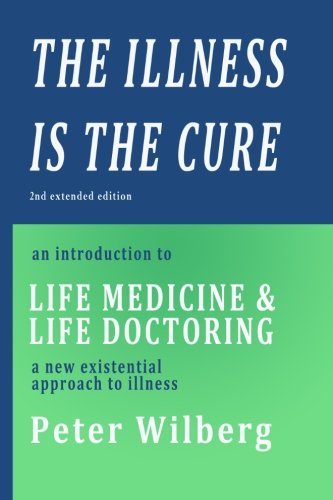
Wilberg on Wednesday - The Illness Is The Cure pt 38/46


Appendix 1. Questions & Answers on Life Medicine –
an Interview with Peter Wilberg


Ben Watt: Visits to the doctor often leave patients feeling marginalized and ignored. What has gone wrong?

Peter Wilberg: Doctors are ‘trained’ (indoctrinated in years-long boot camps might be a more appropriate way of putting it!) to reduce the human body to a biological machine. This training predisposes them not to see the patient’s body as an embodied self, i.e. as the outer face of a person – and one whose ‘inside’ consists just as much of thoughts and feelings as of tissue and organs. The result is a total separation of biology from biography, the life of the human body from the life and life world of the individual human being. The body and its symptoms are not seen as a symbolic embodiment and expression of a dis-ease experienced in the patient’s life (for example an experience of ‘heartbreak’ or total ‘loss of heart’ expressed as heart symptoms – or of childhood sexual abuse expressed as vaginal or anal symptoms). Instead of seeing the human body as an embodiment of the individual human being, it is treated as a mere ‘thing’ that the patient ‘brings with them’ to the doctor – like bringing a car to a garage. Unfortunately, many patients are already alienated or cut off from their own bodies, and may treat their own body as a mere thing or ‘It’ in the same way that many doctors do, thus colluding in a mutual ‘We-It’ relation to their illness.

Alternatively, however, patients will literally ‘get ill to see a doctor’ – turning a life problem into a bodily symptom just in order to get it at least medically recognised by another human being – and, through the specific and social role of the doctor, by society at large. But if the doctor fails to even try to see behind the patient’s presenting symptoms – to see the life problems or distress they express and embody—the patient will indeed feel marginalised and ignored as a human being – as they will if they sense no authentic human warmth or empathy from their doctor. Michael Balint wrote of a ‘collusion of anonymity’ whereby patients are passed from one doctor or specialist to another without anyone taking any interest in or responsibility for the patient as a person – and one with a real life rather than just a name or hospital code number. Indeed, one consultant actually admitted to me that among his fellow professionals in the hospitals he worked in, patients were not even referred to by their personal names. Instead they were identified with their illness and referred to in a wholly impersonal way as ‘The Emphysema’ or ‘The Liver Failure’.

This depersonalisation of the patient and their body is compounded by doctors’ trained belief in maintaining ‘clinical distance’, i.e. to not show any human empathy whatsoever for the patient’s lived experience of illness (for example of acute or chronic pain and the way this affects their lives. In the past, miners who developed chronic respiratory or back problems from having to work long shifts in almost airless tunnels not big enough to stand up straight in used to be told by their doctors: ‘It’s your work that’s causing it – so get used to it’. Yet even today, doctors are still taught than any expression of subjective emotional empathy with patients is a threat to their clinical ‘objectivity’, rather than being central to the patient not feeling ‘marginalised and ignored’ – but instead fully taken in as a unique person with a unique life (and not just as ‘some-body’).

As regards human empathy or the lack of it, I myself recall an experience of mentioning an agonising seven-hour long attack of Trigeminal Neuralgia (known as the ‘suicide disease’ because it is one of the most painful illnesses known) to a clinical practitioner. But because for him it was a mere side-issue unrelated to my principal presenting symptom, there was literally zero empathic response – as if I’d just made some totally inconsequential remark about the weather or traffic. In fact, so entrenched are they in their posture of ‘clinical distance’ that I have yet to hear one doctor whose first words in response to mine consisted of such basic, everyday empathic phrases such ‘Sorry to hear that’ or ‘That sounds very distressing’.

Yet were doctors to truly take time to listen – and also ask the right sort of questions, for example, ‘Is or has there been anything else bothering you in your life?’, a clear relation between what is really bothering the patient and life and their symptoms will often immediately pop out. Thus an elderly woman suffering from night-time heart pains—that the doctor initially only sees as possible signs of ‘angina’ requiring further clinical tests – may share (possibly for the first time) the continuing heartache she feels from recently losing her husband – and losing him to a night-time heart attack at that. Or else a patient with a chronically aching shoulder might be found to answer ‘Yeah, since my cousin/brother/business partner pulled out of our business I feel I’ve had to shoulder everything – and I mean everything – on my own’. Many more examples and case studies of symptoms as a type of ‘somatic metaphor’ for feelings and life problems are given on my site.

Ben Watt: Could you distinguish your approach to human suffering and illness from that currently prevalent in healthcare?

Peter Wilberg: A whole range of sharp differences between conventional biological medicine on the one hand, and what I call ‘Existential Medicine’ or ‘Life Medicine’ on the other are summarised in a two-column table on my website. One of the most basic answers to your question however, as suggested by the very title of my book, lies in its recognition that illness and suffering have an innately healing or ‘curative’ value and purpose in themselves. In other words, instead of seeing illness as something to be cured, the Life Doctoring recognises illness itself as the cure – our body’s way of calling upon us and helping to change ourselves, our lives and our world. Thus simply asking ourselves and recognising what an illness is stopping us from doing (for example, overworking) can offer a key to its healing purpose, as can the recognition of what it may be forcing us to do (to take more for ourselves for example). But no illness will have the same meaning for every individual, and it is this individually curative life meaning – and not a more or less individual ‘cause’ or ‘cure’ of the biological or genetic sort – that Life Doctoring serves to help the patient to discover on many levels – and in its many, often complex individual aspects.

A central metaphor I employ in my writings to get over this new approach is the idea of illness as a form of pregnancy – in other words, a process of gestating, giving birth to and learning to embody new and different aspects of ourselves – and with them a new and different way of ‘being in the world’ and of of living our lives. That process – like pregnancy itself – can of course require much time – whether weeks, months, or, in certain cases of chronic illness, many years or even a whole lifetime. With this metaphor of ‘illness as pregnancy’ in mind much medical treatment is really aimed at using drugs or surgery to terminate the patient’s pregnancy. Which is why treatments for serious illness, even when successful, are often followed by the patient developing another illness – or the same illness again. One can also compare see illnesses as ‘body dreams’ – or rather as ‘body nightmares’. Were it possible that medicine had the technology to scan a patient’s dreams, what would happen if a nightmarish monster were discovered in them? No doubt this monster would be regard as the principal ‘cause’ of the patient’s nightmares. Perhaps, then, the same dream-scanning technology could be used to ‘censor’ the patient’s dreams and prevent any possibility of the monster appearing again – an equivalent to surgically removing a tumour. Yet would doing so in any way explain or deal with the reasons for the patient’s having this monstrous nightmare (or tumour) in the first place? Comparing illnesses to body dreams and nightmares allows us to see just how backward modern biological medicine really is – comparable in its view of illnesses to the way a lot of people, in particular scientists, thought of dreams in the era before Freud, i.e. seeing them as completely meaningless experiences rather than as having deep personal life meanings.

Ben Watt: What is the wheat and the chaff of biological medicine

Peter Wilberg: Another good question – though behind and in answer to it is the question of what doctors themselves regard as ‘wheat’ and what as ‘chaff’. If the patient’s life as a whole – including their life problems, stresses or dilemmas, current or recent life circumstances and events, life history and experiences and their most important life relationships are all regarded as ‘chaff’, then even to speak of ‘biological’ medicine is a contradiction in terms – the root Greek meaning of the modern term ‘biology’ being ‘the speech’ (logos) of ‘life’ (bios)’. It is the way in which difficult and often painful – but at the same time deep and potentially transformative – aspects of our life themselves speak through our bodies and through illness – as they also speak through our dreams—that constitutes what should be the ‘wheat’ of ‘biological medicine ’. Thus if a patient felt or feels ‘stifled’ or ‘unable to breathe’ in their life – for example, in their home or place of work, their family or particular relationships, or in particular places or life circumstances, is it enough to simply diagnose some disease entity called ‘asthma’ and give them inhalers for the rest of their life? If another patient feels subconsciously inflamed with anger at some person or situation in his or her life, what help is it to simply diagnose and treat the resulting inflammation of their skin or another biological organ? If someone finds a situation or person in their lives ‘a pain in the ass’, is it enough to perform a rectal examination and look for sensitive haemorrhoids? If the same children ‘known’ to be reactive to a particular allergen can be unknowingly exposed to it in a clinical environments – and yet show no allergic reaction to it of the sort they do at home or in school – then what is it their bodies are really reacting to through their ‘allergy’? The list of questions such as these is endless, and the possible answers all highly individual and therefore infinitely variable. And yet precisely because they cannot be compiled into a neat set of statistics or pinned down to some particular gene it is biological medicine itself that discards them as ‘chaff’.

Ben Watt: Many people believe that biological medicine has proven itself with such achievements as surgery under anesthesia, antibiotics, vaccines, and genetic analysis. Do you disagree, and if so, why?

Peter Wilberg: These ‘achievements’ may be regarded as another element of the ‘wheat’ in biological medicine, its ‘good stuff’—although, taking each of the achievements in turn, one can find many good reasons for disagreement.

1. Surgery under anaesthesia. I have already referred to the principal natural sources, not just of most modern pain relievers but also anaesthetics. As for surgery as such, putting aside emergency surgery for war or accident injuries, stroke or heart attack victims etc., there remains the larger question of meaning—of how and why people come to require surgery – for whatever reason, in the first place. Or rather the question is, in what ways might a life- and meaning-based approach to medicine have prevented or forestalled the need for surgery ever arising? Conversely, why is it that, even according to the medical research itself, so much wholly unnecessary and/or damaging and counter-productive surgery is performed? A principal reason is that patients’ needs are assessed according to statistical risk factors and not as those of individuals. That is why so many women have had a breast removed only to find there was no cancer there, or that so many men have been rendered impotent and/or incontinent, not just by surgical treatment but simply through surgical testing for prostate cancer – conducted solely on the basis of dubious statistical risks of prostate cancer based on how much of a particular antigen they have in their blood.

2. Antibiotics. Five points. Firstly, antibiotics treatments developed grew out of the accidental discovery of the bacterial effects of a naturally occurring mould or fungus – not through some pharmaceutical company designing a molecule unknown in nature or to the human body. Secondly, the widespread use of antibiotics did not develop until after major epidemic infections declined as a result of improved hygiene and sanitation. Thirdly, as we know, the overuse of antibiotics threatens to render the bacilli they were designed to treat ever more resistant. Fourthly, though I have been as grateful for the availability of antibiotics as many others, their successful use has not in any way explained why the medical conditions requiring their use arose in the first place – nor prevented their repeated use for the same or other conditions. Only a meaning-based approach to the medical conditions most often treated with antibiotics can explain this. For fifthly, since we all constantly carry the bacteria which supposedly ‘cause’ sore throats – and a host of other illnesses, including lethal ones – we should at least all have sore throats all the time and be in constant need of antibiotics to treat them. So what other factors in our lives and psyches prevent this happening?

3. Vaccines. Many very big questions about these too – too many to go into here. But as with antibiotics some of the questions never fully addressed are what makes certain people susceptible to a particular bacillus or virus in the first place, and how come many people come in contact with them without getting ill at all – even during plagues and epidemics? Another question is whether their use might not make the body less able to distinguish a potentially threatening virus from a harmless one contained in a vaccine. Even many doctors argue that better specific and general immunity is created by actually contracting certain childhood illnesses than by vaccinating against them. Finally, we have yet to explain why the incidence of polio, for example, was already falling before mass vaccination was introduced. Finally, there are many who would claim, with good reasons, that the multiple constituents of most vaccines are in themselves highly toxic.

4. Genetic medicine. It is one thing to recognise that, far from being a mere biological machine, the human body is a living biological language of the human being—and that illness too is a form of body language and bodily communication. It is quite another thing however, to reduce this language to genetic strings of molecules constituting our DNA. The huge danger new forms of genetic medicine threatens us with come from the belief that we can remove or disable genes associated with a particular disease with no other effects resulting. This is rather like thinking we can eliminate the use of ‘bad’ language by simply censoring or removing from our linguistic vocabulary certain sequences of sounds and letters these ‘bad’ words contain. The claims made by genetic medicine are in some ways philosophically quite infantile—as if some genius has discovered that – WOW! – the words yuck, muck, fuck and sucks – all contain the letter sequence u-c-k. So we’ll just take a sequence like u-c-k out of your genetic vocabulary – and good l-u-c-k to you!

Ben Watt: What thoughts do you have on alternative medicine and the other practitioners who describe themselves as holistic?

Peter Wilberg: Many if not most forms of alternative medicine follow exactly the same basic model as orthodox medicine, seeing illness and health as opposites, and seeking causes and cures for a patient’s illness, rather than seeking to understand its meaning and healing value in the larger context of their lives. It makes no difference whether you see a patient’s illness as ‘caused’ by an energy block, evil spirit, virus, mutated cell or gene – the basic model is the same.
The only difference is one of language. Thus a practitioner of New Age ‘energy medicine‘ for example, might ‘diagnose’ an illness as a result of an ‘energy block’ in one or more of the patient’s ‘chakras’. Similarly, practitioners of traditional forms of Chinese and Indian Ayurvedic medicine differ only in employing very different diagnostic and even anatomical vocabularies to those of modern Western biological medicine (see my essays and book chapters on ‘Alternative Medicine’ and ‘Energy Medicine’).

I myself actually avoid the word ‘holistic’ in describing my work, used as it so often is today in a way that implies that the human being is precisely not a unitary whole – inseparable from their life and life world as a whole – but rather a mere assemblage of separable parts labelled ‘Body, Mind, and Spirit’ (and in this sense no different in essence from any other assemblage such as a car).

Ben Watt: So, to recapitulate, what are doctors for?

Peter Wilberg: A very good question indeed! Indeed, in a recent essay of mine entitled Automated Diagnosis and the Future of Biomedicine, I pose the question of what essentially a doctor is doing while listening to a patient. I argue that if what the doctor is doing is essentially going through a sort of calculative ‘algorithm’ or ‘decision tree’ in order to end up with one or more possible diagnoses, then the doctor could just as well be replaced by automated diagnostic software systems – built on a far larger and more up-to-date databases of symptom clusters and diseases, and incorporating far more detailed and integrated patient medical records, than any human doctor could possibly ‘store’ in their own head. On the other hand, the availability and increased use of computer assisted diagnosis could also potentially also free the doctor from the role of serving as a mere human medical computer – a ‘black box’ between the patient’s ‘input’ and some form of mentally computed ‘output’ in the form of prescriptions, further tests, or referrals to specialists. Instead they could give their full attention to exploring the symbolic life meaning of a patient’s symptoms – and even the very symbolism to be found in the scientific terminologies used to account for them. For we must not forget that what is seen as medical ‘science’ is as much based on metaphor as on ‘facts’ or ‘evidence’ (for example, the military metaphor of ‘counter-attacks’ by immunological ‘defenses’ against colonising ‘foreign bodies’, in the form of microorganisms, cancerous cells, etc). And the whole notion of illnesses – not least cancer – as something against which a war must be fought pervades the mindset of most doctors and their patients, even though not a single form of expensively researched and ‘aggressive’ hi-tech treatment for cancer, though a source of huge profits for the health industry, has been shown to increase the life expectancy of cancer patients (though such treatments, whether through surgery, chemo- or radiotherapy do often devastate the patient’s quality of life). Yet the single word ‘cancer’ has become a symbol of how not just doctors but most people now understands illness – as a type of invasion or colonisation by mutant cells or ‘foreign’ bodies of all sorts. Indeed, in this sense, the word ‘cancer’ has become the medical equivalent of derogatory terms for Jews and Blacks.

Coming back to the question however, our notion of what doctors are for has also come a long way from a time – only a few centuries ago – when the use of even simple measuring instruments such as thermometers was regarded as quackery, as was the very notion of ‘diagnosing’ some sort of hidden disease ‘entity’ causing the patients symptoms. At that time emphasis was still placed on providing both symptomatic relief to patients – whether in the form of human care and comfort, wise and healing words, or natural plant remedies such like willow bark or the seeds of the poppy plant – which still represent the principal natural raw material for profitable pharmaceutically-patented pain-relieving drugs such as ‘aspirin’ (a constituent of willow bark), codeine and morphine, as well anaesthetics such as novocaine.
‘I don’t care what you know unless I know that you care.’ This saying offers another answer to the question of why many patients are unhappy with the sort of treatment they get from doctors—or rather the way medical treatment has replaced authentically human health care. Michael Balint wrote of the ‘drug’ that we call ‘doctor’. It is the degree and depth of life experience and empathic life understanding that the patient feels coming from a particular doctor – as expressed in his or her way of listening, words, body language, general demeanour and manner of communication – that has the most powerful and immediate effect on the patient’s sense of well-being – or the very opposite. In other words it is to the doctor-patient relationship and the nature of doctor-patient communication that we should look in addressing the big question: What are doctors are for? Currently, however, it is as if the patient as a human being does not even figure in medical discourse at all. Thus, one can read literally thousands of ‘scientific’ and supposedly ‘evidence-based’ medical research papers in none of which can be found so much as single reference to the patient’s lived experience of illness, their experience of the particular form of surgery or treatment described – or often even to the symptoms that it was intended to treat! In general, ‘successful’ treatment is more and more equated to observed changes in a visual representation of the patient’s body, whether through numbers on a chart or images from a X-ray or scanning device – and that irrespective of whether the patient actually experiences any improvement in their symptoms. The result can be tragi-comic. For as a friend of mine shared with me, he himself was told – without even a hint of irony – that the surgical procedure conducted on his father had been completely ‘successful’ – aside from the minor detail that his father had died during the operation. The side-effects of medical drugs and surgery as actually experienced by patients are almost never reported in medical journals and papers, but are just ignored as a form of ‘collateral damage’ that the patient has to put up with. Reading patient experience forums on the Internet however (something it seems doctors never do) tells us quite a different story – often offering a host of horror stories recounting the distressing, often chronic or even permanently life-damaging effects of different types of medical drug or surgery.

Ben Watt: In the light of your thinking, how do you help the ill who come to your home?

Peter Wilberg: Like many counsellors today, I do not only see clients at home but also engage with them through correspondence and Skype. Nor do I see Life Doctoring, i.e. counselling for serious illness – as a replacement for consultations with ordinary doctor, but as a necessary complement to conventional doctoring – that is until medical training itself begins to turn out doctors already steeped in the basic philosophy of ‘Life Medicine’. As for the patient, first contact is usually made by phone or e-mail enquiry. In response I invariably request that a potential patient writes to me again, but this time attaching (a) as detailed a medical history as possible, including of course an account of their current medical condition and its history – along with any drugs they are or have been on on or any treatments that they have received or that have been suggested to them (b) as detailed an account also of their life history as they are prepared to offer – including whatever life circumstance, events and experiences, as well as family and other relationships, they consider as having been most important.
Finally, I might also suggest that they begin to answer in writing also some of the questions listed in my book and on my site under the title What Most Doctors Don’t Ask. These questions are then followed up in face to face sessions and/or through phone or Skype calls and further correspondence – for they are central in beginning to gain valuable insight into ‘the hidden story’ behind a patient’s illness, i.e. the ways in which difficulties in their lives may be symbolised by their symptoms (see also Brian Broom: Somatic Illness and the Patient’s Other Story). For this purpose however, it is of the utmost importance that the Life Doctor be as medically informed as possible of the specific nature of the patient’s condition – whether through very competent and thorough research skills, by virtue of already being a doctor, or through consultation with medical professionals and specialists. Only in this way can they help a patient in all the many ways that I see as defining the principal aims of Life Doctoring – both as new and specialist form of counselling (for serious illness) and as a new approach to ‘doctoring’ itself. For it must not be forgotten that though not necessarily a conventionally trained or ‘qualified’ doctor, the Life Doctor not only has additional and very important skills, to ordinary doctors, but also a different type of knowledge of illness – and indeed of the nature of the human body as such – knowledge of a sort most conventional doctors do not get from their training.

With this in mind, the overall helping aims and methods of my work as Life Doctor can be briefly summarised as follows:
  • Giving patients the opportunity to share their experience of illness in all its life dimensions – not least its subjective, social, emotional and relational dimensions. This includes the opportunity to express their experience of medical practitioners and services and/or voice their concerns around specific medical diagnoses, prognoses and treatments.
  • Giving patients greater quantity and quality of listening time – not just a rushed seven, ten or even twenty minute consultation but anything from 1 to 4 hours of deep, patient and empathic listening. True healing can only begin with the patient being fully heard and given the time also to be fully ‘heard out’ beyond the confines of what are generally absurdly limited time boundaries.
  • Well-researched and individually tailored advice in making informed choices about proposed medical tests and treatments, based on knowledge of their potential dangers and side-effects – and alternatives to them. It is important that the Life Doctor be able to protect patients from being persuaded into accepting potentially dangerous, counter-productive or even life-threatening forms of orthodox biomedical treatment, as well as to advise and support them in preparing for consultations with their doctors, consultants, surgeons or other health professionals.
  • Teaching patients ways to more deeply reflect on and meditate their symptoms – including pain – rather than just medicating those symptoms. In this way – and through the Life Doctor’s own highly trained therapeutic and body awareness – helping patients to uncover the life story behind their illness – its biographical as well as ‘medical’ history, its symbolic meaning in the context of their lives and its potentially healing value in transforming their lives.
  • This means helping patients to retrace and reverse the process by which they turned particular life relationships, life experiences and life problems into illnesses – and instead begin to approach those life experiences, life problems and life relationships anew, with a fresh awareness and from a fresh perspective, whilst at the same time always offering the patient on-going emotional support in just coping with their illness and suffering on an everyday basis.

UNRWA are terrorists

The SMPBI has been campaigning since the 7th October Massacre in Israel for the paliarstinan terrorists to be exposed for the murdering filt...