Wednesday, 9 January 2019

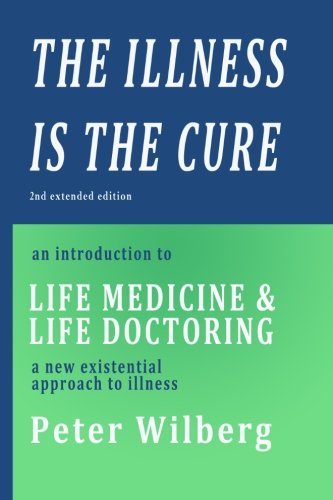
Wilberg on Wednesday - The Illness Is The Cure pt 26/46


Getting to the Heart of Illness –
and of Heart Disease


Listed on the following paragraph[next page] is an extended set of everyday expressions, many of which are mentioned in other sections of this book and all of which refer to the ‘heart’. Together they ‘get to the heart’ of what I call the ‘felt body’ or ‘lived body ’. For the ‘heart’ they refer to is not a mere biological organ which mechanically pumps blood, and neither do the expressions refer merely to ‘states of mind’ separate from and independent of the body. Instead the ‘heart’ they all refer to is an organ of our lived body rather than our ‘physical body’. It is the heart experienced not as a biological organ but as the ‘heart’ of the lived body – understood as an organ of feeling awareness.


“The Language of the Heart”


‘a loving heart’
‘a passionate heart’
a ‘big heart’ / a ‘kind heart’
a ‘cold heart’ / ‘cold-hearted’
a ‘warm heart’ / ‘warm-hearted’
to be ‘open hearted’ or ‘closed-hearted’
to be ‘heart-broken’ or ‘broken-hearted’
to ‘go to’ or ‘get to’ the heart of something’
to be ‘hard-hearted’ or to ‘harden one’s heart’
to have or not have the ‘heart’ for something
to suffer an ‘aching heart’ or ‘heartache’
to be ‘heartened’ or ‘disheartened’
to ‘lose heart’ or to ‘lack heart’
to have a ‘heart-to-heart’ talk
to feel ‘stabbed in the heart’
to ‘take something to heart’
to ‘strengthen one’s heart’
to speak ‘from the heart’
to feel one’s heart ‘sink’
a ‘heartfelt emotion’
to be ‘heartless’
a ‘frozen heart’

‘At the heart’ of Life Medicine lie three basic understandings all linking Language, Life and Illness:
  1. That everyday language referring to any of the parts, organs or functions of the human body does not merely make use of bodily ‘metaphor s’ to describe mental or emotional states, but instead indicates the way we live and experience such states in a bodily way – through our subjectively felt body or ‘lived body ’.
  2. That both bodily expressions such as ‘losing heart’ and bodily conditions such as heart disease and its symptoms are symbols of something else – states and experiences of the felt or lived body and of its organs and functions.
  3. That so-called ‘organic’ dysfunctions, disorders or diseases – for example heart diseases – are biological embodiments of basic dysfunctions, disorders or diseases of the lived or felt body: for example an incapacity to feel or love expressed through a hardened heart, or the felt experience of a ‘broken heart’ or ‘loss of heart’.
Life Medicine therefore, does not claim that illness is ‘all in the mind’. On the contrary, it understands illness – like the many everyday expressions that symbolise its nature and symptoms – as an expression of our subjective experience of life and of our subjectively felt body – ‘the lived body’.

No form of conventional medical testing however, no matter how technologically sophisticated, can see, scan or diagnose the felt or lived body – nor can it detect a felt sense of dis-ease in that body – such as a ‘broken heart’ or a feeling of ‘loss of heart’.

Similarly, no form of biomedical treatment for hardened arteries can cure ‘a hardened heart’, just as no form of ‘open-heart’ surgery can cure someone with ‘a closed heart’.

“The heart is often described as a type of pump. With the latest developments in modern technology, there are all kinds of heart operations that can be performed, even the use of heart transplants. In many cases, even when hearts are repaired through medical technology, the same trouble reoccurs at a later date, or the patient recovers only to fall prey to a different, nearly fatal or fatal disease. This is not always the case by any means, but when such a person does recover fully, and maintains good health, it is because [their] beliefs, attitudes and feelings have changed for the better, and because the person ‘has a heart’ again; in other words because the patient himself has regained the will to live.”

“Many people who have heart trouble feel that they have ‘lost the heart’ for life. They may feel broken-hearted for many reasons. They may feel heartless, or imagine themselves to be so cold-hearted that they punish themselves literally by trying to lose their heart.”

“With many people having such difficulties, the addition of love in the environment may work far better than any heart operation. A new pet given to a bereaved individual has saved more people from needing heart operations than any physician. In other words, a ‘love transplant’ in the environment may work far better overall than a heart-transplant operation, or a bypass, or whatever; in such ways the heart is allowed to heal itself.”

“The condition of your heart is affected, for example, by your own feelings about it. If you consider yourself to be cold-hearted or heartless, those feelings will have a significant effect upon that physical organ. If you feel broken-hearted then you will also have that feeling reflected in one way or another in the physical organ itself…. each individual also has many options open. Everyone who feels broken-hearted does not necessarily die of heart failure for example. The subject of health cannot be considered in an isolated fashion … each person will try to fulfil their own unique abilities, and to ‘fill out’ the experience of life as fully as possible.”
from The Way Toward Health by Jane Roberts (see appendix 6)

Case Example 3

A recently bereaved widow, whose husband Harry died from a heart attack, finds herself suffering disturbing chest pains at night and goes to see her physician. The physician sees her symptoms only as signs of some possible organic disorder which might be ‘causing’ them. He sends her to a consultant to test for possible heart conditions. The tests proving inconclusive, the consultant ends up diagnosing mild angina, and prescribes beta-blockers. These in turn prove to have little effect on the patient’s symptoms.

On visiting her physician a second time however, the latter recalls her recent bereavement and, as a result, begins to read the bodily ‘text’ of her symptoms in a different way, understanding them in the life context of her loss and the pain it may be causing her. Rather than seeking a purely clinical ‘diagnosis’ of the patient’s symptoms he himself listens to his patient in a genuinely patient way. As a result an insight flashes through his mind which he shares with her. He ‘sees’ that she may be suffering from a doubly broken heart: “the one that killed Harry, and the one you’re left alive with, that hurts when you’re most alone in the middle of the night…the broken heart that gave up and the one that has to carry on painfully.” This heartfelt hearing of the patient and the heart-to-hearttalk that ensue are the first time anyone has ever acknowledged the pain of her grief. It gives her the strength of heart to acknowledge and bear it in a new way. Her symptoms disappear. The patient’s heart symptoms disappear as bodily symbols and metaphorical signifiers of her pained heart, not through an intellectual understanding of their significance alone but through a memory arising from the feeling heart of the physician.

This paradigmatic case vignette, cited by Dr David Zigmond in an article on different modes of patient-physician communication, goes to the heart of the contrast between biomedical diagnosis and what could be called ‘life diagnosis’.

The root meaning of the term ‘diagnosis’ actually is ‘through knowledge’ (dia-gnosis). Yet the Greek verb, gignostikein, from which the word gnosis (knowledge) derives did not mean merely knowledge of or about something – (for example biomedical knowledge of the body). Instead it denoted the sort of knowing we refer to when we speak of being ‘familiar’ with people, of ‘knowing’ them well or intimately as human beings – in much the same way that family doctors used to know or be familiar with their patients, as if a part of their families.

It was this type of ‘knowing’ that the doctor in Zigmond’s case study brought to bear in relating to the widow – not just his standard body of medical knowledge ‘about’ the heart as a biological organ and the type of ‘diagnosis’ to which it can lead. His method consisted simply of having the patience to listen to his patient in a different way – not seeking a diagnosis of a possible heart ‘condition’ but affirming her heartbreak in a heartfelt way. By ‘bearing with’ his patient in this way, helping to bear the burden of her pained heart with her – she no longer felt herself so painfully alone in bearing it – and was able to find a new bearing towards the bereavement that occasioned it.

The paradox that Zigmond notes however, is that despite the inconclusiveness of the initial medical tests, had the physician himself not embodied this new and different bearing towards his patient – had he not heard her in a heartfelt way as a human being but simply treated her as a potential ‘case’ of angina – then the patient herself might well have found herself in the position of having no way to express the heartbreak of her loss except through actual and perhaps increasingly acute cardiac symptoms – using her biological heart as an instrument of what Freud called ‘organ speech ’.

The physician’s capacity for a different type of listening – one that did not merely serve as a prelude to some form of purely biomedical diagnosis was therefore ‘preventative medicine’ in the deepest sense. For it may well have forestalled a process whereby this patient might well have ended up as a genuine ‘heart case’ requiring serious medical intervention. Alternatively, she might have found herself seen as a so-called ‘heart sink’ patient – someone who repeatedly ‘bothers’ her doctor, but whose medical tests continue to reveal no conclusive, measurable signs of any organic disorder or heart disease – thus suggesting some form of malingering. Yet such ‘heart-sink’ patients are not a marginal group. In their persistence, they are simply unconsciously reacting to the absence of a type of listening that most patients actually seek – the type of listening required for ‘life diagnosis’ and ‘life doctoring’.

This one single case described by Zigmond is therefore ‘paradigmatic’ – for in its simplicity it nevertheless reveals in full clarity the sharply opposing frameworks or ‘paradigms’ of Biological Medicine and Life Medicine, Bio-medical Doctoring and Life Doctoring. Indeed recent research has shown that many older widows die within three years of their bereavement – not due to arterial disease but principally through an enlargement of the heart’s pumping chamber – in other words a (painfully) ‘throbbing heart’.

Zigmond also offers us a study in the very meaning of ‘diagnosis’ as such – showing how different ways of listening to and coming to ‘know’ a patient can themselves have a direct bearing on the patient’s health and medical condition itself. Our biology has its basis in our biography, and in that larger body of awareness that is our life world as a whole. For it is always within the specific contexts of our life world that we experience a felt ‘dis-ease ’, just as it is capacities of awareness that allow us to relate to and respond to our life world in a healthy way – with awareness.

Illness can and has been understood in many ways: in a purely objective and biomedical way, as a mechanical, neurophysiological ‘effect’ of psychical stress or trauma, as a relation to our life world and other people in it, as a form of silent bodily communication or even protest, as blocked action or communication, and/or as a metaphorical language through which we give silent bodily expression to any subjectively felt ‘dis-ease ’. Understanding organic illness as a language of awareness embraces all other understandings of it. More importantly it provides us with an understanding of illness that affirms its innate meaningfulness in the life of the individual – as an expression and embodiment of their lived experience of themselves and of their life world as a whole, as an expression and embodiment of the degree of awareness they bring to their experience, and as an expression and embodiment too, of the specific capacities or ‘organs’ of awareness that they do or do not exercise in relating and responding to their experienced self and world – for it is these specific capacities that offer new keys to diagnosing illness as a language. (see The Language of Illness and Illness as a Language)

Reference:

Sunday, 6 January 2019

Socialist Quotes for Sunday Reflection pt 43

"But what is true in his principle, we, too, must accept. And what is true is that before we can be active in any cause we must make it our own, egoistic cause-and that in this sense, quite aside from any material expectations, we are communists in virtue of our egoism, that out of egoism we want to be human beings and not merely individuals."

"Besides this, he gives very important remarks on government, and having proved that every kind of government is alike objectionable, no matter whether it be democracy, aristocracy, or monarchy, that all govern by force; and that, in the best of all possible cases, the force of the majority oppresses the weakness of the minority, he comes, at last, to the conclusion: “Nous voulons l'anarchie!” What we want is anarchy; the rule of nobody, the responsibility of every one to nobody but himself."

-Friedrich Engels

.....................

......................

Stalin’s response to Churchill’s “iron curtain” speech in his interview to “Pravda” on March 14th, 1946.
.....................

“The free movement of labour encourages the modern slavery of workers moving at the orders of cheapskate global employers, gangmasters and people traffickers. It adds to the huge number of the reserve army of the unemployed. And it defies the laws of economic gravity to think that you can massively expand the supply of labour without lowering its price.”
https://www.cpbml.org.uk/news/no-borders-no-control

......................


Please comment at:
https://www.tapatalk.com/groups/smpbiforum/socialist-quotes-for-sunday-reflection-pt-43-t94.html

Wednesday, 2 January 2019

Wilberg on Wednesday - The Illness Is The Cure pt 25/46


The Language of Illness

Could it be that the way we use language to talk about illness and disease affects our whole understanding of it? Could it be that “the essence of a disease” and “the essence of a word” – of the language with which we describe states of ‘dis-ease’ – are one and the same?
To begin with it is important to recognise how many phrases used to talk about illness contain words that imply that it is:
  • some ‘thing’ that we ‘have’, ‘catch’ or ‘get’
  • something that is ‘wrong’ or ‘bad’
  • something that attacks us
  • Something that fails

Examples:
  • I caught a cold.
  • She has cancer.
  • What’s wrong with me?
  • He’s got a bad heart.
  • My back/head is killing me.
  • He is suffering from liver failure.

Secondly, biological medicine, far from being based purely on scientific fact, is pervaded by verbal metaphors or figures of speech – and in particular expressions derived from the language of war.
Examples:
  • War on cancer.
  • Defending or protecting oneself against disease.
  • Battling, struggling or fighting against an illness.
  • Mobilising/reinforcing the body’s immune defences.
  • An aggressive tumour or virus.
  • Fighting off an infection.
  • Killer cells.

Thirdly, illness has been explained and interpreted historically in many different religious, moral and ‘scientific’ ways.


Examples:
  • As a punishment for sin.
  • As a ‘test’ of will or faith.
  • As an attack by malign spirits.
  • As a result of misdeeds in a past life.
  • As a sign of moral ‘degeneracy’ (syphilis, AIDS).
  • As an evolutionary means for the survival of the fittest.
  • As an invasion by pathogens such as bacteria or viruses.
  • As the ‘price’ paid for an ‘unhealthy’ lifestyle.
  • As a result of eating the ‘wrong’ foods.
  • As a colonisation by cancerous cells.
  • As a result of faulty genes.

Fourthly, the body itself has been culturally and linguistically described in many different ways:
Examples:
  • As an image of God.
  • As a sacred temple of the gods.
  • As something to be controlled or tamed by the mind.
  • As a container of emotions and of the soul or psyche.
  • As a mere disposable shell of the soul or spirit.
  • As a more or less well-functioning machine.
  • As a product of our genes.

Body Language in Everyday Speech

Everyday speech and verbal language is itself full of ‘body language‘ – containing countless metaphors or ‘figures of speech’ which not only refer to bodily organs and functions but offer symbolic clues to types of inner dis-ease that might find expression in both physical and mental health problems.

Examples:
  • To be/feel inflamed, to be thick-skinned or thin-skinned, sensitive or prickly, irritable or itchy, to be touched or untouched by something/someone, to let something/someone get under one’s skin.
  • To be heartless or cold-hearted, to take something to heart, to be disheartened, to lack heart or lose heart, to be heartbroken, a heartfelt emotion, a fluttering heart etc.
  • To find something hard to stomach or digest, to feel sick or nauseated about something, to have a gut feeling about something, to feel gutted.
  • To not feel one can breathe freely, to feel stifled, to feel one has no room to breathe, to lack breathing space, to lack inspiration (from the Latin spirare – to breathe).
  • To be headstrong, to be boneheaded, to keep a clear head, to head in a certain direction, to make or not to make headway, to head something off, to have a head for something, to lose one’s head, to bring something to a head etc.
  • To be unable to face or face up to something or someone, to come face to face with something or someone, to show one’s true face.
  • To not see a point, to refuse to see something, to not see straight, to not see things in perspective, to lack vision or insight, to be short-sighted, to close one’s eyes to something, to have a blindspot, to not have an eye for something.
  • To stand on one’s own two feet, to find one’s balance or ground, to stand up for oneself, to take things in one’s stride.
  • To lack backbone, to be spineless, to back someone up or to be in need of support and backing.
  • To feel inwardly frozen stiff or immobilised.
  • To shoulder a burden or lean on someone’s shoulders.
  • To feel something as a pain in the neck or a pain in the ass.
  • To feel overstretched, stressed, stiff, constricted or tense.
  • To feel someone getting up one’s nose.
  • To be unable to handle or get a grip on a situation or person.
  • To be full of bile.
Even simple linguistic prepositions such as ‘in’ and ‘out’, ‘on’ and ‘off’, ‘up’ and ‘down’ etc – all of which form part and parcel of the very structure of language – play a particularly significant role here, implying that the body is a container of some sort for mental and emotional objects.

Examples:
letting something ‘out’, taking or holding something ‘in’, having an idea ‘in’ one’s mind or a feeling ‘in’ one’s body, letting ‘out’ an emotion, feeling ‘off’ or ‘put off’, going ‘into’ oneself or letting things ‘out of’ oneself, feeling ‘up’ or ‘down’, ‘high’ or ‘low’, trapped ‘in’ one’s body or ‘out of’ one’s mind.

All these expressions arise from and reflect our felt bodily relation to space – as also does the use of words such as ‘upset’, ‘unstable’ or ‘imbalanced’ and expressions such as ‘leaning to one side’, ‘finding one’s ground’ or ‘shifting’ one’s stance, attitude, posture or position.

That language itself is ‘body language‘ can also be seen from the way in which expressions referring to ‘mental’ states make use of figures of speech but relating to specific bodily sensations or movements:

Examples:
feeling ‘overstretched’ or ‘under pressure’, ‘reaching’ for a goal, ‘catching’ or ‘catching onto’ something, ‘running away’ from something’, ‘moving on’ and ‘getting ahead’, ‘falling behind’ or ‘going downhill’, ‘falling apart’ or putting oneself ‘together’, ‘shaking’ with fear or ‘shaking’ something off, ‘shifting’ one’s attitude, ‘carrying’ a heavy burden, ‘grasping’, ‘hanging onto’, ‘losing one’s grip on’ or ‘letting go’ of something etc.

These are examples of a whole range of expressions used to refer to ‘mental’ states which at the same time refer to muscular states. For example we speak of feeling tense or relaxed, or else nervous or restless – hence wanting to fidget or make use of our muscles in some way.

Similarly, a state of high tension or anxiety may be felt muscularly – for example as a ‘tension headache ’, a ‘knot’ in the stomach, a ‘flutter’ in the heart etc. This is not surprising given that our heart, stomach and intestines are made up of muscle – as are our respiratory and vocal organs.

If someone is drunk or drugged is it their mind or their muscles that may make them feel disoriented or lose their balance? Perhaps it is both and neither. Perhaps it is a person’s overall or underlying bodily mood or tone of feeling which finds expression both in muscle tone and in mental states.

Hence also the expression ‘highly strung’ – which can apply to both a person’s nerves and their muscles, but is drawn from the language of stringed musical instruments – and suggests an understanding of the human body or ‘organism’ itself as a musical instrument – the meaning of the Greek word organon.

Finally, both our language and our muscles and joints can be more or less rigid and stiff or articulate – allowing us to freely communicate or ‘articulate’ ourselves through both verbal speech, different tones of voice and ‘body speech ’. Could it be then, that both illness and language, bodily symptoms and bodily figures of speech – what Foucault called “the essence of a disease” and the “essence of a word” – are one and the same? Could it be that illness gives this common essence the form of symptoms, whilst language gives it the form of bodily metaphors or figures of speech? Could it be that the body itself is a not a biological machine to be repaired but a living language of the human being? For verbal language, as we have seen, is itself largely ‘body language‘ – being made up of figures of speech rooted in bodily sensations and states.


Illness as a Language and ‘Somatic Metaphor’ – Cases from the work of Dr. Brian Broom


The following case reports are drawn from Dr. Brian Broom’s book Meaning-full Disease – how personal experience and meanings can cause and maintain physical illness. They are based on the approach to illness taught by Brian Broom to health professionals at the Auckland University of Technology and first detailed in his book Somatic Illness – the Patient’s Other Story – which contains a wealth of further case descriptions. Broom’s ‘MindBody’ approach – like that of Life Doctoring – consists in exploring the nature of a patient’s illness as ‘somatic metaphor’. This means listening for and hearing in the patient’s own language and choice of words evidence of clear metaphorical connections between the patient’s somatic symptoms on the one hand and particular events and experiences in their lives on the other. In all the cases that follow, names of patients have been changed and any similarity to persons known to you reflects the commonness of such connections but also the essentially symbolic nature of illness as ‘somatic metaphor’.
Skin thickening
Eunice, a 71 year old woman, had an 18 month history of generalized thickening of the skin, and tissues under the skin, causing uncomfortable splinting of the chest, and tightness of the arms and upper legs. This thickening was very obvious. Despite her age it was impossible to pinch her skin into folds. Despite intensive investigation a firm diagnosis had not been made. I will not emphasise the medical detail but though the appearances were not classical she was told she had “connective tissue disease” and was accordingly treated with steroids and other potent drugs.

I was asked to see her for a second opinion. I began by enquiring about the onset of her skin thickening. She startled me by saying that it began when she fell over in the local garden nursery, sustaining injuries to her face and legs. I was inclined to brush this information off, and get on with the important (sic) material. But something made me hesitate, and I enquired further. She described the fall as “shattering.” Mystified as to the relevance of this I asked what effect this event had had on her. She replied: “ I went into my shell for a while.” I was immediately struck by the fact she was presenting to me with a thickened shell of skin and here she was using language to match. I invited further comment, and within the next 3 to 4 minutes she used the words “I went into my shell” 3 times. Moreover, she further volunteered in her description of being taken back to her home by a friendly gentleman: “I went inside the four walls of my house, and closed the door, and sat and sat and sat.” In the few weeks following the injury skin thickening developed first in the legs and then became more generalized. I sat listening to this wondering what sense to make of it. I enquired about aspects of her life. She had enjoyed very good health throughout her life, but it seems that the accident compromised (“shattered”) her sense of herself as perennially invulnerable. Moreover the embarrassing injuries to her face induced social withdrawal. She had actually started to improve by the time I saw her and the possibility existed that this was a response to the drugs she had been on. I enquired of her as to what she felt was the cause of her improvement. She related it to a friend who had come to her and said that she should get active again. She said that she improved again as she started to “come out of my shell.” This “shell” theme was the metaphor she persisted with in both her language and her body.

I suggested to her that the thickening of the skin was a bodily (somatic) representation of what she was also expressing in using the term “shell.” She accepted this, though without much insight. I encouraged her to continue to be active and resume her previous social contacts, and suggested I follow her up regularly for support, encouragement, explanation, education, and revision of her home situation so that coping could be ensured for as long as possible. After the third visit she declined further sessions. One year later both she and her physician reported marked clinical improvement, and she was on no medication.

Leukoplakia
Teresa requests review because she wants to ‘live life more fully’. In her thirties she developed leukoplakia, a precancerous condition of the mouth. By the time she came to me she had had seven surgical interventions, including removal of carcinoma and one plastic reconstructions of the tongue and the floor of the mouth--the last requiring eighteen months rehabilitation as she learned to speak again. Early in the interview she proffered the interesting comment that “if only I could get rid of it (my emphasis) I would be able to live more fully from day to day”. Though she was obviously (!) referring to the leukoplakia and cancerous tendency I suspected the it was not the cancer that had been removed 2 years before, with no evidence of recurrence. I noted the words but made no comment.

A review of her life-story was illuminating, and some key points will be emphasised. Apparently, after she was born, she and her mother were collected by father from the hospital. He dropped them off at home and went off to see his mistress. When Teresa was seven years old her father suicided, though she was not aware of the nature of his death. At age twelve she was crying in her bedroom. Mother found her, asked what was wrong, and Teresa replied that she was crying about “daddy”. Mother, who was now alcoholic, responded: “It’s your fault your father is dead – you would never sit on his knee.” The background to this cruel comment is not clear. Teresa did remember that as a child she often felt much more identified with her absent father than with her mother. At age sixteen she learned from relatives that her father died by suicide. At nineteen she entered a marriage that, over six years, repeated in some ways the traumas of childhood. At age thirty three she developed the leukoplakia of the mouth. It turns out that this was the age that her father committed suicide. Her father was an oral surgeon. I point this out to Teresa who has herself wondered, over the years, whether this is significant, though it had never been discussed with doctors. Returning in my mind to the it referred to above, I asked her what, apart from this cancerous tendency, she would most like to get rid of in her life. She seemed to understand what I was asking, but struggled initially, becoming very tearful, unable to find the right word. Eventually she said she most wanted to get rid of the shame. To me it seemed likely that the shame and the leukoplakia were intimately connected in some way. Could one think up a better somatic metaphor than a precancerous condition of the mouth, for the shame of being responsible for the death of one’s oral surgeon father?

Teresa had some brief psychotherapy, which was unusually fast-moving and involved only nine sessions. The turning point in therapy occurred when she actually started to remember sitting on her father’s knee. She reported, after the session in which that occurred, a persistent “joy” which has continued, and seems to have expressed itself in a variety of interpersonal and social freedoms. A year later she reported no further problems and her surgeon expressed astonishment with the good state of her mouth.

Nasal irritation
Katrina, a woman in her twenties has struggled with obesity since age thirteen. Finally she conquers it by having a gastric bypass operation, losing some 60 kilograms in weight. At last the obesity is behind her. But the problems associated with her obesity appear in another form. She works as an acupuncturist. Since losing weight, and transcending her enormous weight problem, she has become more and more irritable with clients who seek her help for what she sees as relatively trivial bodily concerns. Compared to her struggle with obesity many of these clients have little to complain about. She no longer wants to tussle with ‘bodies’. As this irritability increases she develops chronic nose and sinus catarrh, congestion, and infections resistant to antibiotics. She ‘can hardly bear to face’ some of these clients. Her nose may settle for a while when away from clients, but as soon as she leans over these troublesome clients demanding solutions to their ‘trivial’ problems her nose starts to pour fluid. They get ‘up my nose’.

Vertebral arthritis
A couple were referred because of marital difficulty … In the course of the first session he complained of back-pain, and we enquired further about this. He had been previously diagnosed with ankylosing spondylitis, which is an inflammatory arthritis of the vertebral column leading, eventually, to a rigid fusion of all the vertebrae. Asked when the problem began, without any hesitation he gave the following intriguing story. Seven years before he had been present at his wife’s first labour, during which an epidural anesthetic was given. He was absolutely appalled at the sight of the needle being inserted into his wife’s spinal column, and collapsed in a faint on to the floor. He woke up with pain in his back, and had been “feeling her pain” ever since.


Please comment at:
https://www.tapatalk.com/groups/smpbiforum/wilberg-on-wednesday-the-illness-is-the-cure-pt-25-t93.html

Tuesday, 1 January 2019

The Twitter ban and a clarification of our position on child-rapists, aka, paedophiles

Happy New Year to all SMPBI Comrades and Supporters.

We begin 2019 with a response to the bigots on social media who have banned our twitter team no less than three times in the past few weeks, for our uncompromising position on paedophilia in all its forms, with particular emphasis from twitter on our opposition to the attack on children which is underway disguised as 'gender self-identification'.


On the 23rd December, one of the team got into a debate with a paedophile, telling the disgusting abomination that he is the lowest of all human life and that his desire to rape children is unacceptable.  This apparently goes against twitter rules, as it is 'hate speech' against an individual because of his 'sexuality'. Wow, just wow. So now twitter is banning people for confronting paedophiles!  Here is the 'offensive' tweet:


To clarify matters. The official position of the Socialist Motherland Party regarding child-rapists, aka paedophiles, is that we oppose them 100% and view their behaviour (whether in the fantasy stage or in the active rapist stage) as deplorable.  We see it as our duty to expose them whenever we encounter them, and to attack them in every means possible.  This can include exposing them on social media, campaigning in the streets against known nonces, getting them sacked from employment, and other more imaginative means.  It is our duty to defend our people from all destructive influences, and to fight for a better future. Paedophiles have no part of the future. If we do not oppose them they will be emboldened by lack of opposition and become an even greater menace.  The Socialist Motherland Party is 100% anti-paedophile.  This position is an official position and is not negotiable.


The Socialist Motherland Party has taken a strong line in protecting women from men who use the self-id so-called 'trans' agenda to gain access to women's and girls' spaces.  This too has led to problems on twitter.

Our first twitter ban was for the following:
As stated previously, our Twitter account was temporarily suspended by the biology denial bigots of Twitter, for stating the undeniable fact that an individual born with ovaries is female, and an individual who can at any time in his life produce sperm, is male. The identity politics obsessives will use all manner of pseudo-scientific gymnastics to justify an ideology which is effectively the enshrinement of paedophilia and a cross-dressing fetish as a virtue.  Cross-dressing in itself - like any other fetish - is a matter for individual adults. But the trans-agenda is not concerned with adults, but more and more with children.  It is the sexualisation of children which we condemn, and the vile industry which seeks to encourage children to undergo harmful procedures (surgery, hormone therapy) which will ruin their health permanently.  We are now at the stage where girls who are tom-boyish or boys who likes pink, will have this used against them as a justification for gender realignment butchery.  Traditionally, pink was for boys and blue for girls, but fashions change and the colours reversed.  The idea that children must be mutilated because of how they play, is an outrage.  The SMPBI stands up for sanity, nature, and the protection of children.  We will not bow to transfascism and to the identity cult which push the nonsense that 'feelings' matter more than biology.  This puts us at odds with the liberal extremists who dominate social media, and this is something to take pleasure from.


Tellingly, although on the first occasion in which our account was put on a ban, the mentally ill men who made threats of violence against the party, were not sanctioned.  The sooner the diseased liberal society is replaced by the wholesome healthy Socialist Motherland we crave, the better.


Now, after the second ban (as written of at the top of this post), our twitter team has again fallen foul of the twitter bigots.  On attempting to post for the first time this year, the following censorship was displayed:

The first tweet is a response to a question by a man calling himself TranimeGirl (with emphasis on the Girl, as in female child, which this man certainly is not).  With the intention of creating an excuse to censor dissent to the transfascist cult, he deliberately asked if 'terfs' hate transgenderists - using the liberal slur 'terf' to attack any women who dare to state the obvious facts that men are men regardless of how they dress, that lipstick is not a magic wand which reverses the laws of nature, and that those who engage in biology denial are transfascists who prey on children, making them an especially repugnant variety of paedophile.


The 'offensive' (to bigots) tweet stated that it is wrong to hate people for suffering from mental illness (which the trans issue clearly is), and that rather than indulge in the delusions of the ill, people should be campaigning for better healthcare for people with psychiatric problems (the autocorrect changed the word 'campaigning' to 'damaging' but the intent was still clear.)  The Socialist Motherland Party believes in health care, not identity politics, and is disgusted at the way that the pharmaceutical industry is using an ideology based of the ridiculous concept of sex being changeable, to destroy the lives of vulnerable children with unnecessary surgery and highly profitable hormone 'treatment'.  The vast majority of transgender people are autistic, making the industry an attack on people who are already damaged - making the business not only paedophile (which is NEVER an excuse) but also a direct assault on the most vulnerable of children.  Our stance against the sick people who abuse children, gained us another ban!


The second part of the third ban, was regarding a tweet in response to a man in Spain winning a sexually exploitative 'beauty contest'.  As was stated, it is bad enough that women are pressured into believing that all that matters is physical appearance.  How many lives have been ruined by the sexualisation of girls, by the pressure to look like air-brushed, photo-shopped (and therefore unrealistic) images of anorexic (physically and mentally unhealthy) women?  That a man has won such a degrading competition only spreads the sickness to include boys who have been mentally devastated by the entertainment media and the school system to believe that they are secretly girls and need surgery to realign mind to body!  The transgender ideology attacks same-sex attracted children, teaching boys who like boys that if they are mutilated and wear make-up (or even if they are not mutilated!), that they become girls and are therefore heterosexual!  They are not!  Gays and Lesbians are who they are: they are not in the wrong bodies, and they cannot be 'cured' of their sexual attraction.  Twitter considers opposition to two disgusting exploitative industries (beauty contests and the trans industry) as 'hateful', so we were given a third ban!


The Socialist Motherland Party is not going to remain silent on any issue which harms the working class.  If the bourgeois lunatics were content to limit their identity politics madness to their own class, we would celebrate their self-destruction!  But they are using the law, the media and the education system to push a deranged ideology on our children.


The trans-agenda is a part of the paedophile agenda.  We condemn it regardless of the era, the location, the victims, the perpetrators etc.  We can talk about the likes of Jimmy Savile, and indeed we have done for a number of years (see posts here) , but he is dead and safe from justice.  What matters now is to deal with paedophiles in any way we can. As stated above, we will find out where they work and where they live, and do what we can to get them sacked and moved away from access to children.  We cannot get to the establishment rapists in any way other than exposing them.  Our focus has to be on what we can do to protect our children. When the Socialist Motherland comes, there will be merciless justice meted out to the ruling class for how they have treated us. Liberal collaborators will be treated just the same as their paymasters.  Obeying orders has never been an excuse for doing wrong.  We will fight the rapists wherever we can - on a paedophile by paedophile, rapist by rapist basis.  Some call this lynch mob mentality. So be it. Today a mob, tomorrow a bigger mob, building to a revolutionary mass which will sweep away the liberal sickness and destroy the ruling class and the entire degenerate capitalist system.


Please comment at:
https://www.tapatalk.com/groups/smpbiforum/the-twitter-ban-and-a-clarification-of-our-positio-t92.html

UNRWA are terrorists

The SMPBI has been campaigning since the 7th October Massacre in Israel for the paliarstinan terrorists to be exposed for the murdering filt...